Dear Walker Percy,
It was like awaking from a "deja vu." The sonorous rattle of the cicada clacking across the patched cement of our back deck. The disconcerting thing is that the sound of a single cicada, 2 1/2 inches long on the outside, is a racket. And that is when I realized that I am homeless.
Strange for someone who nests, who gathers around herself impatiens and begonias, who puts family snap-photos in groupings under the plexiglass of poster frames, who keeps second grade successes marked with stars, and trophies from mini-marathons for the benefit of a children's hospital, but there it is.
My husband speaks it out loud, but he is wont to do that, ready to up and out of there at the notice of a moment. He isn't homebound. "I've had it," he'll say. But I'm trapped by a few pieces of homeliness. Something in the turf or in the walls can cling to me, but mostly it's the cleavings of relationships. Up and out of there isn't comfortably part of my framework. However, in spite of my longings, my propensity to be a local, I haven't found a nail for my Welcome Home sign.
Walker, you say, "New York is New York", but localities in Alabama, Mississippi, and Louisiana (and perhaps Tennessee too) share traits which set the region apart from much of the United States. Perhaps that is true. Perhaps there is a southern traitedness that shuts its door on outsiders who would seek a home place, laughing with that Southern irony you talk about so much, at visitors who knock and seek to gain some entrance. I'm not sure if it is refusal based on irony or refusal based upon refusal, that otherly refusal of the traitedness. "Y'all come back, now," is after all predicated on the delicious assumption that we'all are leaving.
Janine just arrived from up north. Well, West Virginia. Her family moved her in with a rush, what you might term "Northern edgyness". The apartment was set up and operating before I arrived with my dolly. Welcome, welcome, good luck. We stood outside in the warm evening with glasses of unsweetened tea and she asked me a very unsettling question. "What is that sound? It's driving me crazy." What sound? What was she talking about? And that was the moment that started the deja vu. It set me up for an awakening of sorts. I had stopped hearing the cacophony of the cicadas.
Your frontispiece to The Last Gentleman quotes Father Romano Guardini from The End of the Modern World. "Loneliness in faith will be terrible. Love will disappear from the face of the public world, but the more precious will that love be which flows from one lonely person to another."
And so it has, love is gone, North, South, East, West, publicly gone. We're a lonely bunch and in the midst of the static of life it is hard enough to identify other lonely faithful even when you can speak the same cultural language and there nothing to distract you from hearing. So shall I go home to the North or stay here and continue in failing attempts to find the flow of love as it exists here?
Perhaps I should be encouraged that the cicadas have faded from my attention. It could be a sign that I may find a home here after all. And, as the good Guardini went on to say, "Perhaps [wo]man will come to experience this love anew, to taste the sovereignty of its origin, to know its independence of the world, to sense the mystery of its final why? Perhaps love will achieve an intimacy and harmony never known to this day. Perhaps it will gain what lies hidden in the key words of the providential message of Jesus: that things are transformed for the [wo]man who makes God's will for His Kingdom his [her] first concern (Matt 6:33)."
May it be so.
Betsy DeGeorge
Friday, September 29, 2006


Sunday, September 24, 2006
Memoriam for AJ
Dear Bloggers,
I began blogging because I am interested in technology and publication. I am a manager of a publications department and was scheduled to do a workshop on using the tools of the 21st century for communication in the classroom. So I began my blog. And I began reading blogs. Meanwhile, I heard about AJ. He is the son of a friend of a friend. He had cancer and the prognosis was not good. And he was posting to a blog called Care Pages.
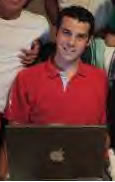 So I began to read this blog, a phenomenal account of strength and love, the fortitude of a family in faith dealing with the worst fortune. The whole family got involved with the posting especially as AJ got weaker and could not always record the account of the day or event himself.
AJ continued living fully every day and continued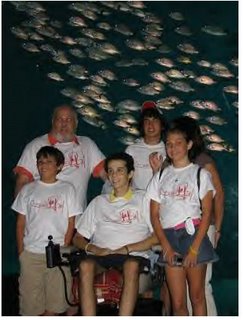
his faith journey with authenticity and with energy for doing good. And he continued his adventures, visiting an aquarium when he was no longer able to pursue more exotic interests like parasailing. Even in his last days, he initiated a partially blog-driven campaign to raise money for the hospital that served his needs during his treatment. The last day of his life it was announced that the fund had reached a milestone of $50,000.

We blogreaders knew that today's post was inevitable and that it would not be written by AJ, this strong friend who had come alive to us on the pages of a blog, and who had, through it, encouraged us to a fuller kind of living. AJ's Dad said,
"We felt sorrow, pain, relief, joy, doubt, amazement, comfort, calm, anxiety, anguish, mercy, and other emotions that words can't describe just yet. So, I come to my familar place and time to share with all of you. I am not sure how long I will need to do this."
Publication is a communication, a public form of communication. Blogging allows us to publish. AJ's life deserved to be published, for he was a fine young man and gave beautifully to his family, friends, and those around him. I'm glad he published that spirit to those of us in the etherworld also. We, too, have benefited from knowing him.
Blogging, I'm sure, met a particular need for AJ and family. It meets needs for all of us blogging souls. We ship our thoughts out bottled up in electrons and corked with a .com, and we have said something, whether useful or not. Certainly, AJ didn't waste a word.
Domine, Jesu Christe, Rex gloriae
libera animas omniurn fidelium. . .
repraesentet eas in lucem sanctam quam olim
Abrahae promisisti et semini ejus.
Betsy
I began blogging because I am interested in technology and publication. I am a manager of a publications department and was scheduled to do a workshop on using the tools of the 21st century for communication in the classroom. So I began my blog. And I began reading blogs. Meanwhile, I heard about AJ. He is the son of a friend of a friend. He had cancer and the prognosis was not good. And he was posting to a blog called Care Pages.
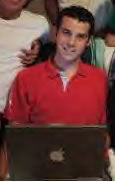 So I began to read this blog, a phenomenal account of strength and love, the fortitude of a family in faith dealing with the worst fortune. The whole family got involved with the posting especially as AJ got weaker and could not always record the account of the day or event himself.
AJ continued living fully every day and continued

his faith journey with authenticity and with energy for doing good. And he continued his adventures, visiting an aquarium when he was no longer able to pursue more exotic interests like parasailing. Even in his last days, he initiated a partially blog-driven campaign to raise money for the hospital that served his needs during his treatment. The last day of his life it was announced that the fund had reached a milestone of $50,000.

We blogreaders knew that today's post was inevitable and that it would not be written by AJ, this strong friend who had come alive to us on the pages of a blog, and who had, through it, encouraged us to a fuller kind of living. AJ's Dad said,
"We felt sorrow, pain, relief, joy, doubt, amazement, comfort, calm, anxiety, anguish, mercy, and other emotions that words can't describe just yet. So, I come to my familar place and time to share with all of you. I am not sure how long I will need to do this."
Publication is a communication, a public form of communication. Blogging allows us to publish. AJ's life deserved to be published, for he was a fine young man and gave beautifully to his family, friends, and those around him. I'm glad he published that spirit to those of us in the etherworld also. We, too, have benefited from knowing him.
Blogging, I'm sure, met a particular need for AJ and family. It meets needs for all of us blogging souls. We ship our thoughts out bottled up in electrons and corked with a .com, and we have said something, whether useful or not. Certainly, AJ didn't waste a word.
Domine, Jesu Christe, Rex gloriae
libera animas omniurn fidelium. . .
repraesentet eas in lucem sanctam quam olim
Abrahae promisisti et semini ejus.
Betsy
Wednesday, September 20, 2006
Preface for a New Creed--A Survey
Dear Theologians,
I am getting ready to write a new creed. I promised my daughter that I would. Perhaps you could give me a jump start. This Scripture is one that is a bit of a driver for my thinking. How about you?
"We know that we have passed from death to life because we love one another. Whoever does not love abides in death. All who hate a brother or sister are murderers, and you know that murderers do not have eternal life abiding in them. We know love by this, that [Jesus] laid down his life for us - and we ought to lay down our lives for one another. How does God's love abide in anyone who has the world's goods and sees a brother or sister in need and yet refuses help? Little children, let us love, not in word or speech, but in truth and action."
- 1 John 3:14-18
OK. Here is the survey question.
What do you consider to be an important, primary faith statement, not present in current credal statements that should be included in those statements?
Reminder:
Apostle's Creed
Nicene Creed
Athanasian Creed
Steve Martin Creed
Thanks for any ideas you can contribute.
Betsy
Tuesday, September 12, 2006
Words, Words, Words
Dear Anne G G,
Take up as much of my cyberspace as possible! I will answer in this new post because the other post that I'm currently working on is taking too long to develop. It's kind of about being a Northerner living in the South. (Touchy stuff.) Here is my response to your response.
1) Your father quotes Meatloaf saying, "We can talk all night but it ain't gettin' us nowhere." I say that a diminished 5th chord may, in fact, communicate a precise "something" more universally than a word. But for ideas of a certain sort, we are left with only words to build concepts and, no matter how flawed, they are the tools of humanity. But, does that mean, that God can foist something upon these puny tools that we cannot? If He/She can, then I would say with Max of the Princess Bride, "It would take a miracle," at every single reading, which is possible given that we are talking about God. But, if that is so, why don't we all receive these words in identical ways. We surely do not.
The miracle may be that we seem to be able to sustain some remnant of the original concept, a common range of meaning. I refer to my survey on goodness. I find it revealing that people find common themes of understanding and that those understandings are persistent. Nonetheless, I would maintain that slippage occurs.
Oh dear, I'm out of writing time and I only covered one of your three questions. Well, to misquote the original ground round musical composition, "One out of three ain't bad."
I will return to the question of Christian Exclusivism in my next post, because it is indeed, and should be I think, a hot button or at least hot fodder for thinking.
I love talking and thinking with you, in spite of the inadequacy of language.
XOX
MOM
Saturday, September 09, 2006
The Heart of Christianity (Marcus Borg)--Chapter 2--A Study
Dear Stevie et al,
I'm dragging through this book very slowly. Perhaps I'll ending up posting per chapter and long after your group has moved through the material. Oh well. I'll try not to be long winded this time.
As I read through this I am immediately reactionary. It comes from a life of reaction I suppose. Borg too is reactionary, but he is fighting it and so I will too. His Returning to Faith as Believing at the end of Chapter 2, shows that he is, indeed, fighting his own reactions.
I appreciate the four words that he presents as faith definitions: Assensus-Belief, Fiducia-Trust, Fidelitas-Fidelity or -Allegiance, and Visio-Vision. I think these are good, though I thought that the vision concept actually goes outside the bounds of the freight that faith is typically asked to carry.
Here is what I liked about what is said. Faith is not just a list of beliefs for us to tuck away in our heads and pull out whenever we are asked for our statement of faith. First of all, we are asked to do that very infrequently. Second, this list rarely helps us live, really live our lives.
Borg at first seems to say that our Biblical Credo is not much more important than a Steve Martin schtick, but he redeems his thinking later in the chapter. First he says, "Does God really care what is in our heads?" He answers that question with a "No." That was uncomfortable for me. Later though, he fesses up and says, "We cannot give our heart to something that our mind rejects." And lets face it, he is writing a book to convince people via their heads to think/believe a certain way about Christianity, ergo he must care about belief as "assensus," belief as rational content.
I have long accepted an image of my faith that fits his description under Faith as Fiducia (Trust). It is linked to Soren Kierkegaard and the expression he introduced in the book The Concept of Anxiety. Borg talks about Soren's floating metaphor. The metaphor I relate to is the Leap of Faith. This is the point of existential engagement when, not knowing for sure in the typical rational, empirical sense of knowing for sure, not knowing comprehensively because our minds fall short, we study and forget, we have only about 80 years to work through the material, we don't get it, when that. . . we take a leap into the not sure, ready to free fall in our belief, our trust.
Part of that Leap is not knowing, but knowing that we will choose this, nonetheless. That is how I feel about the teachings of Christ. I choose this. I affirm this. I say "Yes" to this kind of loving, this kind of good, this kind of justice, this kind of living. As far as my head can go with this, I say "Yes" and then my heart takes over and leaps to the arms of Jesus.
One last thing, Borg's description of modern use of creed reminds me in an eerie way of the last scene of the initial Battlestar Galactica movie, when the commander describes Earth, which he does not believe exists, and convinces everyone that it does, ending with a raucous, "So say we all, so say we all, so say we all."
I have been for some time been working on a new credal statement, one that revamps the worn and inadequate one we currently use, replacing the term "Father Almightly" with "Creator All Loving", etc. The creeds need work not vacuous recitation.
I love you,
Mom
XOX
Friday, September 08, 2006
Tuesday, September 05, 2006
Out of the Debris
Dear Rukshani Weerasooriya,
I have enjoyed (is that the right word? I don't think so.) reading your poetry. My sister Debby gave your book, Salt to me for a few days. It is very good. Out of the Debris is very touching. On the WriteClique.net site you have titled the work Tsunami. I understand that, but I prefer the title you used in Salt for I pictured so many places, Pakistan, New Orleans, Iraq, and Sri Lanka.
I appreciated the words of Lance Corporal also:
"I'm tired
It's midnight.
I'm propped up
Against the mud
Like a cannon gun,
To fight
The battles you
Criticize
From behind
Your trenches
Of ink.
My blood.
Your right.
That's not so hard
To rationalise,
When I'm out here
And you're safe in there.
Your sovereignty
Well intact.
Our skies are not the same.
Mine and yours.
Mine is black.
You've taken my stars
Away.
Away.
To stud
Your darkness
With my light.
I was like you
When I signed my name.
Just a father,
A son,
A lover. A friend.
But today
I am a coin in your
Treasury of blood.
Cold, worthless blood
You so casually
Spend."
More people need to be able to read your thoughts. But I couldn't even buy this on Amazon.
Email: pp144@isb.paknet.com isn't enough of a marketing plan for you. Are you working on it?
Betsy
Saturday, September 02, 2006
The Heart of Christianity (Marcus Borg)--Part I--A Study
Dear Stevie (and Your Study Group),
I have started the book. I thought I might throw a little information at you that would be like background. Let's start with the terms Borg gives for two kinds of Christianity, "Earlier" and "Emerging." I think he is trying to get at something here, but those choices, though they do accomplish one thing that he is aiming at, fail at another.
1. I think he is trying to do plain talk. He doesn't use the technical terminology. He is moving away from terms that carry unnecessary baggage with them, i.e. fundamentalism, evangelicalism, liberalism, etc. He succeeds here.
2. However, he chooses terms with their own built-in baggage system and does so inaccurately. For instance, liberalism in it's most prominent current form does predate fundamentalism in its current form and predates evangelicalism by a long shot. Therefore to identify what he defines as earlier with the term earlier, is not intrinsically accurate. Old line liberalism is hardly an "emerging" theology. It has been around since the days of Darwin. (Darwin was not operating in a theological vacuum. I'm not saying that Darwin was primarily speaking of theological things, just that he was not alone in his willingness to question theological suppositions.)
So, I don't like his terms because they mislead us.
Next, let's talk about verbal plenary inspiration. Again, Borg avoids the tech terms. He calls this literal-factual.
"Verbal plenary inerrancy means that one believes all of the Bible is inspired down to the very words of Scripture. The belief in non-verbal plenary inerrancy would mean that one believes all the Bible is inspired, but only as to its concepts—not all the words—meaning that it might contain historical errors."
Conservative Bible scholars would immediately defend "verbal" inspiration, claiming that concepts are built upon words, so you can't give up the God-source for the very words of Scripture. Less conservative folks, me included, would say, yes, but words are, after all, only words. They do not remain stable, meaning slips out from under them.
(Eg What did William Butler Yeats mean when he wrote:
“I have heard that hysterical women say
They are sick of the palette and fiddle-bow.
Of poets that are always gay,”
Not a comment on sexual identity, but. . . )
Words do not have the power to remain verbally inspired even if they want to, even if God wants them to. Not in the world we live in.
At any rate, the whole inspiration discussion is an important one, but not one that you can engage in properly without the whole history. I’m not saying he is doing an unfair thing. Just that you, as a “hunter” need to acknowledge that there is more, much more, to be said on this subject.
It wasn’t until the second century that people started talking about such a thing as verbal, plenary inspiration. Augustine in the fourth century probably tackled the subject more completely, but that was at a time when the content of the Canon of Scripture was still under debate. Augustine included in his Canon a book or two that we don’t include. Groups of church leaders got together to argue vehemently about this stuff, back then. The fact that we are discussing it now should not be hard to believe. However, we should not draw too many conclusions without doing all of our homework.
Borg has done some homework, but his opinions come from a particular perspective. It is a different one from mine. I have done some homework too. You have a perspective. You have done some homework. That doesn’t mean we can’t learn from each other. And it doesn’t mean we don’t have more homework to do.
This is getting long. But, I want to include comments on what we discussed on the phone.
Borg lists 3 things as specific issues that divide the contemporary church.
1. Ordination of women
2. Gays and lesbians
3. Christian exclusivism
The first two are cultural hot buttons. They are important. You know your feminist mother is very active in the cause of the first issue. I am doing my homework in the area of the second. But the third is in a totally different category. Putting the third in the list with the first two and only those two minimizes the qualitative difference of that issue.
I’m not saying that it is out of line to discuss the third.
A realtor friend once said to me, “everything I own is for sale, if the price is right.” For me, everything I believe is up for discussion, if the thinking is clear enough.
However, this list is not clear thinking. It is using hot buttons to introduce a categorically different line of discussion. That is intellectual manipulation. Don’t be fooled by it. Borg should know better. Again, I’m not saying he doesn’t have important things to say.
More later,
I love you.
MOM
XOX
PS. I meant to give you some background on Borg and Spong, who he refers to. I’ll do that later. But the connection between Borg and the Jesus Seminar is key to understanding him. This is part of the “Quest for the historical Jesus” movement, driven by the idea that you can take the Gospels and figure out which statement Jesus actually made and which he did not make. Of course there is very little historical information about Jesus outside of the scriptural texts. Just a quick reference to him in the works of Josephus. That’s about it. Obviously, the work of the Jesus Seminar is pretty speculative. I think they would like it to be authoritative and Borg’s more popularized books (with their non-technical prose) are an attempt to present the work of the Seminar to the “common folk.”
Saturday, August 26, 2006
Doubting I'll Win, Place, or Even Show
Dear Horses of the Rickety Fence,
I'm a little frustrated. The bruise has gone, but the situation remains the same. The field is large and you are hard to work with. All I have is a cinderella license in horsing around and perhaps I'm not up to this challenge.
Three horses, a five acre field, no halters, and just me with a pocket of treats and a switch. Really, what do I think I can accomplish?
Cleopatra, as lovely as your name. Why are you so afraid and reclusive. I kneel before you, keeping low and averting my eyes. You occasionally circle, examining, determining whether, not I, but my apple, or carrot, or crunchy nugget is worth you apprehension. Sometimes it is. And I am swept by a wave of achievement--"I touched your muzzle this time!" Or not, I moved too quickly, and you are gone. Lovely Cleopatra, why should you come to me?
Chase, you old fellow. Perhaps too old to fool with. You are just in the way. You are not even endearing with your constant but irritating presence. Yet, maybe you have something left in you to find. Meanwhile my purpose is to set you aside in hopes of reaching the others.
Cyrus, my dear violent one. Someday you may actually hurt me with not just a nip but a real bite, or not just a rush but a strike. Then I shall regret that I ever met you. Meanwhile, you challenge me and I challenge you back. We are in a dance and if I never return to you in your field, it will be because I have fallen into my fear, or you have pushed me there.
Betsy
Trainer, Novice 2nd Class
Thursday, August 24, 2006
Not a Hail, Heil, or Hello
Dear Blogger,
“Hail Satan”, you said. And lightly. And I do understand now that you were quoting a song that offers no such welcome. But how can a page bear those words? How can your voice sustain them? My ears just can’t stand it. The words tear through already stretched drums and break them in one blast.
Of course, it’s not the fault of the last straw when the back of the camel pops. Not the fault of the last brick when the pile topples. But my ears have heard too much. They’ve heard the roar of televised tumbling skyscrapers, the explosion of missiles (my missiles, my own American made, not imported from Taiwan, missiles) exploding in ancient cities, the crunch of bulldozers, Caterpillars, over homes and single bodies standing, the wail of mothers and fathers, not just one, not just one nation’s, seeking their lost daughters and sons, hoarsely crying, lifting rubble, not in hope but desperation.
My ears hear mad shouts of fault, fault, fault, like the echo of some ghostly court, but it is no game, just one terrorist liability after another, shaking the world at some level not measurable on the moral Richter scale.
And if words mean anything, which I will grant that they may not, but if they do, then this is what the word Satan means, this holocaust of craziness, this pogrom of power wielding it’s weight for ill. Enough. Too much. Even this slight welcome is more than my world can stand.
But of course you did not mean this. It is not what you said, it’s just what I heard.
Betsy
Monday, August 21, 2006
Requiem
Dear Angie and Tommy,
The saliva is slowly accumulating in my mouth but I can’t swallow. When I notice my cheeks, they are wet and my headache is not gone, in spite of double doses of Ibuprophen. If I were to go to the Hallmark store and would search for a card, it would not be for the most perfect one, but for the most imperfect, the black and gray and stained and torn one, with no words at all, for there are no words for this. No sympathy can move into this great pit of despairing ache. If there is something that may enter into this grief, it certainly is not words.
Yet, words are our first tools, the ones we so rely upon for almost everything. Words, the definers of humanity, right up there with opposable thumbs in lifting us above the animals, are simply inadequate for this task, which could, I believe, be achieved better by a six week old puppy that could at least crawl warmly into your laps to offer fur for stroking and eyes to look into without having to glance away under the weight of meaning.
So I offer nothing really. What would the right card say? "In this darkest night, there is the light of hope." Or, "May there be comfort in knowing that the memories will live in our hearts forever." Yes, but this is more than can be borne now. Now, the cards should only say, "Would you like a glass of water", or "I fed the dog last night and I’m taking the parakeet to my house for a few days."
This morning I listened to the chorale that sits behind Cantata 140 by Bach. This spoke a little of what my heart is feeling. It said in the notation of melody and harmony, just a little that seemed right. The words are in German so they do not interfere, though I do know that the scriptural text is Matthew 25; not inappropos. Around about the fourth line of this, the harmonies say for just a few bars, what I would like to say.
And maybe tomorrow there will be words. And after that some hope and memories.
With my love and many tears,
Betsy
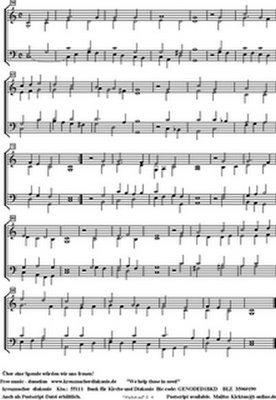
The saliva is slowly accumulating in my mouth but I can’t swallow. When I notice my cheeks, they are wet and my headache is not gone, in spite of double doses of Ibuprophen. If I were to go to the Hallmark store and would search for a card, it would not be for the most perfect one, but for the most imperfect, the black and gray and stained and torn one, with no words at all, for there are no words for this. No sympathy can move into this great pit of despairing ache. If there is something that may enter into this grief, it certainly is not words.
Yet, words are our first tools, the ones we so rely upon for almost everything. Words, the definers of humanity, right up there with opposable thumbs in lifting us above the animals, are simply inadequate for this task, which could, I believe, be achieved better by a six week old puppy that could at least crawl warmly into your laps to offer fur for stroking and eyes to look into without having to glance away under the weight of meaning.
So I offer nothing really. What would the right card say? "In this darkest night, there is the light of hope." Or, "May there be comfort in knowing that the memories will live in our hearts forever." Yes, but this is more than can be borne now. Now, the cards should only say, "Would you like a glass of water", or "I fed the dog last night and I’m taking the parakeet to my house for a few days."
This morning I listened to the chorale that sits behind Cantata 140 by Bach. This spoke a little of what my heart is feeling. It said in the notation of melody and harmony, just a little that seemed right. The words are in German so they do not interfere, though I do know that the scriptural text is Matthew 25; not inappropos. Around about the fourth line of this, the harmonies say for just a few bars, what I would like to say.
And maybe tomorrow there will be words. And after that some hope and memories.
With my love and many tears,
Betsy

Friday, August 18, 2006
Techno-Socialist Manifesto
Dear W.
Good news! He is available, and just in time for you to set up the most powerful and important position in the federal government. The Secretary of Technology, Bill Gates, will define the parameters himself. You will not find it needful to explain the position to Bill. He will be able to do that himself. You will not have to apologize for his actions, for we Americans, long ago, learned not to mess with this master of our world.
Besides, Bill has been Secretary of Technology for a long time now, he might as well have the title. Now, I’m not saying that there won’t have to be changes, and Bill will have to get on board, but I think he can be convinced. I believe he has already moved into that stage of life called “generativity.” You will only be feeding the monster for him.
Here is the plan. All hardware and operating system software becomes nationalized. In addition, certain use-critical software should be nationalized too, word processing, image manipulation, email, might as well include blogging. Then Bill oversees this.
We need to get MIT onboard and have them get those $100.00 laptops finished. Here’s the plan. Every boy and girl in the country gets one of these every couple of years. No questions asked. Laptops have to be a given. They are the new #2 pencil.
When I first learned to use a computer, this 20-something girl, Karyn, explained the internet to me as a superhighway for information. That is when I got this idea. Transportation systems are not private. Highways can’t be built hodge-podge by local companies and neighborhood volunteers. They are critical to national life. The feds and states take over. Well, what is more important to our national life today than the information superhighway. Nothing, my friend.
It is time for you to pay attention to an issue that will draw more flak than the war in Iraq. This is it. It is also something that could raise your status in the pantheon of presidents. You want to be remembered for something. You don’t want to be thrown in the waste can of presidents with Calvin Coolidge and (who was that guy?) Benjamin Harrison. This could put you on the presidential map. They might even bring in more granite for a new face in South Dakota. You would join the ranks of the lofty--George Washington, Abraham Lincoln, and George W. There could be a new holiday, The Bush/Gates Technology day.
Think about it. You don’t have much more time to pull this off!
Sincerely,
Betsy
P.S. Yes, I am available to act as Undersecretary for Download Management
Tuesday, August 15, 2006
Friday, August 11, 2006
Online Petition Requesting UN to Work for Ceasefire
Dear Ricken Patel of the Ceasefire Campaign,
In accordance with your request, I am posting this link to my blog.
"As the awful civilian death toll rises above 1000 in Lebanon and Israel, people around the world are seeking a place to voice their frustration and concern. Over the last 4 days, 200,000 people from 148 countries have signed the ceasefire petition. At this rate, we could soon be the largest global online petition in history."
Online Ceasefire Petition
With hope (almost),
Betsy
Scent of a Truth
Dearest Son,
I have been thinking about our last conversation. We, I think, did achieve a level of interaction that is not always attained. I wish we had more time together for such talks without interruption. But even our phones provided interruption for us, now that I think about it. We would say something wholly profound, there would be a pregnant pause, then a tin-man’s voice with news of the disconnection, or worse than that, a period of being unsure and the hopeful but prescient “can you hear me now?”
What is truth and how can we know it? You could study for a degree in philosophy, but I fear that is not how you will find an answer to this question. You will find more good questions and perspectives if you want to do that, but not an answer. For this answer, you do not study; you stalk.
When your grandparents were much younger (I was in third grade), they decided to leave the Lutheran church that they attended. In those days, or should I say, in their lives, leaving this church was like leaving home. They had attended that church since their infancy. Their parents, both sets, were part of that church, brother, friends, aunts, friends of parents. They had sung in the choir, participated in the services, taught Sunday school, led in vacation Bible school. They were respected there, for Pete’s sake. But now, in their soulish stalking, they felt they should leave that church and find a different one.
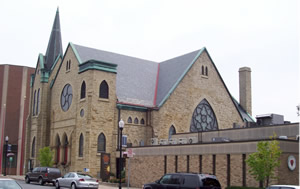
I don’t remember all the machinations. I do remember the day the trigger was pulled, though even that is vague. A visiting minister came to the pulpit of the church in this conservative old town. He, probably a recent graduate of some forward-looking seminary, was armed with a sermon whose punch line was, “God is a grunt.” I do remember that, not from hearing him say it, but from my parents’ reactions and discussions afterward, for hours, in the foyer of the fellowship hall, not with this visiting wraith, who, I am sure was whisked away for dinner at Taylor’s Restaurant, but with one friend and then another who could not, or could, understand my parents’ sense of the “last straw” in regard to this sermon, and a church that seemed to be slipping away from “sound moorings.”
Little did my parents know, that the young minister was probably not being heretical. I doubt that he was trying to communicate any Nietzchesque thoughts about the non-existence or deadness of God, but was more likely trying to suggest the fallibility of human understanding and our inability to see spiritual truths in any way but obliquely. He may have been trying to point out that language, our greatest human invention, is flawed, and little more than a series of grunts and clicks designed to put outward form, however, inadequate, to our inner lives.
Nonetheless, my parents did leave that church in the heat and ardor of their spiritual pursuit.
When I was in college, studying social work, I had my first experience with a teacher who designed his courses in such a way that everything related to process rather than conclusion. I was adrift. I could not figure this out, quick as I was to excel at learning in a rote and prescribed manner. This was a new thing and I was not ready. “What is the answer?” I wanted to know.
I’m still like that I suppose, and I’m like my mother enough to get angry in the face of those issues that, to me, are the lines in the sand that I will not step over.
But let’s get back to your hunt, for you too, want to know, want to find. I cannot tell you where to find your prey, or how exactly to do it. I will tell you how I began and that you must be ready for this search to be a process, not one with the answers laid out before you. Truth is elusive, not because of the inadequacy of truth, I think, but because of the limitation of the human being and mind. Of course there are truths that are less elusive. 2+2=4 appears to be fairly solid. Falling bodies accelerate at 32 ft per sec/per sec until they reach maximum velocity of about 135 miles per hour for a human body (hopefully equipped with parachute and rip cord to bring that speed down to 12 miles per hour prior to impact.)
But the truths we are talking about. Those that intersect with the spiritual realm are quite vaporous at times. I say vaporous, not non-existent. So you start, where you can start. You go into the woods. And here is how you do that. You set up the presuppositions. You say, “if God exists, then. . .” Later, you say, “if God does not exist, then. . .” As you study the conclusions you match them with your actual observations of the world. Is the world, as you know it more like the world you would expect if there were a God, than if there were not a God?
You know already what I have concluded, generally, as a result of this exercise in my life. But you must pursue these thoughts for yourself, not in a vacuum but as honestly as possible. Not in a vacuum, because you do have many good resources at your disposal. I recommend seeking out the advice of good people. What kind of people are good people? Well, I happen to have a survey available for you to consider if you need to identify their characteristics.
I was listening to an interview with Toni Morrison the other day. On the subject of good and evil she said, “Being good is more complicated an idea than being or doing evil. Evil gets more play, but evil is a sham, screaming like a petulant child.” That is one of the kinds of clues you look for in the course of your search. Look for patterns related to good and truth. Don’t just look to smart people. Smart is a grunt. Look for people who say stupid things but who know how to do good. That is a track. Look for love and lovers and people who can love without reward. That is a fingerprint. Look for that which is not power driven or materialist driven, that is scat, and you just might be onto something; you’re on the trail.
I love you son. Do not tire of this even when it is deeper than you can go and further than you can see.
XOX
MOM
I have been thinking about our last conversation. We, I think, did achieve a level of interaction that is not always attained. I wish we had more time together for such talks without interruption. But even our phones provided interruption for us, now that I think about it. We would say something wholly profound, there would be a pregnant pause, then a tin-man’s voice with news of the disconnection, or worse than that, a period of being unsure and the hopeful but prescient “can you hear me now?”
What is truth and how can we know it? You could study for a degree in philosophy, but I fear that is not how you will find an answer to this question. You will find more good questions and perspectives if you want to do that, but not an answer. For this answer, you do not study; you stalk.
When your grandparents were much younger (I was in third grade), they decided to leave the Lutheran church that they attended. In those days, or should I say, in their lives, leaving this church was like leaving home. They had attended that church since their infancy. Their parents, both sets, were part of that church, brother, friends, aunts, friends of parents. They had sung in the choir, participated in the services, taught Sunday school, led in vacation Bible school. They were respected there, for Pete’s sake. But now, in their soulish stalking, they felt they should leave that church and find a different one.

I don’t remember all the machinations. I do remember the day the trigger was pulled, though even that is vague. A visiting minister came to the pulpit of the church in this conservative old town. He, probably a recent graduate of some forward-looking seminary, was armed with a sermon whose punch line was, “God is a grunt.” I do remember that, not from hearing him say it, but from my parents’ reactions and discussions afterward, for hours, in the foyer of the fellowship hall, not with this visiting wraith, who, I am sure was whisked away for dinner at Taylor’s Restaurant, but with one friend and then another who could not, or could, understand my parents’ sense of the “last straw” in regard to this sermon, and a church that seemed to be slipping away from “sound moorings.”
Little did my parents know, that the young minister was probably not being heretical. I doubt that he was trying to communicate any Nietzchesque thoughts about the non-existence or deadness of God, but was more likely trying to suggest the fallibility of human understanding and our inability to see spiritual truths in any way but obliquely. He may have been trying to point out that language, our greatest human invention, is flawed, and little more than a series of grunts and clicks designed to put outward form, however, inadequate, to our inner lives.
Nonetheless, my parents did leave that church in the heat and ardor of their spiritual pursuit.
When I was in college, studying social work, I had my first experience with a teacher who designed his courses in such a way that everything related to process rather than conclusion. I was adrift. I could not figure this out, quick as I was to excel at learning in a rote and prescribed manner. This was a new thing and I was not ready. “What is the answer?” I wanted to know.
I’m still like that I suppose, and I’m like my mother enough to get angry in the face of those issues that, to me, are the lines in the sand that I will not step over.
But let’s get back to your hunt, for you too, want to know, want to find. I cannot tell you where to find your prey, or how exactly to do it. I will tell you how I began and that you must be ready for this search to be a process, not one with the answers laid out before you. Truth is elusive, not because of the inadequacy of truth, I think, but because of the limitation of the human being and mind. Of course there are truths that are less elusive. 2+2=4 appears to be fairly solid. Falling bodies accelerate at 32 ft per sec/per sec until they reach maximum velocity of about 135 miles per hour for a human body (hopefully equipped with parachute and rip cord to bring that speed down to 12 miles per hour prior to impact.)
But the truths we are talking about. Those that intersect with the spiritual realm are quite vaporous at times. I say vaporous, not non-existent. So you start, where you can start. You go into the woods. And here is how you do that. You set up the presuppositions. You say, “if God exists, then. . .” Later, you say, “if God does not exist, then. . .” As you study the conclusions you match them with your actual observations of the world. Is the world, as you know it more like the world you would expect if there were a God, than if there were not a God?
You know already what I have concluded, generally, as a result of this exercise in my life. But you must pursue these thoughts for yourself, not in a vacuum but as honestly as possible. Not in a vacuum, because you do have many good resources at your disposal. I recommend seeking out the advice of good people. What kind of people are good people? Well, I happen to have a survey available for you to consider if you need to identify their characteristics.
I was listening to an interview with Toni Morrison the other day. On the subject of good and evil she said, “Being good is more complicated an idea than being or doing evil. Evil gets more play, but evil is a sham, screaming like a petulant child.” That is one of the kinds of clues you look for in the course of your search. Look for patterns related to good and truth. Don’t just look to smart people. Smart is a grunt. Look for people who say stupid things but who know how to do good. That is a track. Look for love and lovers and people who can love without reward. That is a fingerprint. Look for that which is not power driven or materialist driven, that is scat, and you just might be onto something; you’re on the trail.
I love you son. Do not tire of this even when it is deeper than you can go and further than you can see.
XOX
MOM
Sunday, August 06, 2006
Lightening Bugs from the Porch
Dear Eudora Welty,
I told my children about sex in front of the rabbit pen. The bunnies were doing what bunnies do. The older children sensed the import of it all, but the youngest claims to this day I didn't tell her at all. Telling these top secrets at too young an age can, at times, result only in satisfaction to the heart of parents that the deed is done.
When my daughter told me in her late teens that I had failed as a mother, I immediately launched into an explication of the subject right there at the dinner table. The reaction: "Stop, stop. You are too late now." I received a similar reaction from my married children when I flew a trial balloon with them to test the wording for my next survey question. "What, do you think, is the most important element of sexual practice in the lives of committed partners?" This time the reaction was just, "STOP. STOP." (Oh, the life of the pure researcher is certainly a daunting one.)

I'm bringing this up with you because I'm reading your musings in a book titled, One Writer's Beginnings. I'm reading what, apparently, was originally a lecture entitled, Listening. You say,
"Ever since I was first read to, then started reading to myself, there has never been a line read that I didn't hear. As my eyes followed the sentence, a voice was saying it silently to me. It isn't my mother's voice, or the voice of any person I can identify, certainly not my own. It is human, but inward, and it is inwardly that I listen to it. It is to me the voice of the story or the poem itself. The cadence, whatever it is that asks you to believe, the feeling that resides in the printed work, reaches me through the reader-voice."
You ask whether others hear that voice too. Yes, I do. And sometimes I must read aloud to hear the intonations in unison and test the sound to make sure that I am hearing it right. I hear it even more when I am writing. I think that is why I've started to blog, to get the sound out of my head and onto the screen. I write it down so I'll have it for later, so I can check it and make sure it is true. If it stays inside my head, I can't, as you say, "begin the process of testing it for truth."
When you interrupted your mother as she broached the subject of sex, and instead chose to talk of lightening bugs, do you think you weren't ready to test those words for truth? Perhaps, she would have done better to read the words from a book so the voice telling you those truths would have been one other than your mother's. There are words that mothers just aren't allowed to say because testing a mother's words for truth is almost a sacrilege. It is better to say, "Stop, stop. Look at the lightening bugs."
Best,
Betsy DeGeorge
P.S. I certainly hope your read my last letter to Toni Morrison. I haven't finished with you on that subject yet!
I told my children about sex in front of the rabbit pen. The bunnies were doing what bunnies do. The older children sensed the import of it all, but the youngest claims to this day I didn't tell her at all. Telling these top secrets at too young an age can, at times, result only in satisfaction to the heart of parents that the deed is done.
When my daughter told me in her late teens that I had failed as a mother, I immediately launched into an explication of the subject right there at the dinner table. The reaction: "Stop, stop. You are too late now." I received a similar reaction from my married children when I flew a trial balloon with them to test the wording for my next survey question. "What, do you think, is the most important element of sexual practice in the lives of committed partners?" This time the reaction was just, "STOP. STOP." (Oh, the life of the pure researcher is certainly a daunting one.)

I'm bringing this up with you because I'm reading your musings in a book titled, One Writer's Beginnings. I'm reading what, apparently, was originally a lecture entitled, Listening. You say,
"Ever since I was first read to, then started reading to myself, there has never been a line read that I didn't hear. As my eyes followed the sentence, a voice was saying it silently to me. It isn't my mother's voice, or the voice of any person I can identify, certainly not my own. It is human, but inward, and it is inwardly that I listen to it. It is to me the voice of the story or the poem itself. The cadence, whatever it is that asks you to believe, the feeling that resides in the printed work, reaches me through the reader-voice."
You ask whether others hear that voice too. Yes, I do. And sometimes I must read aloud to hear the intonations in unison and test the sound to make sure that I am hearing it right. I hear it even more when I am writing. I think that is why I've started to blog, to get the sound out of my head and onto the screen. I write it down so I'll have it for later, so I can check it and make sure it is true. If it stays inside my head, I can't, as you say, "begin the process of testing it for truth."
When you interrupted your mother as she broached the subject of sex, and instead chose to talk of lightening bugs, do you think you weren't ready to test those words for truth? Perhaps, she would have done better to read the words from a book so the voice telling you those truths would have been one other than your mother's. There are words that mothers just aren't allowed to say because testing a mother's words for truth is almost a sacrilege. It is better to say, "Stop, stop. Look at the lightening bugs."
Best,
Betsy DeGeorge
P.S. I certainly hope your read my last letter to Toni Morrison. I haven't finished with you on that subject yet!
Saturday, July 29, 2006
Must Toni Morrison Crusade
Dear Toni Morrison,
Somewhere near the end of three hours of interview with Toni Morrison on C-Span's In Depth, I identified your answer to the question I have been asking authors. Must the author crusade?
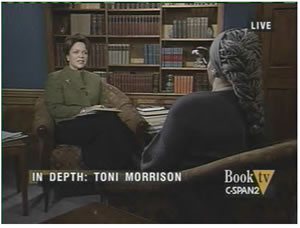
Ok. That is not exactly how Sam Saleem asked his question, but it was close and followed some other interesting discussion on morality and the necessity of negotiating rather than dictating a moral position.
Sam asked, "How have you been able to balance the role of spokesperson on racial issues on the one hand and an artist on the other."
You said, "Those two go together for me. I don't find them different at all. I think that art should be political, representative, and absolutely and irrevocably beautiful at the same time."
There it is, I said in my mind. Meanwhile, I tucked away my own personal 15 minutes of fame in my file box. My 15 took place today as I basked in the limelight of being on the cover of the Knoxville Voice, along with my Women in Black cohorts under a headline that, well, didn't make any sense at all. This time, though, I wasn't the editor so it wasn't my fault, I was, instead, one of the cover girls (and guys).

We may not be absolutely and irrevocably beautiful, but we are political, representative and speaking for a just peace.
Thanks for your thoughts. I will write to you later about your comments on morality. The discussion was fascinating.
Betsy
Somewhere near the end of three hours of interview with Toni Morrison on C-Span's In Depth, I identified your answer to the question I have been asking authors. Must the author crusade?
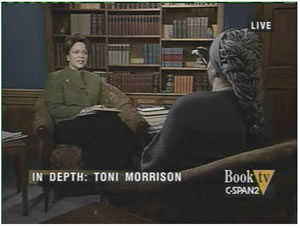
Ok. That is not exactly how Sam Saleem asked his question, but it was close and followed some other interesting discussion on morality and the necessity of negotiating rather than dictating a moral position.
Sam asked, "How have you been able to balance the role of spokesperson on racial issues on the one hand and an artist on the other."
You said, "Those two go together for me. I don't find them different at all. I think that art should be political, representative, and absolutely and irrevocably beautiful at the same time."
There it is, I said in my mind. Meanwhile, I tucked away my own personal 15 minutes of fame in my file box. My 15 took place today as I basked in the limelight of being on the cover of the Knoxville Voice, along with my Women in Black cohorts under a headline that, well, didn't make any sense at all. This time, though, I wasn't the editor so it wasn't my fault, I was, instead, one of the cover girls (and guys).

We may not be absolutely and irrevocably beautiful, but we are political, representative and speaking for a just peace.
Thanks for your thoughts. I will write to you later about your comments on morality. The discussion was fascinating.
Betsy
Tuesday, July 25, 2006
While Shepherds Watched Their Flocks By Night
Dear Shepherd types,
It was when my friend began to describe to me how she expressed the bladder of her paraplegic dog when I actually realized that I do not love my animals. And, on top of that, I am glad.
Perhaps you jump to the conclusion that I am squemish, but I'm not, (well, maybe a little.) Or perhaps you think I draw the line at expressing bladders, but I don't. Baa-aa-aab, our pet lamb needed some "expression" once when he got a ureter infection. We did that, or I should say my husband did, under cover of evening lest the neighbors come to believe that those old tales about sheep herders were being acted out right next door. (By the way, why did they choose sheep herding rather than cattle rounding as the occupation for Enis and Jack?)
But honestly I've gotten hardened to these things since having male horses. The responsibility of grabbing a horse penis and cleaning it's sheath has got to be the farmlife equivalent of taking a good stiff drink, (no pun intended.) And I do know that caring for animals simply demands the gross at times. It comes with the territory.
I've had dogs that I liked lots. Annie was particularly sweet. She was cooperative and gentle. She was dog-loyal, that spirit of the domesticated dog that communicates something akin to love.

I am enjoying my horses enormously. Nebuchadnezzar has a wonderful personality and a great look. When he runs back and forth impatiently in the field he looks like something out of a movie, his head high and curious. And to ride him is an adventure. I say that I ride for the "rush" and he is guaranteed enjoyment. Partly, that is because I can never wholely anticipate his anxieties. The last time he surprised me with his antics was over a butterfly, and a small one at that. There are moments when Neb appears to prefer my company. That is nice. I prefer his often.

Then there is Solomon. Ah, what a nice ride he can give, effortlessly. He isn't pretty. In fact he has lately been accused of being grass fat. But he is a wonderful guy. He has even proven himself to be dependable in a trailer. I can ask for nothing more.

I entitled this picture llama madness. And llamas are indeed a mad bunch. They are not cuddly, unlike some sheep (see references above). My most unusual llama experience took place in the middle of a rain storm. One of the llama's had just given birth and I was worried about the little critter, covered with all the gross stuff that newborns get covered with. Mama was busy delivering the placenta and I decided that I needed to pick baby up and carry her to the relative dryness of the barn. The rest of the female herd was in the vicinity, but as they are not an aggressive lot, I picked up baby and began walking down the hill toward the herd and the barn. Mama followed. As I passed each of the other llamas, one by one, they spit at the baby. It felt like a scene from My Big Fat Greek Wedding and ranks for me as one of the four or five most incredible natural events of my life.

Then the kittens. Oh, my they are cute. The Pink One, The Black One, The Orange One, The Grey One (a.k.a. Graham), and The Black One with the Stubby Tail.
It was when my friend began to describe to me how she expressed the bladder of her paraplegic dog when I actually realized that I do not love my animals. And, on top of that, I am glad.
Perhaps you jump to the conclusion that I am squemish, but I'm not, (well, maybe a little.) Or perhaps you think I draw the line at expressing bladders, but I don't. Baa-aa-aab, our pet lamb needed some "expression" once when he got a ureter infection. We did that, or I should say my husband did, under cover of evening lest the neighbors come to believe that those old tales about sheep herders were being acted out right next door. (By the way, why did they choose sheep herding rather than cattle rounding as the occupation for Enis and Jack?)
But honestly I've gotten hardened to these things since having male horses. The responsibility of grabbing a horse penis and cleaning it's sheath has got to be the farmlife equivalent of taking a good stiff drink, (no pun intended.) And I do know that caring for animals simply demands the gross at times. It comes with the territory.
I've had dogs that I liked lots. Annie was particularly sweet. She was cooperative and gentle. She was dog-loyal, that spirit of the domesticated dog that communicates something akin to love.
I am enjoying my horses enormously. Nebuchadnezzar has a wonderful personality and a great look. When he runs back and forth impatiently in the field he looks like something out of a movie, his head high and curious. And to ride him is an adventure. I say that I ride for the "rush" and he is guaranteed enjoyment. Partly, that is because I can never wholely anticipate his anxieties. The last time he surprised me with his antics was over a butterfly, and a small one at that. There are moments when Neb appears to prefer my company. That is nice. I prefer his often.
Then there is Solomon. Ah, what a nice ride he can give, effortlessly. He isn't pretty. In fact he has lately been accused of being grass fat. But he is a wonderful guy. He has even proven himself to be dependable in a trailer. I can ask for nothing more.
I entitled this picture llama madness. And llamas are indeed a mad bunch. They are not cuddly, unlike some sheep (see references above). My most unusual llama experience took place in the middle of a rain storm. One of the llama's had just given birth and I was worried about the little critter, covered with all the gross stuff that newborns get covered with. Mama was busy delivering the placenta and I decided that I needed to pick baby up and carry her to the relative dryness of the barn. The rest of the female herd was in the vicinity, but as they are not an aggressive lot, I picked up baby and began walking down the hill toward the herd and the barn. Mama followed. As I passed each of the other llamas, one by one, they spit at the baby. It felt like a scene from My Big Fat Greek Wedding and ranks for me as one of the four or five most incredible natural events of my life.
Then the kittens. Oh, my they are cute. The Pink One, The Black One, The Orange One, The Grey One (a.k.a. Graham), and The Black One with the Stubby Tail.

But I do not love them. Thank goodness for that. I love people and my heart dies enough times over them. Suppose I had to include heartbreak for animals. No thank you. I'll stick with people for that.
Betsy
Monday, July 24, 2006
Ode to a Well Tempered Clavier
Dear Myers Briggs,
Oh, Myers, I think it started when I looked at the Keirsey temperament sorter. I didn't mean to take it, but then they said I would be finished in a mere 12 minutes, and. . . that I would have a whole new vision of me, ready to face myself and the world with renewed confidence, knowing that I am I and that, well, I'm perfectly normal, just like 1.8877 percent of the population with a B average.
So, I fell in, and came out an Idealist. Now I'm stuck searching for the ideal way to live. If I could just achieve some baroque kind of order to my life that would balance out the notes I hear in the right side of my brain with the ones I hear in the left. Frankly I think that's what Bach was trying to do when he started messing around with the tunings of his harpsicord. Those old church scales, just weren't ideal, and when he heard that Phrygian mode, he knew it had to go.
With a well-tuned harpsichord, the harmonies began to soar. It was like an invention! And even when the church started shooting their canons at him, he just increased the volume on his basso continuo and turned the other fugue.
I've been working a bit with my clavier, checking the frequencies, doing the math. I think I've just about got it right. I'm preparing for the show, because one of these days my key is going to shift, the tension's going to rise, and bingo, an ideal resolution.
That, my dear Myers, will be the day.
B
Tags: Music
Subscribe to:
Posts (Atom)

 Posts


