Saturday, December 30, 2006

The Advent: Nativity by Gustav Doré


Dear David,

Thank you for this nativity scene. It is one of my favorite illustrations from one of my favorite acquisitions of this year, i.e. The Dover production of The Doré Bible Illustrations, the 241 electrotype woodcut plates from La Sainte Bible of 1865. Once again we can thank the French for something of remarkable beauty and memorable magnitude.

And I thank you for finding this wonderful volume for me in the dusty piles of Betty’s Antique Store in Lenoir City (pronounced not as in the French tradition, but as the first half of the way George Strait might call one or the other of two roadies standing, smoking, behind the Yamaha mixer, ”Len or Billy Bob, get that Guild for me, will ya?”) Betty’s is closed now. I’m not sure what happened, no giant sale like the Brown Squirrel runs every couple of months, "Last Chance before Closing!" But she is really out of business, empty windows, empty floor, nothing but the sign to remind us of the treasures that once were available behind the chipped china display around the corner from the pile of old Saturday Evening Posts.

But back to the subject. The wonder of the Doré book for me (and for folks of my age category) is, as stated in the intro to it. “There can be little doubt that these engravings . . . have fixed the iconography of Bible in our minds.” I would say, “my age and tradition” but you are not of my religious tradition, and you recognized it’s classic import right away. The pictures in this black and white volume take me to the remembrances of the stories of the Bible, The Brazen Serpent, David and Goliath (replete with gory decapitation), Daniel in the Den of Lions, Jesus and the Woman Taken in Adultery, Jesus and the Disciples Going to Emmaus, various images of the Crucifixion, and of course this one, The Nativity. I’d say even younger folks have been impacted by the works of this masterpiece from 1865, (Can any good thing come out of the 1860’s?) because so much of the biblically-related artistic imagination of the 20th century found its roots here in the pages of the Doré Bible.

Back to this image of the advent--It is such a nice one. Men and women who are quite authentic in their response to a baby, haloing around the Christ child. Is Joseph napping? The animals are precious too. The little one reminds me of the lamb we had once, Baa-aa-b. You didn’t know us then, but Cate will doubtless remember.

Well, in all my thinking about advent this year, I have enjoyed considering it in light of this image best of all. And I have this image thanks to you. We will have to go antiquing again real soon!!!
May your holiday be wonderful. Hope to see you soon.

Betsy

Sunday, December 17, 2006

Top 4 or 5 or 7 of 2006


Dear Listmakers,

Meandering around blogdom, I find, everywhere, lists of favorites from 2006. I'm overwhelmed at all the books/movies/music et al. that you people have studied. I feel like Charlie Brown in the face of all the lists. (Note: I would point to an online cartoon of Charlie Brown and Linus looking at clouds, but the Schulz estate is pretty tight-lipped with their stuff. Think: Linus and Charlie lying on their backs in a field watching the clouds. Linus says, I see Moses leading the children of Israel across the Red Sea with Pharoah's chariots close behind. Charlie says, I was just going to say that I saw a ducky and a doggy.)

If I were to make a list of the top. . . 4 or 5 or7 things from 2006 (all genre) I'd include (in no particular order of importance):

1) A series of tapes by Robert Greenberg about Understanding the World's Great Music. (Robert, I do plan to post a blog-letter to you real soon!)

2) The blog Paterson Project. Very nice concept and because of it I've discovered the poetry of William Carlos Williams.

3) Toni Morrison's books. These are not easy books for me, but, I think they are honest and expansive for me.

4) The Requiem Mass. It has been a sad year in ways for me, but I have found great rest the way folks for centuries have done, through the requiem. Mozart, Verdi, Faure, Rutter.

5) I haven't seen many movies made this year, none that readily come to mind as meriting mention. One I should have seen before, but that I saw this year, is Crash. I know this movie has positive and negative following, but I did respect what it was saying, and, I do know that crash.

6) I heard bell hooks speak several times this year. She is certainly a worthy thinker.

7) Blogging. I began blogging as an experiment related to a presentation on technology at a conference. It has become important to me as a way to develop as a writer, but it's more than that, somehow.

OK. So that's it. I guess what I'll have to do is write a To Do List. Now, I could come up with an impressive one of those!

Thursday, December 14, 2006

Third Week of Advent: O Lord, Come By Here


What is the attraction of the simple song that we sing and mock, love and hate, play with and worship by? Kumbayah, Lord. I suppose part of its glow is that it allows for anything. Someone's singing, someone's praying, someone's crying, someone's laughing, someone's dancing, someone's sleeping, someone's sinning, someone's serving, I suppose someone could even be having intercourse and you could Kubayah.

This song allows us to be exactly who we are and still say Kumbayah, Lord.

So, in this spirit, the third week of advent could be a true celebration, not of chaos and lasciviousness, but certainly of acceptance and forgiveness. You have not come, Jesus, in the form of authority and pomp, (see revisionist creed) but you've kind of sidled up to us with the rhythm of jimbay drums, and the beat of our own hearts, and, and participation in who we really are.

Kumbayah, my Lord, Kumbayah.

Betsy

Tuesday, December 12, 2006

Second Sunday of Advent: O Come Emmanuel

Dear Friends Who Are Muslim and Yet Don't Hate Me for My Various Stupidities,

This second week of advent I am reminded by the song O Come, O Come Emmanuel of how patient you have been with me and my cultural faux pas. You are remarkable in so many ways and have opened up your lives to me without prejudice and with great love. Thank you.

Remember the first time I invited you over for dinner and I served bacon bits to go with the salad. I suppose you should have walked out then and there, but you didn't and I'm so glad. I know it was thoughtless of me, and I actually knew better. I guess that I just went on "company-for-dinner autopilot" and pulled out the usual stuff. Gee, I don't even like bacon bits.

Then there was the time I served Aunt Melba's green salad. The salad is a sneaky thing, with all the cool whip and cream cheese; it just doesn't look like jello. You seemed to like it, and were ready for seconds when I mentioned the word gelatin. That time I really didn't know that Muslims do not eat jello. Oh how I wish I were better prepared for the socio/religious challenges of building a bi-cultural relationship. Yet, you forgive and I'm trying not to forget.

And I didn't forget to consider you at Anne GG's wedding. Our priest didn't quite understand why we insisted on non-alcoholic wine for the celebration of the Eucharist just because our Muslim friends would be in attendance. Of course, I didn't expect you to participate, but heck, I thought, if you wanted to, I didn't want you to have to deal with alcohol. See, I am trying to pay attention!

Now even your children are teaching me new things. Remember the Christmas stocking incident? I'm glad you like to celebrate Christmas with us. One of my other Muslim friends actually said she thought that Jesus was the greatest prophet. I don't know if you would express it quite that familiarly, but as you say, "We are both people of the book," and you are glad to join us in our celebration of Jesus' birth as told in our book. So both you and your beautiful little girls enjoy the "stocking" tradition, or as your youngest would ask upon entering for the holiday visit, "Where is my sock?" And it will be waiting next week, her "sock," with her own name engraved in sparkles, but. . . without the Gummy Bears I mistakenly included one year, indelicately, without reading the ingredients. Yes, caught by gelatin once again. I can still picture your oldest girl, barely able to read but, careful by your training, saying, "Mommy, can we have this?" and pointing to the label. You are always so gracious and delicate in your responses. Thank you for once again forgiving my failing.

So last Christmas I was again, uncomfortable, that we had crossed a line, with the singing of this song:

"O come, O come, Emmanuel
And ransom captive Israel
That mourns in lonely exile here
Until the Son of God appear
Rejoice! Rejoice! Emmanuel
Shall come to thee, O Israel."

I realized while singing, that these words just might be beyond the pale for my dear friends. I hadn't thought, in advance, how these particular words might sound to your ears. I promise that I won't select O Come Emmanuel this year, though you have always generally loved our annual carol singing. And of course you have already shown that you have not taken offense, for when I called to set the date for the party this year, you eagerly asked, "We will be singing?"

Needless to say, at this holiday season, it is one of the great gifts of my life to have you as my friends. Your presence in my life is truly an advent of Christ for me.

Eid Mubarak!

Betsy

Wednesday, December 06, 2006

Call Me a Socialist or a Pirate


Avast Yusaf Hamied,

Call me a socialist, but I like what you are doing, have done, etc. Let capitalism fall if it must. (It won't.) I am also willing to call it good. (See Survey on this topic.)

I know that lots of people call you a pirate. Maybe being a pirate is good too, when what you are doing is saving Aids victims and heart patients, not just downloading MP3s. (I heard that your company provides the drugs for 40% of the Aids patients in third world countries. Is that so?)

Of course large pharmaceutical firms want to make a profit. And they should on some level, but I wonder what ever happened to motivation that comes from saving peoples lives? I'm thinking that since the government already pays for a good share of the research that sits behind most drugs, the idea of patents that block people from getting life-saving medicine is ludicrous and uncivilized. (Let's reserve the patents for Viagra.) If pharmaceutical companies find it hard to be motivated to make drugs without accruing the level of profits that will provide yachts ("It's a Sailor's Life for Me!") for every drug rep in the lower 48 states, then perhaps we could outsource the work to India.

I don't have much more to say, except, thanks, matey.

Betsy

Sunday, December 03, 2006

First Sunday of Advent: Even So Come Lord Jesus

Dear Georg Friedrich,

Today we sang our way into the Christmas season with the annual Messiah sing-along. Yes, I suppose it sounds either hokey. . . garnering about it fuzzy feelings of Kum Ba Yah about a campfire, or pretentious. . . right. . . we are all plopping open scores of one of the world’s most difficult oratorios and sight reading it for our own enjoyment. Ok, you are correct, we were bad (and not just a little bit) especially when we stumble through passages like that from Chorus 21, “His yoke is ea-e-e-e-e-e-e-e-e-e-e-e-e-e-e-e-e-easy, His burthen is light.” (Burthen, what the heck is burthen?)

Well, you wrote this music. Don’t criticize us when even seasoned choir members slide off pitch.

Nonetheless, advent is here and it is not bad entering it with a high musical tour of the images of the season.

“Who, indeed may abide the day of His coming? And who of us may stand when He appeareth? For He is like a refiner’s (refi-i-i-i-i-i-i-i-i-i-i-i-i-i-i-i-iners) fire.” I’m standing there singing, (or maybe listening at this juncture) and looking around saying, “Who indeed, of this motley off-key bunch will be left standing if He advents like Loge rather than the Jesus we have come to know and love. That Jesus, a.k.a. holy child born in a manger, is certainly where we want to head in this advent season. Let’s try to keep the refiner’s fire out of this thing or at least reduce it to a campfire for a few shepherds, motley like ourselves, huddling for warmth on a cold winter night, intoning “Come by here.”

What we need to behold is “the Lamb of God, that taketh away, taketh away, the Lamb of God, of God, the Lamb of God, that taketh away the sins of the world, of the world. Behold!”

Yours,

Betsy

P.S. Here is a great advent poem by Rich of Pilgrim Path.

Thursday, November 30, 2006

Why I Don't Write Poetry

Dear Professor G.,

I wish you hadn't said you liked my poetry and then denounced it in one visitation. You, in casual khaki, saying "This is very good," and then when I was almost convinced that, perhaps, I could say something, whispering. . . what was it exactly? Did you say that you would like to lie with me?

How to Debase a Person in Their Youth. Is that the title of the book you eventually wrote? You with a fine house on the lake, a wife, a wine cabinet, and a child almost as old as I was?

Tonight, when I look back over my shoulder, it is still with a twinge and with a notebook empty of the poems, good or bad that I might have written, had you not convinced me, that afternoon, that I was not a poet.

I was sorry when that placid little Alcyon Lake was mentioned in TITLE 33, CHAPTER 26, SUBCHAPTER III, § 1324 of that clean lakes act because the trends of water quality in that lake, including but not limited to, the nature and extent of pollution loading from point and nonpoint sources and the extent to which the use of lakes was impaired as a result of such pollution, particularly with respect to toxic pollution.

Had you thrown your other bodies there?

B

Monday, November 27, 2006

Reprise of This I Believe and Do Men Ever Write in Women's Voices

Dear Commenters,

The thing that I love most about blogs is the comments. But sometimes they get lost. So today I'm bringing two of them to the top in order that they not be shielded from consideration by their depth of position.

1. Response to This I Believe
Cate said...
In response to your question, I do like the pronoun in the creed. I just read the Creed again (not just for the second time), and the pronoun immediately made me think of a fluidity of the Spirit. It is not incarnate (although we could say it may incarnate) and need not conform to our categories of male and female which causes such distress sometimes. By this I do not mean that the Spirit is androgynous, but wholly both and something more.

Just thinking about the Spirit and "incarnate" and associated to the belief (doctrine?) of transubstantiation. In Catholicism, the communion host becomes the body and blood of Christ...So the Spirit is not incarnate but is transubstantiated, or "becomes substance" as She reveals herself through the witness of one being (Being?)to another. Just a thought.

As for the sin before forgiveness, perhaps the order is spiritually correct. Forgiveness becomes meaningful when we realize our sin. When we are able to see ourselves as sinners--as much as our defenses will allow--I think there is a qualitatve shift in what it means to forgive others.


2. Response to Do Men Ever Write in Women’s Voices?
Anne G G said...
Here are some thoughts from Virginia Woolf about men's treatment of women in novels, which perhaps explains in part why they haven't historically created female protagonists very often. I bring it out as a historical relic, not as a comment on the way the 21st century man might write. But I think it's useful; it's also very long:

"That perhaps accounts for some of the characteristics that I remember to have found here, I thought, taking down a new novel by Mr A, who is in the prime of life and very well thought of, apparently, by the reviewers. I opened it. Indeed, it was delightful to read a man’s writing again. It was so direct, so straightforward after the writing of women. It indicated such freedom of mind, such liberty of person, such confidence in himself. One had a sense of physical well–being in the presence of this well–nourished, well–educated, free mind, which had never been thwarted or opposed, but had had full liberty from birth to stretch itself in whatever way it liked. All this was admirable. But after reading a chapter or two a shadow seemed to lie across the page. it was a straight dark bar, a shadow shaped something like the letter ‘I’. One began dodging this way and that to catch a glimpse of the landscape behind it. Whether that was indeed a tree or a woman walking I was not quite sure. Back one was always hailed to the letter ‘I’. One began to be tired of ‘I’. Not but what this ‘I’ was a most respectable ‘I’; honest and logical; as hard as a nut, and polished for centuries by good teaching and good feeding. I respect and admire that ‘I’ from the bottom of my heart. But—here I turned a page or two, looking for something or other the worst of it is that in the shadow of the letter ‘I’ all is shapeless as mist. Is that a tree? No, it is a woman. But . . . she has not a bone in her body, I thought, watching Phoebe, for that was her name, coming across the beach. Then Alan got up and the shadow of Alan at once obliterated Phoebe. For Alan had views and Phoebe was quenched in the flood of his views. And then Alan, I thought, has passions; and here I turned page after page very fast, feeling that the crisis was approaching, and so it was. It took place on the beach under the sun. It was done very openly. It was done very vigorously. Nothing could have been more indecent. But . . . I had said ‘but’ too often. One cannot go on saying ‘but’. One must finish the sentence somehow, I rebuked myself. Shall I finish it, ‘But—I am bored!’ But why was I bored? Partly because of the dominance of the letter ‘I’ and the aridity, which, like the giant beech tree, it casts within its shade. Nothing can grow there."

Friday, November 17, 2006

French Socialist Leaders and Living in the Here and Now

Dear Segolene Royal,

“I am living intensely this moment of happiness,” you said of your nomination as Socialist Party candidate for President of France. Now that is a French way of saying it philosophically, isn't it? It makes me think of my current reading (Camus). But it also reminds me of my studies about my creed.

Likewise, it brings me to thinking of the following submission from a Letters-and-Surveys reader (thanks Cate) from an article entitled Psychology and Mysticism by Dr. Sandy Drob.

Drob says, "Almost all mystical traditions ask their adherents to be present in the here and now. They offer techniques and modes that move one away from both the future and the past and into the present moment." Interesting thought.

Later in the article he says, "Each person, place, thing or event that we encounter in life provides us with an opportunity, through wise, insightful, ethical, and compassionate acts, to liberate the sparks contained in the things or events we encounter. Further, these encounters provide us with an opportunity to liberate the sparks contained in our own souls, which are also imprisoned. Or, we can throw the world and self into further darkness, depending on how we comport ourselves." (He earlier identifies "sparks" as sparks of divinity.)

So, anyway Segolene, congratulations on your nomination. As a fellow socialist and feminist (all self-defined) I wish you success in your bid to become France's first female president!

Le jour de gloire est arrive!

Betsy

Thursday, November 09, 2006

Do Men Ever Write in Women’s Voices? A Survey

What classic male authors have written in a female voice? Or failing that, name some fully developed female protagonists (not just a pastiche or caricature of a person) that have been created by male authors? Think of this as a meme. (Is that a correct use of this term?)

Background

I’d like to have a list to take with me to the next meeting of my book club. The club is currently studying Camus’ Plague. The club started as the result of a conversation at the office about L’Étranger. We, two of us, decided to read and study another of Camus' classics. I put up a sign-up sheet in my office lunchroom inviting other participation, but no one else was interested in reading this particular book. What is wrong with these people? Is the choice not upbeat enough?

So we had our first meeting. As my husband would have predicted, it deteriorated to a discussion of feminism (not completely.) My husband says that I can start on any topic and eventually I will link it to feminism. It makes him really mad. (Not that he disagrees necessarily, but I think he’s bored hearing my same opinions over and over again.)

So, the feminist question that arose was, Do male writers ever write in a female voice, and if so, what are the best examples? Failing that, name the well developed female protagonists in classic literature penned by male authors. I know there are plenty of cardboard representations of women in literature written by men, but who are the fully developed female protagonists. Help me here!

Wednesday, November 01, 2006

This I Believe

Dear Me,

I believe in God, creator, revealer of self and all and me, without whom I could not know or be known, upon whose reality, reality rests.

I believe in a holy goodness, common in its fundamentals, to all humankind, which in it's very existence illumines God and the path of being.

I believe in love as the first good, the summum bonum, of the universe and an inhaled breath, the global dance and the catching eyes. I believe that God is the fount or source of all Love, which though in human expression appears as in a mirror darkly, is in Godly presentation unquantifiable and incomprehensible.

I believe in Jesus Christ, God, Son, Savior, first born and bearing daughters and sons through sacrifice and substitution, incarnation and presence, mercy, embrace, and remembrance.

I believe in sin and the eternal damnation of all in me that rises up against the good and God and in the forgiveness of sin and triumph of justice.

I believe in the Holy Spirit and the populist work of that spirit revealing herself in the witness of one spiritual being to another, linking not just soul to soul or God to soul, but all to all.

I believe in the resurrection from death and both the life everlasting and the eternal now.

I believe in the mystery of all of this and that if I do not sometimes tuck away my "I believes" and replace them with I be, I do, I care, I love, I will, then faith itself may curl, become translucent, and fade away.

Amen

Thursday, October 26, 2006

A Simple Sentence

Dear Toni Morrison,

I am in the middle of love, no, Love, I mean, the book. I'm always in the middle of love. I'm lucky that way.

I wanted to talk to you about sentences. You have a power in your sentence construction. For example, just one, though I could identify so many.

"It might help the new woman convert her own rental in his arms to a longer lease."

Wow, what a sentence. You have, in 17 words, pinned down so many things. Christine's action,* designed to send a message, was intercepted and watered down by the new woman. You have, in a sentence, set up a metaphor, established the complexity of a human dynamic filled with longing and hope, turned the metaphor and then crushed that hope by implication. You are masterful.

I want to talk about another powerful sentence too. And it's from story about love, one as hard your's always are, harder maybe, but with a turn of a phase that establishes hope rather than dashing it.

Girls go to school safely. They are kept girls too. Kept in an insulated community, in a tiny school filled with knowns and expecteds. A man fights insanity and loses the battle. His entrance into the school is unexpected and explosive and tragic. The story is documented on the front pages everywhere. I don't need a footnote.

But I'm taken by the short sentence and wonder at it. "I forgive," he said, the farmer in the dark clothing.

And not just by the words, but by the subsequent acts, recorded quietly because the usual media circus was short-circuited by a quiet community, I, the world, was convinced that this man and these people knew a thing or two about love. And though I am sure I do not, now, hold inside me the depth of spirit exhibited by these plainfolk, I have seen love enough, from mother, father, husband, child, friend, relative, and stranger, that I am certain they have chosen the path of love.

Every time I read your works, I am impressed by your sentences. When I read the short paragraph framed by an ill-spoken farmer, I was in awe.

Betsy

*Christine was a jilted, "kept woman" whose response was to destroy the jilter's automobile. His "new woman" protected the man from the enormity of the ruin and the power of what a displaced woman could do.

Wednesday, October 18, 2006

Part III or IV (if you count the frog): Time Past And Time Future Allow But A Little Consciousness

“I am able to make from the springboard the great leap whereby I pass into infinity, my back is like that of a tight-rope dancer,. . . hence I find this easy; with a one-two-three! I can walk about existence on my head.”—S. Kierkegaard—Fear and Trembling—Problemata: Preliminary Expectoration

Dear Soren,

Geehaw, this is harder than I thought. I’m just trying to explain in 45 words or less my view of which people get damned to hell and why. How come that is so difficult? Next thing I’ll be talking about angels on the head of a pin, to describe some nuance of the subject.

If only you were here to interpret for us.

But I’ll try to take a pitch at the target, and when I throw, it is always back to you existentialists. Camus says, (The Plague in the voice of Tarrou) “Query: How contrive not to waste one’s time? Answer: By being fully aware of it all the while. Ways in which this can be done: By spending one’s days on an uneasy chair in a dentist’s waiting room; by remaining on one’s balcony all a Sunday afternoon; by listening to lectures in a language one doesn’t know; by traveling by the longest and least convenient train routes, and of course standing all the way; by lining up at the box office of theaters and then not buying a seat; and so forth.”

We really do walk about existence so easily, insentiently, but to springboard to infinity, ah, that is not the same. And Camus’ suggestions, though giving us a little consciousness, don’t quite jettison us out of the temporal.

I want meaning to my time. I want eternity in my time. That is, I believe, not opposable thumbs, what makes me human. That should be in the creeds. “I believe that human moments in time hold eternal significance.”

In Paul Tillich’s cluster of sermons entitled, The Eternal Now, chapter entitled The Good That I Will, I Do Not, he says, “. . . Sin is a picture full of ugliness, suffering and shame, and, at the same time, drama and passion. It is the picture of us as the battleground of powers greater than we. It does not divide men into categories of black and white, or good and evil. It does not appear as the threatening finger of an authority urging us—do not sin! But it is the vision of something infinitely important, that happens on this small planet, in our bodies and minds. It raises [hu]mankind to a level in the universe where decisive things happen in every moment, decisive for the ultimate meaning of all existence. In each of us such decisions occur, in us, and through us. This is our burden. This is our despair. This is our greatness.”

And, could I add, this is our portal to life eternal?

Have you ever used Flash*? Oh, of course not, no computers in the 1800’s. Well, Macromedia Flash is a timeline-driven software. It is harder to learn to use than, say Adobe PhotoShop or Microsoft Word or even AutoCad. It is not just three dimensional, it is four dimensional. It allows for change over time. A circle morphs into a cube. A video plays with music, etc. When constructing a Flash movie, a designer assigns a purpose to each frame, each moment on the timeline. And while working on a project there is a little red slider that can be pulled, now forward, now back, into the Flash future, back to the Flash past, with a flick of the mouse.

Click here

And when we test our projects we watch that red slider glide through the events. If we see a mistake on the stage (that is what the workspace is actually called) we try to catch that slider. STOP. Stop. We want to change that frame. Make it right.

I’ve digressed it seems for a simple point. Would that we all had sliders to catch and draw back our lives to points in time that we regret, that run through our heads over and over. Bad playbacks. Damnable moments. Damned moments. So when I deal with exclusivism, it's not primarily the question, "who is excluded from salvation?" but "am I wholly excluded from damnation?" And my answer is no, I am not.

Is it possible that each of our moments hold the potential for salvation or damnation? We either embrace the grace extended to us or curse it. Am I saved? Is my soul saved? Am I damned? Is my soul damned? Yes. Yes. Yes. Yes. How can I believe that it is not all so. I know my heart and I know my moments. I believe that God’s grace has saved me, that I have drunk from “a spring of water welling up to eternal life.” God has revealed that salvation in eternal moments. But also, "The good that I will, I do not," (Romans 7) And,“Blessed is the [hu]man who perseveres under trial, because when he has stood the test, [s]he will receive the crown of life that God has promised to those who love him.” (James 1:12) And, “You see that a person is justified by what [s]he does and not by faith alone. In the same way, was not even Rahab the prostitute considered righteous for what she did when she gave lodging to the spies and sent them off in a different directions? As the body without the spirit is dead, so faith without deeds is dead.” (Did Rahab have to sign off on a creed before God declared her righteous?) Eternal life, begins in our every day existence. When we refuse the salvation of the Lord in our todays, we refuse it for the eternity that our todays could have been. When we do not love our neighbor today, we close that portal to eternity. When we do not house that spy today, we have entered into a damnation of that which had potential for the eternal. Grace is extended to us, all of us, not just once, at the beginning of a spiritual journey, not just at the crisis of a testimony, but at every turn. We have but to receive it. Likewise, we have but to reject it.

I am a Christian. And I do believe that it is the grace of Jesus Christ I’m talking about here. And I suspect that this grace is very wide indeed, extending at least the breadth of an EOC statement. And I praise God that mercy eternal has been mysteriously extended to me, and consciously so, in the unity and diversity of my soul.

Soren, your thoughts often leave me in the dusky dust. I do not always understand. I am like a rope on the Goodyear blimp. Sometimes it feels like I’m holding on for dear life, just reading your ideas. Yet your thoughts have helped lead me to these thoughts. And it is my thoughts, not yours, that must, in the end, make sense to me. So I’ll continue to read and think and baby step.

Betsy
*Click here for a very fun presentation of Flash in Flash.

Tuesday, October 17, 2006

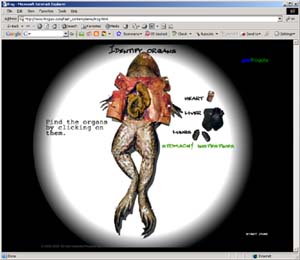
Dissecting the Body* and Soul

Dear God,

If only dissecting the soul were as straightforward as dissecting the body, perhaps we would not have to take so many anti-depressants.


Click Here to Dissect


Betsy

*I love this Website

Wednesday, October 11, 2006

The Mystery of the Soul: Symbol and Salvation

Dear Psyche,

I’m having trouble moving my thought processes along in a clearly discernable way. Last night I realized that the best thing to do would be to try to say it and have you and anyone else who wants to try, rip it apart and then I’ll put it back together again.

Let me draw a picture.

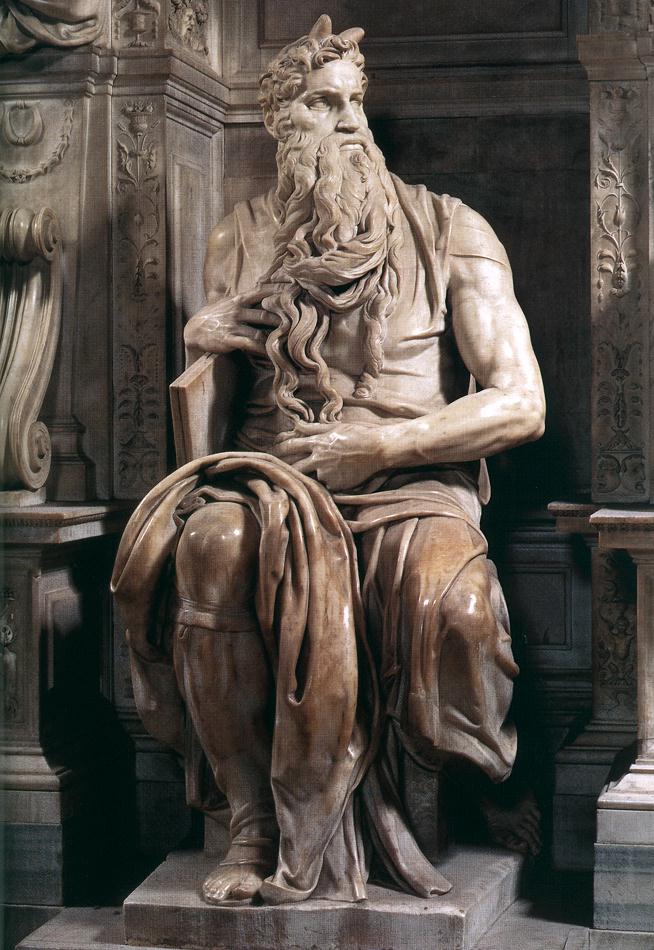
God waited around for Moses to die. He didn’t rush the process and I think it is because God likes poetry (hence God would no doubt be entertained by the Paterson Project) and waited around for Moses to speak to the end of his last “Ha’azinu,” his last proclamation of a “Shema Israel.” In a way, it reminds me of John the Baptist’s death question to Jesus. “Are you really the Christ?” But Moses rolls it out more, beginning in his own voice with a proclamation of God’s name, “Oh, praise the greatness of our God! He is the Rock, his works are perfect, and all his ways are just.” But he turns the voice of the poem over to the Rock, seeking confirmation to the earlier “Shema Israel, the Lord our God, the Lord is one.” And the Rock doesn’t say, “hear”, it says, “See now that I myself am He! There is no God besides me. I put to death and I bring to life, I have wounded and I will heal, and no one can deliver out of my hand.” And then Moses dies.

And then, Joshua begins. And the folks of Israel are ready to enter the land of dreams. And this part of Scripture is where I, too, begin in piecing together my picture of the human soul. The children must cross the River Jordan in order to enter the Promised Land. Of course, I don’t have to talk about the salvation symbolism that has splashed out of that river. The whole party of Israelites went through the dry baptism of the River Jordan led by the covenant of God. And when they had reached the other side, Joshua chose 12 disciples and sent them back out into the riverbed to gather memorial stones. Those they brought to where they lived in the camp. And Joshua made a pile to serve as an eternal reminder.

That pile of rocks, for me, describes the human soul. Our souls are monuments to the salvation of the Lord, the Rock of our salvation. The salvific act of crossing the Jordan is one thing and it is a miracle of God and has to do with the essence of our beings. But the composition of our eternal souls is a rock collection that memorializes for time and eternity the existential affirmations, happening moment by moment, to the salvation that enlivens us.

The other symbols of Scripture that speak of soul are similar in their multiplicity of form. The children of Israel themselves are a picture of the soul. The grapes of the vineyard. The molecules that make up the baby being born. All have unity and diversity, singularity and multiplicity intrinsic to them. The soul is not a singularity.

Believe it or not, this is where I begin my thinking about exclusivism. And I'll continue this line of thinking another day.

B

Tuesday, October 03, 2006

Exclusivism and the Holy Catholic* Christian Church

*Another word that needs to be excised and replaced in the creeds. The baggage that term carries is totally unacceptable. Yet we continue to drag it along without a thought.

Dear Theologians, especially Anne GG and Cate, who asked,

This is going to be long. I will have to break it into at least two parts. I want to try and work this through (for myself) carefully. I'm hoping you will help me with this and not rigidly quote me on any of this. I don't want to be heretical for heretical sake.

Eric Hoffer says, "To know a person's religion we need not listen to his profession of faith but just find his brand of intolerance." (I unfurled this quote yesterday from the code of the local paper's Celebrity Cipher, but it does speak to the subject.) Exclusivism of faith is the up side of intolerance. It comes from, I believe, the depths of our desire to get it right. We, humans (some of us anyway), spend our lives trying to nail down what we believe. We check our beliefs for errors, systematize, categorize, make application, and then stand guard. We, from whatever denominational or religious perch we sit, hawk-eye everyone else, either kindly or viciously, but knowingly.

It's not just Christians who do this, though this is certainly where I come from. I loved the quote I read on msnbc.msn.com the other day when the folks of Turkey were up in arms about the comments of the Pope. "Anyone who describes Islam as a religion as intolerant encourages violence," Foreign Ministry spokeswoman Tasnim Aslam said. One would have to smile, if the implications weren't so virulent.

But I'm not worried about others. I'm worried about me and whether my own tendencies to exclusivism actually would brand a true Christ follower or not. I think there are a variety of concerns that we need to think about.

1) Has God assigned us the task of making sure everyone is "thinking straight and the same?"
2) Is faith primarily content based?
3) Is faith a goal or an end in and of itself or is it a means to achieving something, i.e. "Salvation, eternal life, heaven, etc."

Possibly if we answer the third question, the first two will fall away. However, I think this is how we wind our way to the issue of exclusivism, at least I do. I look at life and other people and discern reason in terms of relationship. A really good thinker would be much more sterile in their approach. But for me, I'm brought to thought via example. So here are examples that have brought me to crisis of thought. I have a non-Christian friend, (spell that Muslim). She lives like me. Her moral and spiritual concerns are very close to mine, closer than many of my Christian friends. She even uses a wonderful term to draw us together. She says that we are "people of the book." I love that. On top of that, as stated above, I have Christian friends who are very dissimilar to me. Their moral reflections are quite different from mine, some stretching in one direction, some the polar opposite. Both types of people are equally sincere in their basic spiritual concerns.

(Margaret GG would approach this more simply. She thinks the answer is more obvious, and, perhaps, that one need not intellectualize so. But I do that, so let's continue.)

What does this mean, I say in my shriveled little heart? I feel like I am an employee of the mail office who was given two stamps, years ago, to mark packages. One says, "Forward to St. Peter, signature required," the other says, "Go to Hell." But I've gone postal. The packages in front of me are piling up and all I can do is take turns hitting myself on the forehead, first with one stamp and then the other.

Well, I haven't done anything but present an introduction to this subject. So what! This is my blog. Anyone who criticizes me for going on too long encourages violence! But you, too, can say whatever you want and I will probably not delete, excepting spam.

Betsy

Friday, September 29, 2006

Home for a Mudsill

Dear Walker Percy,

It was like awaking from a "deja vu." The sonorous rattle of the cicada clacking across the patched cement of our back deck. The disconcerting thing is that the sound of a single cicada, 2 1/2 inches long on the outside, is a racket. And that is when I realized that I am homeless.

Strange for someone who nests, who gathers around herself impatiens and begonias, who puts family snap-photos in groupings under the plexiglass of poster frames, who keeps second grade successes marked with stars, and trophies from mini-marathons for the benefit of a children's hospital, but there it is.

My husband speaks it out loud, but he is wont to do that, ready to up and out of there at the notice of a moment. He isn't homebound. "I've had it," he'll say. But I'm trapped by a few pieces of homeliness. Something in the turf or in the walls can cling to me, but mostly it's the cleavings of relationships. Up and out of there isn't comfortably part of my framework. However, in spite of my longings, my propensity to be a local, I haven't found a nail for my Welcome Home sign.

Walker, you say, "New York is New York", but localities in Alabama, Mississippi, and Louisiana (and perhaps Tennessee too) share traits which set the region apart from much of the United States. Perhaps that is true. Perhaps there is a southern traitedness that shuts its door on outsiders who would seek a home place, laughing with that Southern irony you talk about so much, at visitors who knock and seek to gain some entrance. I'm not sure if it is refusal based on irony or refusal based upon refusal, that otherly refusal of the traitedness. "Y'all come back, now," is after all predicated on the delicious assumption that we'all are leaving.

Janine just arrived from up north. Well, West Virginia. Her family moved her in with a rush, what you might term "Northern edgyness". The apartment was set up and operating before I arrived with my dolly. Welcome, welcome, good luck. We stood outside in the warm evening with glasses of unsweetened tea and she asked me a very unsettling question. "What is that sound? It's driving me crazy." What sound? What was she talking about? And that was the moment that started the deja vu. It set me up for an awakening of sorts. I had stopped hearing the cacophony of the cicadas.

Your frontispiece to The Last Gentleman quotes Father Romano Guardini from The End of the Modern World. "Loneliness in faith will be terrible. Love will disappear from the face of the public world, but the more precious will that love be which flows from one lonely person to another."

And so it has, love is gone, North, South, East, West, publicly gone. We're a lonely bunch and in the midst of the static of life it is hard enough to identify other lonely faithful even when you can speak the same cultural language and there nothing to distract you from hearing. So shall I go home to the North or stay here and continue in failing attempts to find the flow of love as it exists here?

Perhaps I should be encouraged that the cicadas have faded from my attention. It could be a sign that I may find a home here after all. And, as the good Guardini went on to say, "Perhaps [wo]man will come to experience this love anew, to taste the sovereignty of its origin, to know its independence of the world, to sense the mystery of its final why? Perhaps love will achieve an intimacy and harmony never known to this day. Perhaps it will gain what lies hidden in the key words of the providential message of Jesus: that things are transformed for the [wo]man who makes God's will for His Kingdom his [her] first concern (Matt 6:33)."

May it be so.

Betsy DeGeorge

Sunday, September 24, 2006

Memoriam for AJ

Dear Bloggers,

I began blogging because I am interested in technology and publication. I am a manager of a publications department and was scheduled to do a workshop on using the tools of the 21st century for communication in the classroom. So I began my blog. And I began reading blogs. Meanwhile, I heard about AJ. He is the son of a friend of a friend. He had cancer and the prognosis was not good. And he was posting to a blog called Care Pages.

So I began to read this blog, a phenomenal account of strength and love, the fortitude of a family in faith dealing with the worst fortune. The whole family got involved with the posting especially as AJ got weaker and could not always record the account of the day or event himself.

AJ continued living fully every day and continued
his faith journey with authenticity and with energy for doing good. And he continued his adventures, visiting an aquarium when he was no longer able to pursue more exotic interests like parasailing. Even in his last days, he initiated a partially blog-driven campaign to raise money for the hospital that served his needs during his treatment. The last day of his life it was announced that the fund had reached a milestone of $50,000.

We blogreaders knew that today's post was inevitable and that it would not be written by AJ, this strong friend who had come alive to us on the pages of a blog, and who had, through it, encouraged us to a fuller kind of living. AJ's Dad said,
"We felt sorrow, pain, relief, joy, doubt, amazement, comfort, calm, anxiety, anguish, mercy, and other emotions that words can't describe just yet. So, I come to my familar place and time to share with all of you. I am not sure how long I will need to do this."

Publication is a communication, a public form of communication. Blogging allows us to publish. AJ's life deserved to be published, for he was a fine young man and gave beautifully to his family, friends, and those around him. I'm glad he published that spirit to those of us in the etherworld also. We, too, have benefited from knowing him.

Blogging, I'm sure, met a particular need for AJ and family. It meets needs for all of us blogging souls. We ship our thoughts out bottled up in electrons and corked with a .com, and we have said something, whether useful or not. Certainly, AJ didn't waste a word.

Domine, Jesu Christe, Rex gloriae
libera animas omniurn fidelium. . .
repraesentet eas in lucem sanctam quam olim
Abrahae promisisti et semini ejus.

Betsy

Wednesday, September 20, 2006

Preface for a New Creed--A Survey

Dear Theologians,

I am getting ready to write a new creed. I promised my daughter that I would. Perhaps you could give me a jump start. This Scripture is one that is a bit of a driver for my thinking. How about you?

"We know that we have passed from death to life because we love one another. Whoever does not love abides in death. All who hate a brother or sister are murderers, and you know that murderers do not have eternal life abiding in them. We know love by this, that [Jesus] laid down his life for us - and we ought to lay down our lives for one another. How does God's love abide in anyone who has the world's goods and sees a brother or sister in need and yet refuses help? Little children, let us love, not in word or speech, but in truth and action."
- 1 John 3:14-18

OK. Here is the survey question.

What do you consider to be an important, primary faith statement, not present in current credal statements that should be included in those statements?

Reminder:

Apostle's Creed
Nicene Creed
Athanasian Creed
Steve Martin Creed

Thanks for any ideas you can contribute.

Betsy

Tuesday, September 12, 2006

Words, Words, Words

Dear Anne G G,

Take up as much of my cyberspace as possible! I will answer in this new post because the other post that I'm currently working on is taking too long to develop. It's kind of about being a Northerner living in the South. (Touchy stuff.) Here is my response to your response.

1) Your father quotes Meatloaf saying, "We can talk all night but it ain't gettin' us nowhere." I say that a diminished 5th chord may, in fact, communicate a precise "something" more universally than a word. But for ideas of a certain sort, we are left with only words to build concepts and, no matter how flawed, they are the tools of humanity. But, does that mean, that God can foist something upon these puny tools that we cannot? If He/She can, then I would say with Max of the Princess Bride, "It would take a miracle," at every single reading, which is possible given that we are talking about God. But, if that is so, why don't we all receive these words in identical ways. We surely do not.

The miracle may be that we seem to be able to sustain some remnant of the original concept, a common range of meaning. I refer to my survey on goodness. I find it revealing that people find common themes of understanding and that those understandings are persistent. Nonetheless, I would maintain that slippage occurs.

Oh dear, I'm out of writing time and I only covered one of your three questions. Well, to misquote the original ground round musical composition, "One out of three ain't bad."

I will return to the question of Christian Exclusivism in my next post, because it is indeed, and should be I think, a hot button or at least hot fodder for thinking.

I love talking and thinking with you, in spite of the inadequacy of language.

XOX
MOM