Deb is doing a little play in New York City. Attendance is welcome but not mandatory, but I do expect all of my friends to applaud!
Thursday, May 21, 2015


Monday, February 02, 2015
Books 2015
Books read in 2015
Coming of the Storm - W. Michael Gear and Kathleen O'Neal Gear
Starship Troopers - Robert Heinlein
King Solomon's Mines - Henry Rider Haggard
Ruth - Elizabeth Cleghorn Gaskell
Memory: How to Develop, Train, and Use It - William Walker Atkinson
Clean: Overcoming Addiction and Ending America's Greatest Tragedy - David Sheff
A Million Little Pieces - James Frey
Ancient Feminine Wisdom: Inspired by Biblical Women - Judith Jungman Saadon
Heretics and Heroes: Ego in the Renaissance and the Reformation - Thomas Cahill
Crazy Creek - Sarah Simpson Bivens
Home - Toni Morrison
Origins of Life Part 1 - Robert M. Hazen
On the Origin of Species - Charles Darwin
44 Scotland Street - Alexander McCall Smith
King and Maxwell - David Baldacci
The Joy of Science Part 1 - Robert M Hazen
The Joy of Science Part 2 - Robert M Hazen
The Grand Design - Stephen Hawking and Leonard Mlodinow
Heretic: Why Islam Needs a Reformation Now - Ayaan Hirsi Ali
The Blithedale Romance - Nathaniel Hawthorne
The Joy of Science Part 4 - Robert M Hazen
Everything that Rises Must Converge - Flannery O'Conner
The Joy of Science Part 5 - Robert M Hazen
Coming of the Storm - W. Michael Gear and Kathleen O'Neal Gear
Starship Troopers - Robert Heinlein
King Solomon's Mines - Henry Rider Haggard
Ruth - Elizabeth Cleghorn Gaskell
Memory: How to Develop, Train, and Use It - William Walker Atkinson
Clean: Overcoming Addiction and Ending America's Greatest Tragedy - David Sheff
A Million Little Pieces - James Frey
Ancient Feminine Wisdom: Inspired by Biblical Women - Judith Jungman Saadon
Heretics and Heroes: Ego in the Renaissance and the Reformation - Thomas Cahill
Crazy Creek - Sarah Simpson Bivens
Home - Toni Morrison
Origins of Life Part 1 - Robert M. Hazen
On the Origin of Species - Charles Darwin
44 Scotland Street - Alexander McCall Smith
King and Maxwell - David Baldacci
Origins of Life Part 2 - Robert M. Hazen
The Joy of Science Part 1 - Robert M Hazen
The Joy of Science Part 2 - Robert M Hazen
The Grand Design - Stephen Hawking and Leonard Mlodinow
Heretic: Why Islam Needs a Reformation Now - Ayaan Hirsi Ali
The Blithedale Romance - Nathaniel Hawthorne
The Joy of Science Part 4 - Robert M Hazen
Everything that Rises Must Converge - Flannery O'Conner
The Joy of Science Part 5 - Robert M Hazen
Thursday, February 13, 2014
Books 2014
Here is the list for this year.
I wish I had time to comment on these. Perhaps, I will do that this year.
The Man from Beijing by Henning Mankell
Death Comes to Pemberley by P.D. James
The Secret Man: The Story of Watergate's Deep Throat by Bob Woodward
The Mysterious Affair at Styles by Agatha Christie
Some We Love, Some We Hate, Some We Eat: Why It's So Hard to Think Straight About Animals by Hal Herzog
The Man with the Iron Mask by Alexandre Dumas
Oliver Twist by Charles Dickens
Proof of Heaven: A Neurosurgeons Journey into the Afterlife by Eben Alexander
The Age of Innocence by Edith Wharton
The Girl Who Fell from the Sky by Heidi W. Durrow
A Tree Grows in Brooklyn by Betty Smith
The Book of Forgiving: The Fourfold Path for Healing Ourselves and Our World by Desmond Tutu and Mpho Tutu
Bonhoeffer: Pastor, Martyr, Prophet, Spy by Eric Metaxes
All the King's Men by Robert Penn Warren
The Prime of Miss Jean Brodie by Muriel Spark
Treasure Island by Robert Louis Stevenson
The Light in the Forest by Conrad Richter
Concert Masterworks Part 1 with Robert Greenberg
Concert Masterworks Part 2 with Robert Greenberg
Bellman and Black by Diane Setterfield
Concert Masterworks Part 3 with Robert Greenberg
Eugenie Grandet by Honore de Balzac
Concert Masterworks Part 4 with Robert Greenberg
Burmese Days by George Orwell
What Maisie Knew by Henry James
Understanding Movies:The Art and History of Films by Raphael Shargel
The Mysterious Flame of Queen Loana by Umberto Eco
Maurice: A Novel by E.M. Forster
Masterpieces of the Imaginative Mind : Literature's Most Fantastic Works with Eric S. Rabkin.
Sunday, April 21, 2013
Monday, April 15, 2013
McConnico Cemetery
Dear Garner McConnico,
This is what things look like now.
 McConnico Meeting House is no more at this location, but the cemetery remains. Surely you would be surprised at how the stones, so straight and few when you lived, are now askew and broken and many.
The storm of 1909, referred to in the sign must have been quite a tornado, for even the neighbors at Taproot Farm are still talking about it.

As you can see, someone has been caring for the cemetery in a fashion. They have carefully punctured the earth with white pvc pipes and placed silk flowers at each stone. Some of the stones are legible still, but many are not. Still the caretaker respected all and left a token.

I think that it must have been a descendent of the Nolens, for, as you can see, Littleberry Nolen's grave has been refreshed with a new marker, while, though your family's marker was lifted from the tall grass, is broken and old.

 Your friends, the Beech family, the Cox family, the Waltons, and others, each remain, guarding different corners of this property. Some installed fencing topped with iron spears, fancying, I suppose that this would guard them from storms, or haunts, but in the end, even I and my camera climbed over and stole the images that I have posted here.
The folks at the Ramada Inn reported that a visitor, presumably a Nolen with pvc pipes stayed at their establishment a few years ago and worked diligently to bring order to the discord that years of neglect had wrought upon the cemetery. But even that work is suffering the blasts of time.
 Yet, I appreciate what I imagine is an ongoing tribute from the neighboring hotel, a three flag salute at half mast. Perhaps, they are saying with me, that in spite of the passing of time, the McConnicos and company are not yet forgotten.

See slideshow of additional images.
My regards,
Betsy
This is what things look like now.

The storm of 1909, referred to in the sign must have been quite a tornado, for even the neighbors at Taproot Farm are still talking about it.
So your friends and descendants of the Primitive Baptist Church moved to what might be a safer spot, where they are still flourishing and worshiping on Sunday mornings, for I saw them yesterday. The parking lot was small but full and a tall woman was carrying preparations for the post-service coffee in the back door.The acreage, known as “Nolencrest” was first deeded to John Nolen in 1807. He built the first log house on the farm. The land was farmed in succession by John Nolen, Littleberry Nolen and Stephen Nolen, when in connection with the battles around Franklin the log house was burned in circa 1863, gun fire exchanges are evidenced by Civil War bullets found in the garden. The house was rebuilt as a two-story home on the same location by Milton Berry Nolen, whose family lived there until the tornado of 1887 removed the roofs of every building on the farm except the Springhouse in the cove. The two-story house was wind-damaged beyond repair. Dr. William Stephen Nolen, his wife and five children rebuilt the home and lived in it until the second tornado on April 29, 1909. Once again the home was damaged beyond repair. William “Billy” Nolen rebuilt the house as it stands today. This was the fourth Nolen residence built on the same site.


As you can see, someone has been caring for the cemetery in a fashion. They have carefully punctured the earth with white pvc pipes and placed silk flowers at each stone. Some of the stones are legible still, but many are not. Still the caretaker respected all and left a token.
I think that it must have been a descendent of the Nolens, for, as you can see, Littleberry Nolen's grave has been refreshed with a new marker, while, though your family's marker was lifted from the tall grass, is broken and old.
Your friends, the Beech family, the Cox family, the Waltons, and others, each remain, guarding different corners of this property. Some installed fencing topped with iron spears, fancying, I suppose that this would guard them from storms, or haunts, but in the end, even I and my camera climbed over and stole the images that I have posted here.The folks at the Ramada Inn reported that a visitor, presumably a Nolen with pvc pipes stayed at their establishment a few years ago and worked diligently to bring order to the discord that years of neglect had wrought upon the cemetery. But even that work is suffering the blasts of time.
See slideshow of additional images.
My regards,
Betsy
Sunday, March 17, 2013
More on Best Dressed Cardinals
Dear Vatican Watchers,
First captivated by the Onion's photo essay entitled, The 8 Worst-Dressed at the Papal Conclave, I was then mesmerized by a fleeting couple of images shown during the pope's first prayer during his first public address. Perhaps the cameraman closed his eyes and incidentally focused the lens upon the back of the elite at the vatican window. Why this set of images didn't get any media play, is beyond me.


First captivated by the Onion's photo essay entitled, The 8 Worst-Dressed at the Papal Conclave, I was then mesmerized by a fleeting couple of images shown during the pope's first prayer during his first public address. Perhaps the cameraman closed his eyes and incidentally focused the lens upon the back of the elite at the vatican window. Why this set of images didn't get any media play, is beyond me.

Note: Little signs of the new pope's personal styling choices include his decision to appear on the balcony of St.
Peter’s Basilica without the red mozzetta — the telltale short cape of
the papacy.
For more on the stylings of the patriarch and his compatriots, check out the Style Page in the Catholic Register.
And for more fun with the kids, try out these vestments for your papal dolls!

Do you wonder whether we'll see this puppy (the Papal Tiara) pulled out for special occasions during Pope Francis' casual reign? I'm kind of doubting it.
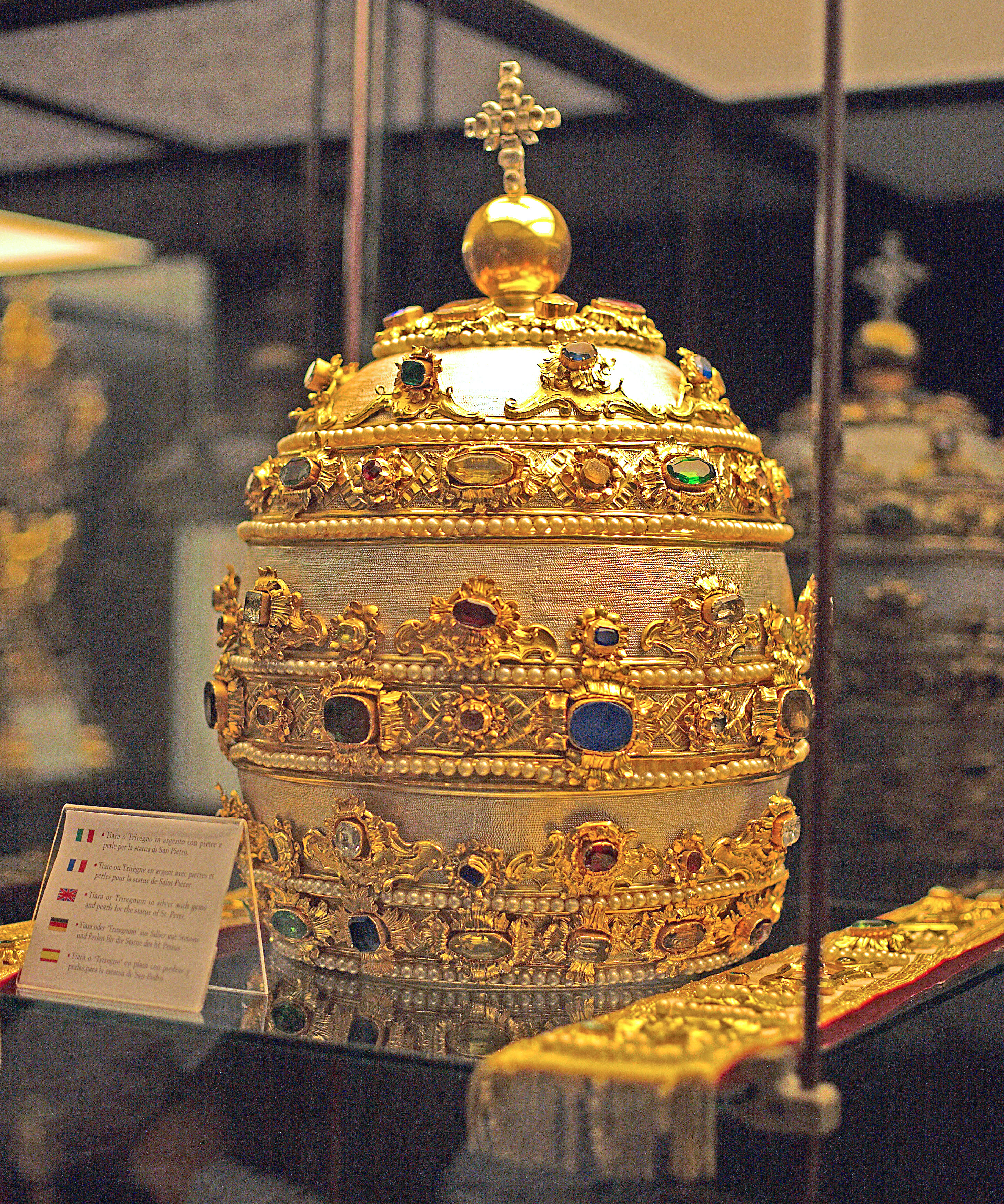
Betsy
Thursday, February 14, 2013
Books and Studies, 2013
This is just a listing of the books I'm reading/have read this year, 2013.
The Snows of Kilimanjaro and Other Stories by Ernest Hemingway
The New Testament Part I by Bart D. Ehrman (The Great Courses)
Life Lessons from the Great Books, Part I by Professor J. Rufus Fears
Around the World in 80 Days by Jules Verne
The John Updike Audio Collection (Short Stories) by John Updike
My Lady Ludlow by Elizabeth Gaskell
The Adventures of Sherlock Holmes by Sir Arthur Conan Doyle
A Journey to the Center of the Earth by Jules Verne
The Modern Scholar: Upon This Rock: A History of the Papacy from Peter to John Paul II by Thomas Madden
The Professor by Charlotte Bronte
The Diamond Necklace and Other Stories by Guy de Maupassant
Life Lessons from the Great Books, Part II by Professor J. Rufus Fears
Adventures in the Unknown Interior of America by Cabeza de Vaca
Following the Path by Joan Chittister
Don Quixote de la Mancha Volume I by Miguel de Cervantes
Don Quixote de la Mancha Volume II by Miguel de Cervantes
The Moving Finger by Agatha Christie
Argo: How the CIA and Hollywood Pulled Off the Most Audacious Rescue in History by Antonio Mendez
Marcelo and the Real World by Francisco X. Stork
Tortilla Flat by John Steinbeck
Earth Afire by Orson Scott Card and Aaron Johnston
Tuesday Club Murders by Agatha Christie
I, Claudius by Robert Graves
The Illusion of Separateness by Simon Van Booy
One of our Thursdays is Missing by Jasper Fforde
Mrs. Pollifax and the Second Thief by Dorothy Gilman
Mansfield Park by Jane Austen
Mockingjay by Suzanne Collins
A Death in the Family by James Agee
Tuesday, January 24, 2012
The Books of 2012
This is just a listing of the books I'm reading/have read this year, 2012.
State of Wonder by Ann Patchett
Truth and Beauty: A Friendship by Ann Patchett
The Prodigal God by Timothy Keller
For Whom the Bell Tolls by Ernest Hemingway
Executive Orders by Tom Clancy
The Story of Painting by Sister Wendy Beckett
Henderson the Rain King by Saul Bellow
The Art of Reading by Joseph Luzzi
The Power and the Glory by Graham Greene
Lord Jim by Joseph Conrad
The Rising of the Ashes by Tahar Ben Jelloun
The Burglar Who Studied Spinoza by Lawrence Block
Silent Day in Tangier by Tahar Ben Jelloun
Cousin Bette by Honoré de Balzac
Treasure Island by Robert Louis Stevenson
Vanished Smile: The Mysterious Theft of Mona Lisa by R.A. Scotti
Falling Upward: A Spirituality for the Two Halves of Life by Richard Rohr
Absolute Friends by John le Carre
Dickens Women by Miriam Margolyes
Home by Toni Morrison
No Excuses: Existentialism and the Meaning of Life by Robert Solomon (The Great Courses)
The Divine Comedy: Inferno--Purgatorio--Paradiso by Dante Alighieri
Prague Winter: A Personal Story of Remembrance, 1937-1948 by Madeleine Albright
The Private Patient: an Adam Dalgliesh Mystery by P. D. James
Agnes Grey by Anne Bronte
The Two Destinies by Wilkie Collins
Short Stories of Dorothy Parker
Mrs. Pollifax, Innocent Tourist by Dorothy Gilman
Thursday, January 12, 2012
Saturday, December 03, 2011
Advent and Herod the King in Judaea
Dear Herod,
Your moment in history was fleeting. Perhaps were it not for the horror of your actions and their proximity to Jesus and his loving contrast, you would be forgotten, gladly, altogether.
Instead you are immortalized beautifully by artists such as Hector Belioz in this amazing aria from L'Enfance du Christ, O misere des rois. . . and by the dark side of the story of Christmas, the parts that we do not read in its entirety to the children on Christmas Eve.
Betsy
Your moment in history was fleeting. Perhaps were it not for the horror of your actions and their proximity to Jesus and his loving contrast, you would be forgotten, gladly, altogether.
Instead you are immortalized beautifully by artists such as Hector Belioz in this amazing aria from L'Enfance du Christ, O misere des rois. . . and by the dark side of the story of Christmas, the parts that we do not read in its entirety to the children on Christmas Eve.
Now when Jesus was born in Bethlehem of Judaea in the days of Herod the king, behold, there came wise men from the east to Jerusalem, Saying, Where is he that is born King of the Jews? for we have seen his star in the east, and are come to worship him. When Herod the king had heard these things, he was troubled, and all Jerusalem with him. And when he had gathered all the chief priests and scribes of the people together, he demanded of them where Christ should be born. And they said unto him, In Bethlehem of Judaea: for thus it is written by the prophet, "And thou Bethlehem, in the land of Juda, art not the least among the princes of Juda: for out of thee shall come a Governor, that shall rule my people Israel."I must run for today, I'll write again. I'd like to ask you more about those dreams.
Then Herod, when he had privily called the wise men, inquired of them diligently what time the star appeared. And he sent them to Bethlehem, and said, Go and search diligently for the young child; and when ye have found him, bring me word again, that I may come and worship him also. When they had heard the king, they departed; and, lo, the star, which they saw in the east, went before them, till it came and stood over where the young child was. When they saw the star, they rejoiced with exceeding great joy. And when they were come into the house, they saw the young child with Mary his mother, and fell down, and worshipped him: and when they had opened their treasures, they presented unto him gifts; gold, and frankincense, and myrrh. And being warned of God in a dream that they should not return to Herod, they departed into their own country another way.
And when they were departed, behold, the angel of the Lord appeareth to Joseph in a dream, saying, Arise, and take the young child and his mother, and flee into Egypt, and be thou there until I bring thee word: for Herod will seek the young child to destroy him.
When he arose, he took the young child and his mother by night, and departed into Egypt: And was there until the death of Herod: that it might be fulfilled which was spoken of the Lord by the prophet, saying, Out of Egypt have I called my son.
Then Herod, when he saw that he was mocked of the wise men, was exceeding wroth, and sent forth, and slew all the children that were in Bethlehem, and in all the coasts thereof, from two years old and under, according to the time which he had diligently inquired of the wise men. Then was fulfilled that which was spoken by Jeremy the prophet, saying, "In Rama was there a voice heard, lamentation, and weeping, and great mourning, Rachel weeping for her children, and would not be comforted, because they are not."
But when Herod was dead, behold, an angel of the Lord appeareth in a dream to Joseph in Egypt, Saying, Arise, and take the young child and his mother, and go into the land of Israel: for they are dead which sought the young child's life. And he arose, and took the young child and his mother, and came into the land of Israel. But when he heard that Archelaus did reign in Judaea in the room of his father Herod, he was afraid to go thither: notwithstanding, being warned of God in a dream, he turned aside into the parts of Galilee: And he came and dwelt in a city called Nazareth: that it might be fulfilled which was spoken by the prophets, He shall be called a Nazarene.
Betsy
Friday, December 02, 2011
Advent with Charles Dickens
Dear Charles Dickens,
Last year I discovered the little book you had written for your children, The Life of Our Lord. Yes, I know you weren't keen on its being published, but just before Christmas, in 1933, your son Henry died, and after that a decision was made, by the grandkids, to share the work with all the rest of us (i.e. the waiting public).

I love the lines in this description of the advent of Christ, where you say, "His father and mother lived in a city called Nazareth, but they were forced by business to travel to Bethlehem," and "the town being very full of people, also brought there by business, there was no room for Joseph and Mary in the Inn."

Betsy
Last year I discovered the little book you had written for your children, The Life of Our Lord. Yes, I know you weren't keen on its being published, but just before Christmas, in 1933, your son Henry died, and after that a decision was made, by the grandkids, to share the work with all the rest of us (i.e. the waiting public).

If you are interested in the 2011 version of publication, here is this Christmas page in its audio form.
Of course when most of us who love your work, think of Christmas, we think of your greater known work, A Christmas Carol. That story, too, has much to say about business and the bad business of Scrooge. But today, I'm thinking about that good businessman you created, Fezziwig, who had "the power to render us happy or unhappy; to make our service light or burdensome; a pleasure or a toil…The happiness he gives, is quite as great as if it cost a fortune.”
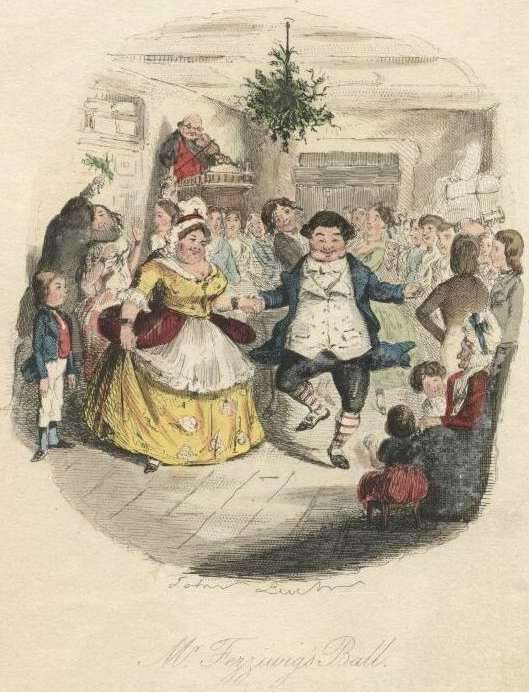
In an economic period that is fraught with Scrooges and business people flinging the Gift of God and good from the inn to the stable or Zuccotti Park, I wish that the spirit of Fezziwig might occupy Wall Street and our own hearts too.
Wednesday, November 30, 2011
Advent and Homelessness
Dear Invisible Neighbor,
When Jesus came he found himself temporarily homeless, sleeping in the O AD equivalent of a garage.
Have you ever had to sleep in a garage? Are you considered homeless if you still have a garage that you can sleep in?

Little Lord Jesus, no crying he made, on his manger mattress.
Christmas has always been associated with good-deed doing for the poor and homeless. From Saint Nicholas to Good King Wenceslas, who on the feast of Stephen gave flesh and wine and pine logs to the poor peasant living in not much more than a stable between a forest fence and a fountain, neighborly folks with excess goods, have found that winter's rage is tempered by benevolence.
When Jesus came he found himself temporarily homeless, sleeping in the O AD equivalent of a garage.
Have you ever had to sleep in a garage? Are you considered homeless if you still have a garage that you can sleep in?

My friend John was interviewed by the Associated Press the other day about homelessness. John works for the Association of Gospel Rescue Missions. He said, and the Washington Post quotes John saying that one-third of homeless shelter residents are newly homeless. I guess if Jesus came today, he would fall into that group of newly homeless. Plus he would fall into the increasing statistical category of women and children. This is a category that has doubled in the last two years.
If the homeless, like Jesus, are sometimes invisible, let's pray that the Advent season gifts us with eyes to see and ears to hear.
Betsy
Tuesday, November 29, 2011
An Advent Journey of the Magi
Dear Magi,
So, you had a cold advent, and a long excursion, regretting the summer palaces, but not the trip altogether. I suppose we all do that as the journey drags and lags and passes into retrospective. We monkey around in our minds with the things that have been steeled to confuse us. Birth and Death.
Wholly remarkable.
Betsy
*Burnt Norton. T.S. Eliot's First of Four Quartets.
So, you had a cold advent, and a long excursion, regretting the summer palaces, but not the trip altogether. I suppose we all do that as the journey drags and lags and passes into retrospective. We monkey around in our minds with the things that have been steeled to confuse us. Birth and Death.
Time present and time pastOr perhaps all time is redeemable in that one moment, not a bit too soon, that was satisfactory to all that needed satisfying. And redeemable in that one baby, arriving ready to teethe death.
Are both perhaps present in time future,
And time future contained in time past.
If all time is eternally present
All time is unredeemable.*
Wholly remarkable.
Betsy
*Burnt Norton. T.S. Eliot's First of Four Quartets.
Monday, November 28, 2011
Advent
Dear Shepherds,
I had been waiting. That is a phrase filled with. . . but of course it is. And you were there, waiting as if you were hoping all your lives.
Betsy
*Harold Norse in All My Life I've Been Waiting
**Chorus of the Shepherds (L'Adieu des Bergers)
from L'Enfance du Christ (Berlioz)
From: VAI DVD 4303 L'Enfance du Christ
Hector Berlioz
With John McCollum, Florence Kopleff, Theodor Uppman, and Donald Gramm
Boston Symphony Orchestra and the Harvard Glee Club and Radcliffe Choral Society
Charles Munch, cond. (1966)
I had been waiting. That is a phrase filled with. . . but of course it is. And you were there, waiting as if you were hoping all your lives.
All my life I’ve been waitingAnd for you the grand awakening on a hillside in the middle of the night in the clear was not so much a finale as a beginning that finalized everything else. So here, after waiting all your lives and finding the lowly shepherd lamb, you sing.
for something unusual to happen.
I may yet come into a windfall,
National Endowment of the Hearts.
All my life I’ve been expecting
a grand finale, an awakening, . . .*
Thou must leave thy lowly dwelling,
The humble crib, the stable bare.
Babe, all mortal babes excelling,
Content our earthly lot to share.
Loving father, loving mother,
Shelter thee with tender care.
Blessed Jesus, we implore thee
With humble hearts and holy fear,
In that land that lies before thee,
Forget not us who linger here.
May the shepherd's lowly calling
Ever to thy heart be dear.
Blessed are ye beyond all measure,Holy Anticipation.
Thou loving father, mother mild;
Guard thee well thy heavenly treasure,
The Prince of peace, the holy child.
God go with you, God protect you,
Guide you safely through the wild.
Betsy
*Harold Norse in All My Life I've Been Waiting
**Chorus of the Shepherds (L'Adieu des Bergers)
from L'Enfance du Christ (Berlioz)
From: VAI DVD 4303 L'Enfance du Christ
Hector Berlioz
With John McCollum, Florence Kopleff, Theodor Uppman, and Donald Gramm
Boston Symphony Orchestra and the Harvard Glee Club and Radcliffe Choral Society
Charles Munch, cond. (1966)
Saturday, June 25, 2011
Violence and Blood Meridian
Dear Dennis,

I told you that Blood Meridian was in the back seat of my car and that I feared it.
I had previously been comforted by your assurances that, if, (as I have not done) I did not finish the book Ulysses, by James (yawn) Joyce, I was not, necessarily, a shallow person. And I could not complete that course. Having stumbled through the first half of this scholastically well-rated tome, knowing sentence by sentence that it certainly was a well-worded set of paragraphs, knowing description by description that the worthy author had ably captured the vignettes of a day, knowing that as the Bloom-fanned pages fluttered and flipped, slowly, I should be appreciating it, I simply could not develop a plan to finally capture this Troy of a book. No hollow horse nor trickery could do it. So back on the shelf it has gone.
And as the sun set on that book, The Evening Redness of the West rose. You were correct. I was not, in the least, bored.
Then on the heels of that, I read, too, Hard Times, by Charles Dickens and was impressed by the fact that both of these books carried with them the air of the morality play.

Dickens, never shy in his naming of moral elements, takes us to the edge of Hell's Shaft in contrasting the lights of Sissy Jupe, Rachael, and Stephen Blackpool with the evils of Victorian industrial and utilitarian society. Certainly, the clouds of blackness that hung over the town of Coke were not less thick than those of the dust that rose under the hooves of the Glantons and Comanches of Cormac's meridian, if not as violent.
But I wonder if Cormac really sees his book as a morality play on the subject of violence, with the Judge, the Devil of War, rising from the shaft of an extinct volcano, able to tend bats and dance the naked totentantz.
Saint-Saens certainly developed the essense reflected by the Judge in his Danse Macabre. I was struck by Cormac's ability to present the picture of this group of men so clearly and yet so soul-lessly. I think he was able to make them seem so spiritually dead by refraining from giving us any picture of their inner lives, but only painting their actions and exterior beings. Only the Judge seemed reflective and animated from within, but the glimpses we were given revealed a black hole sucking light into darkness and life into annihilation.
Perhaps it is most fitting that the protaganist of this book, if there is one, the kid, dies a most demeaning death, non-descript and in the "jake". I find it interesting that critics and reviewers speculate about what indescribable violence the Judge must have inflicted upon the kid. Perhaps, they have fallen into the web of violence itself, seeking to create one worst thing, when the author himself was willing to spare us.
So what is the take-away from the morality play that studies violence? We aren't given the message on the kind of silver platter that Dickens would provide for us, with a nudge to the development of sensibilities that preserve the human spirit animated by kindness, generosity, love, and integrity. We aren't spared by C. M. the reality that has and does play out in every war and every willing maker or war. Nor does he urge us with a turn from alternative. Yet, it is the very bleakness, the desert of the heart of this novel, the thirst with which we are left, the nakedness that such imploding characters reveal, that turns us to the other.
Cormac has left his subject unmasked. There is no question for him, of the result of violence.
I am reminded of the words from Ephesians 2. "You were dead in your transgressions and sins, in which you used to live when you followed the ways of this world and the judge of the kingdom of the air, the spirit who is now at work in those who are disobedient." That is the morality play that Blood Meridian expresses. Like an illumination of a medieval manuscript, this story has revealed the hidden meaning of being dead in transgression. Goodness, it is not a pretty sight.
Betsy

I told you that Blood Meridian was in the back seat of my car and that I feared it.
I had previously been comforted by your assurances that, if, (as I have not done) I did not finish the book Ulysses, by James (yawn) Joyce, I was not, necessarily, a shallow person. And I could not complete that course. Having stumbled through the first half of this scholastically well-rated tome, knowing sentence by sentence that it certainly was a well-worded set of paragraphs, knowing description by description that the worthy author had ably captured the vignettes of a day, knowing that as the Bloom-fanned pages fluttered and flipped, slowly, I should be appreciating it, I simply could not develop a plan to finally capture this Troy of a book. No hollow horse nor trickery could do it. So back on the shelf it has gone.
And as the sun set on that book, The Evening Redness of the West rose. You were correct. I was not, in the least, bored.
Then on the heels of that, I read, too, Hard Times, by Charles Dickens and was impressed by the fact that both of these books carried with them the air of the morality play.
Dickens, never shy in his naming of moral elements, takes us to the edge of Hell's Shaft in contrasting the lights of Sissy Jupe, Rachael, and Stephen Blackpool with the evils of Victorian industrial and utilitarian society. Certainly, the clouds of blackness that hung over the town of Coke were not less thick than those of the dust that rose under the hooves of the Glantons and Comanches of Cormac's meridian, if not as violent.
But I wonder if Cormac really sees his book as a morality play on the subject of violence, with the Judge, the Devil of War, rising from the shaft of an extinct volcano, able to tend bats and dance the naked totentantz.
Saint-Saens certainly developed the essense reflected by the Judge in his Danse Macabre. I was struck by Cormac's ability to present the picture of this group of men so clearly and yet so soul-lessly. I think he was able to make them seem so spiritually dead by refraining from giving us any picture of their inner lives, but only painting their actions and exterior beings. Only the Judge seemed reflective and animated from within, but the glimpses we were given revealed a black hole sucking light into darkness and life into annihilation.
Perhaps it is most fitting that the protaganist of this book, if there is one, the kid, dies a most demeaning death, non-descript and in the "jake". I find it interesting that critics and reviewers speculate about what indescribable violence the Judge must have inflicted upon the kid. Perhaps, they have fallen into the web of violence itself, seeking to create one worst thing, when the author himself was willing to spare us.
So what is the take-away from the morality play that studies violence? We aren't given the message on the kind of silver platter that Dickens would provide for us, with a nudge to the development of sensibilities that preserve the human spirit animated by kindness, generosity, love, and integrity. We aren't spared by C. M. the reality that has and does play out in every war and every willing maker or war. Nor does he urge us with a turn from alternative. Yet, it is the very bleakness, the desert of the heart of this novel, the thirst with which we are left, the nakedness that such imploding characters reveal, that turns us to the other.
Cormac has left his subject unmasked. There is no question for him, of the result of violence.
I am reminded of the words from Ephesians 2. "You were dead in your transgressions and sins, in which you used to live when you followed the ways of this world and the judge of the kingdom of the air, the spirit who is now at work in those who are disobedient." That is the morality play that Blood Meridian expresses. Like an illumination of a medieval manuscript, this story has revealed the hidden meaning of being dead in transgression. Goodness, it is not a pretty sight.
Betsy
Friday, March 11, 2011
Survey: What is the Greatest Novel of All Time?
Folks,
 Though this blog is entitled Letters and Surveys, I must admit, that it has been, mostly, letters. However, occasionally I run a survey. I was hoping that this could be a venue for collecting information, but not too many people add comments.
 Though this blog is entitled Letters and Surveys, I must admit, that it has been, mostly, letters. However, occasionally I run a survey. I was hoping that this could be a venue for collecting information, but not too many people add comments.
In lieu of electronic participation, I use a more traditional form of polling. I ask people what they think. This is somewhat time consuming, because when I ask someone, "What is the greatest novel of all time?", the answer is usually only the beginning of a longer discussion of:
- why this book is one that they love or were touched by
- what characteristics make this book great
- what other books might vie for the title of Greatest Novel
- what are the worst books
- who is the greatest novelist
- why I am asking this question
- and so forth
(I do like these discussions.) Here is the list I've collected so far. I will list them in the comments section. Readers, please add your votes.
My personal answer is: Les Miserables by Victor Hugo
Betsy
P.S. Even if your favorite is already listed, please feel free to list it again. In addition, your comments related to whys and wherefores are very welcome.
Tuesday, March 01, 2011
A People's History of Christianity: The Other Side of the Story
 Dear Diana Butler Bass,
I heard you speak the other Sunday, but I feel like I've spent the week with you as I've read The People's History of Christianity.
So often, I've looked over my shoulder at the history of Christianity and I snap my gaze around again, quickly, to the future, not because I have great hopes, but because history, as typical history, is such a shame. The chapter titles are so grim and disgraceful. It is not disheartening that Christians were
 martyred at the point of swords, but that, so often, they held the swords and ran through the hearts of believers and disbelievers alike. It is not that they were thrown ignominiously to the teeth of lions, but that they were lion hearted. It is not that they were raped and plundered, but that they, with the shield of Christendom emblazoned, deflowered women, children, men, and regions in the name of salvation.
 So, your book turns me round and lets me look with teeth unclenched and reminds me that, throughout the ages, there was another, truer history of faith that played out alongside the narratives of power and prestige recalled by biographers and annalists with credentials impressed upon an authorized version.
Betsy
Click on the Dore image - Richard the Lion Heart in Reprisal Massacres Captives - to see this image in sharper detail at artmight.com. Click on the tapestry to see similar works at quaker-tapestry.co.uk
Saturday, February 26, 2011
And the Prize Goes to W.E.B Du Bois for The Quest of the Silver Fleece
Dear W.E.B.,

The 2010 Ellstrom Award for Literature is late in being awarded. It is not that the decision had not been made. It was clear in my mind that this was a stand-out book based on the criteria set up for the award. That is, it is the book that I liked the most and was most deeply affected by during the reading year 2009. However, I stopped posting for longer than I care to think, and you were left waiting.
So, The Quest of the Silver Fleece by W.E.B DuBois is our choice.
This book is now in the public domain, so all of us are welcome to read it online for free. And it is a meaningful read. I believe that you described the overall affect best, yourself, in the introductory note.
He who would tell a tale must look toward three ideals: to tell it well, to tell it beautifully, and to tell the truth. The first is the Gift of God, the second is the Vision of Genious, but the third is the Reward of Honesty.
In the Quest of the Silver Fleece there is little, I ween, divine or genious; but, at least, I have been honest. In no fact or picture have I consciously set down aught the counterpart of which I have not seen or known; and whatever the finished picture may lack of completeness, this lack is due now to the story-teller, now to the artist, but never to the herald of the Truth.
And it is so, that you are not a writer of fiction who is fully matured and refined. Your sentences do not leave all of us in awe. Your story has some limits, though I have read far worse that were chosen from the New York Times best seller lists. But I am convinced that you have given us a picture of the angst and dignity of two creative young people, living, and wanting to succeed, in a time and environment that was difficult.
The wholeness of the characters, Zora and Blessed, is striking. We empathize with their dreams. We feel for their plights. They convince us. And they give us hope. And I suppose, in 1911 when this book was published, you, too, had those hopes.
Your dream lived within you until the day before Martin Luther King spoke the words, "I Have a Dream," but by that time you had left us for Ghana, finding, perhaps, at least for yourself, a better vantage point to see your dreams unfold. Perhaps, were you with us today, you could help our country build a new and better quest for interracial relationships that address the complexities of our lives today.
Thanks for your soul and your words.
Betsy
Books and Music 2011
Dear Book Lovers,
This year my reading goals are going to include a genre of books that are difficult for me--long books. Most of my reading in the past couple of years has been centered on the classics of new and old literature. However, I have always used one qualifier. It can't be too.o.o.o.o long. This year, I plan to head into that storm of excessive wordiness, letting the howling sentences plash upon the prow of my vessel, setting myself adrift upon the endless roll of interminable ideas and utterances. Simply, I will read some long books. I will also read some others.
Books like Ulysses and War and Peace, even In Search of Lost Time, have long been on my list of "I couldn't get through that" books. Maybe, after this year, that list will have diminished. So far, I'm halfway through my first. I might even try to dabble in The Eight Dog Chronicles, though I don't think I want to commit the next 30 years of my life to them!
And here's a list to choose from.
Books
The Public Domain by Stephen Fishmen
Complete Copyright: An Everyday Guide for Librarians by Carrie Russell
Broken Glass by Alain Mabanckou
American Mind Part I by Allen Guelzo
Ulysses by James Joyce--first 1/2 and I'm taking a break!
A People's History of Christianity: The Other Side of the Story by Diana Butler Bass
The Five Most Important Questions You Will Ever Ask About your Organization by Peter F. Drucker et al
North and South by Elizabeth Cleghorn Stevenson Gaskell
A Spirit of Tolerance: The Inspiring Life of Tierno Bokar by Amadou Hampate Ba
The Alchemyst: The Secrets of the Immortal Nicholas Flamel by Michael Scott
Strengths Finder 2.0 by Tom Rath
To Have and to Hold by Mary Johnston
The Dark Child by Camara Laye
The Razor's Edge by W. Somerset Maugham
The Truth about Muhammad: Founder of the World's Most Intolerant Religion by Robert Spencer
The Enlightenment: Reason, Tolerance, and Humanity in The Modern Scholar Series by James Schmidt
The Moon and Sixpence by W. Somerset Maugham
The Reivers by William Faulkner
The Theory of Everything: The Origin and Fate of the Universe by Stephen Hawking
Blood Meridian by Cormac McCarthy
Hard Times by Charles Dickens
The Wind in the Willows by Kenneth Grahame
The Chronicles of Barsetshire by Anthony Trollope
Clan of the Cave Bear by Jean M. Auel
The Life of an American Slave by Frederick Douglass
Racism Explained to My Daughter by Tahar Ben Jelloun
Islam Explained by Tahar Ben Jelloun
True Grit by Charles Portis
Life and Operas of Verdi - Course 1 by Robert Greenberg
Life and Operas of Verdi - Course 2 by Robert Greenberg
Steppenwolf by Hermann Hesse
2 States, The Story of My Marriage by Chetan Bhaghat
Heaven is for Real by Todd Burpo
Life and Operas of Verdi - Course 3 by Robert Greenberg
Haroun and the Sea of Stories by Salmon Rushdie
Muhammad: A Prophet for Our Time by Karen Armstrong
Blue Like Jazz by Donald Miller
Midnight's Children by Salmon Rushdie
Wednesday, May 05, 2010
Ellstrom Award for Literature - 2010: The Field
Dear Readers of All Stripes,
Last weekend was the event called, The Most Exciting Two Minutes in Sports. It's the Run for the Roses. It's the Kentucky Derby.
Well, perhaps, the announcement of the Ellstrom Award for Literature, 2010, is not the most exciting two minutes in literature, but it is one that I prepare for during the course of a full year. The Derby and the Ellstrom award have two things in common. They both have a great field! By that I don't mean the track, for the Derby track was pretty soggy this year. I mean the "horses" in the running.

I studied the horses that ran in the Derby this year. And then I placed a bet ($6.00) on Paddy O'Prado to win, place, or show. At the end of two minutes, I was $3.40 richer. (Paddy showed.)
During the course of the 2009 year I studied a different, but equally pedegreed, field. And I was far richer for the activity. This field of authors includes some of the very best. (See full list.) The contenders for the award are:
Last weekend was the event called, The Most Exciting Two Minutes in Sports. It's the Run for the Roses. It's the Kentucky Derby.
Well, perhaps, the announcement of the Ellstrom Award for Literature, 2010, is not the most exciting two minutes in literature, but it is one that I prepare for during the course of a full year. The Derby and the Ellstrom award have two things in common. They both have a great field! By that I don't mean the track, for the Derby track was pretty soggy this year. I mean the "horses" in the running.
I studied the horses that ran in the Derby this year. And then I placed a bet ($6.00) on Paddy O'Prado to win, place, or show. At the end of two minutes, I was $3.40 richer. (Paddy showed.)
During the course of the 2009 year I studied a different, but equally pedegreed, field. And I was far richer for the activity. This field of authors includes some of the very best. (See full list.) The contenders for the award are:
- Fyodor Dostoyevsky on The Brothers Karamazov
- Diane Setterfield on The Thirteenth Tale
- W.E.B. DuBois on The Quest of the Silver Fleece
- Sylvia Plath on The Bell Jar
- Bertoldt Brecht on Mother Courage
- Leo Tolstoy on The Death of Ivan Ilych
- Antoine de Saint-Exupery on The Little Prince
- Kurt Vonnegut on Slaughterhouse Five or the Children's Duty Dance with Death
- John Steinbeck on Grapes of Wrath
- Thomas Hardy on Jude the Obscure
- Victor Pelevin on Oman Ra
- Zora Neale Hurston on Seraph on the Suwanee
The also-rans were notable with William Faulkner, Theodore Dreiser, and Joseph Conrad being eliminated at the gate.
So now is the time to place your bets. Which of these stellar authors, new and old, will take the prize, will win the roses?
BRD
P.S. To sweeten the pot--for anyone betting on this race who also comes to visit me at my house before I announce the winner of the 2010 Ellstrom Award, I will give you a book from the DeGeorge family library. And, yes, I will inscribe it appropriately!
Subscribe to:
Posts (Atom)

 Posts


