Dear George Frederic Handel,
This morning our Easter service music included the beautiful Hallelujah Chorus.
Once again, we stood, listening to the beautiful music you composed in celebration of the the birth, passion, resurrection and triumph of our Savior Jesus Christ.
Thank you for this beautiful music, which fills our hearts with joy!
BRD
Showing posts with label Easter. Show all posts
Showing posts with label Easter. Show all posts
Sunday, April 12, 2009


Saturday, April 11, 2009
Darkest Saturday
To All Those in Peril, All Those in Darkness, and All Who are Hopeless:
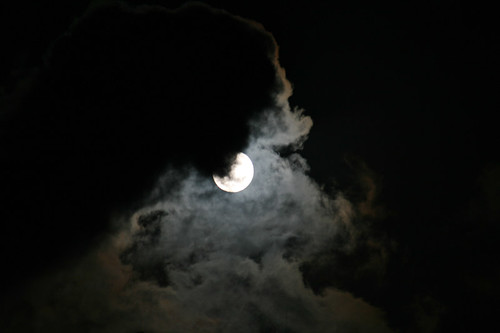 In times long ago, before we tried to insulate ourselves from the night with our electric lights and sound-proof homes, the nighttime was a scary place. The night held untold dangers, isolated one person from another, and was generally thought of as the time when evil most readily abounded. In short, it was the time when men had the least control over their surroundings, and had to trust most heavily in God to keep them safe--to sustain them.
 I'm no Luddite, but I sometimes get afraid of the night. Not because I'm scared of the dark, but because I like to remind myself how truly dependent I am on God to keep me and sustain me. It's like the old child's prayer--
As I read that prayer last night, I imagined this day some 2000 years ago:
 For the disciples, scattered and afraid: The cross was empty, but there was no hope. Christ was dead and in a tomb. It was only a matter of time til they came for the rest of them. How could these men find faith in the midst of such despair? Where did they turn now that their Lord was gone? Where does their faith come from in the blackest night?
And for Christ, I cannot begin to imagine his thoughts on Friday as the black clouds blotted out the sun and the skies grew dark. Death drew nigh. Who, in all the universe, could Christ cry out to, asking for protection and sustenance as all hope fled? "Abba, Daddy! Why have you forsaken me!?" is the only prayer that could be offered.
But as I reflect on these things, I count myself lucky. I have a source to go to when things are their blackest. So today, on the Darkest Saturday of the year, I find myself offering this song as my prayer:
Let the Morning come soon!

TheUkieVillain
In times long ago, before we tried to insulate ourselves from the night with our electric lights and sound-proof homes, the nighttime was a scary place. The night held untold dangers, isolated one person from another, and was generally thought of as the time when evil most readily abounded. In short, it was the time when men had the least control over their surroundings, and had to trust most heavily in God to keep them safe--to sustain them.I'm no Luddite, but I sometimes get afraid of the night. Not because I'm scared of the dark, but because I like to remind myself how truly dependent I am on God to keep me and sustain me. It's like the old child's prayer--Now I lay me down to sleep,That yearning to rely on God for preservation of my life is probably why my favorite part of the Book of Common Prayer is the Evening Prayer, or Vespers as the Roman Catholics call it. It's essentially the same thought in more developed prose. A moment in time as the sun begins to fade, and--lit only by candles if tradition has its way--we remember God's Providence and sustenance as the night falls, asking to be protected til the morning.
I pray the Lord my soul to keep.
If I should die before I wake,
I pray the Lord my soul to take.
Lighten our darkness, we beseech thee, O Lord;
and by thy great mercy defend us
from all perils and dangers of this night;
for the love of thy only Son, our Saviour, Jesus Christ.
As I read that prayer last night, I imagined this day some 2000 years ago:
For the disciples, scattered and afraid: The cross was empty, but there was no hope. Christ was dead and in a tomb. It was only a matter of time til they came for the rest of them. How could these men find faith in the midst of such despair? Where did they turn now that their Lord was gone? Where does their faith come from in the blackest night? And for Christ, I cannot begin to imagine his thoughts on Friday as the black clouds blotted out the sun and the skies grew dark. Death drew nigh. Who, in all the universe, could Christ cry out to, asking for protection and sustenance as all hope fled? "Abba, Daddy! Why have you forsaken me!?" is the only prayer that could be offered.
But as I reflect on these things, I count myself lucky. I have a source to go to when things are their blackest. So today, on the Darkest Saturday of the year, I find myself offering this song as my prayer:
Let the Morning come soon!
TheUkieVillain
Thursday, April 09, 2009
Good Friday
Dear Mary,
This lenten period I have been reminded of the various perspectives from which different people view the passion of Christ. This beautiful piece with it's strange lyrics remind me of your perspective of the crucifixion.
The Crucifixion
Samuel Barber
At the cry of the first bird they began to crucify Thee, O Swan!
Never shall lament cease because of that.
It was like the parting of day from night.
Ah, sore was the suffering borne by the body of Mary's Son,
But sorer still to Him was the grief which for His sake came upon His Mother.
—from the Hermit Songs, Op. 29
The birds began to cry.
Some birds have songs, I know, and those we all enjoy. But others have cries that cut the air. Hawks and eagles have piercing cries. And they are portentious. And that cry that cut the air, that cut day from night, was a sign of the grief that flooded your soul the day Christ died, for he was your Savior, too, and your baby boy.
The text for Barber's Crucifixion derives, I am told, from an ancient collection of Irish homilies known as The Speckled Book (Leabhar Breac). They were written partly in Latin and partly in Irish and constitute the most remarkable Irish ecclesiastical record of the period. An unknown Christian scribe wrote the vivid words of this passion scene sometime in the 12th century. The "cry of the first bird" is a musical motif throughout the brief composition.
And the heritage of this song reminds me again of perspectives, the Irish, the Romans, and the mutts of the world who look at this scene and who know that in their hearts, too, day is being cut from night, and we are lost, left standing at the place of the skull.
BRD
This lenten period I have been reminded of the various perspectives from which different people view the passion of Christ. This beautiful piece with it's strange lyrics remind me of your perspective of the crucifixion.
The Crucifixion
Samuel Barber
At the cry of the first bird they began to crucify Thee, O Swan!
Never shall lament cease because of that.
It was like the parting of day from night.
Ah, sore was the suffering borne by the body of Mary's Son,
But sorer still to Him was the grief which for His sake came upon His Mother.
—from the Hermit Songs, Op. 29
The birds began to cry.
Some birds have songs, I know, and those we all enjoy. But others have cries that cut the air. Hawks and eagles have piercing cries. And they are portentious. And that cry that cut the air, that cut day from night, was a sign of the grief that flooded your soul the day Christ died, for he was your Savior, too, and your baby boy.
The text for Barber's Crucifixion derives, I am told, from an ancient collection of Irish homilies known as The Speckled Book (Leabhar Breac). They were written partly in Latin and partly in Irish and constitute the most remarkable Irish ecclesiastical record of the period. An unknown Christian scribe wrote the vivid words of this passion scene sometime in the 12th century. The "cry of the first bird" is a musical motif throughout the brief composition.
And the heritage of this song reminds me again of perspectives, the Irish, the Romans, and the mutts of the world who look at this scene and who know that in their hearts, too, day is being cut from night, and we are lost, left standing at the place of the skull.
And it was now about the sixth hour, and darkness fell over the whole land until the ninth hour, the sun being obscured; and the veil of the temple was torn in two. —Luke 23:44,45Where I am, this morning in Tennessee, it is raining, and lightening is cutting through the sky and thunder is shaking the windows. And the sky, which otherwise would be brightening with rays of the sun, is still like night. It seems appropriate for Good Friday.
BRD
Monday, April 06, 2009
The Gospel According to H.V.
Dear H. V. Shellmeier,
My husband has spoken of you many times throughout the years of our marriage. You gave him his first job, picking peaches in a New Jersey orchard.
During the years when we lived in N.J. We passed your homeplace many times, and when we did, my husband Steve would tell H.V. stories. I've heard about your truck and your temper, your employees and your obsessions. He has quoted verses of your wisdom from what he called, The Gospel According to H.V. such as, "Don't eat the peaches when they are hot," and "I remember when you could hire a good worker for 35 cents an hour."

Today, Steve told me of the time you watched a beautiful box of grade A peaches spill across the packing yard. Now, anyone who has ever watched peaches being packed, knows it is an interesting and automated process. Peaches arrive from the fields in sun-hot crates. The peaches are hard, not quite ripe. Now, there is nothing like a tree-ripened peach. You do not get those in a grocery store. Ripened on a tree, a peach glows with sweetness. The first bite of such fruit explodes with a holy flavor that blesses each tastebud with glory. Business is business, though, and tree-ripened fruit doesn't sell. Too fragile.
From crates, the peaches are dumped into pools of cool water to be cleaned, chilled, sorted and checked. Each box is precious especially to a man like you, Shellmeier, who has framed your years around the seasons of clingstone and free stone.
 But a clumsy set of hands dropped one of the solid waxed cardboard boxes with peachy forms on the lids and Shellmeier Farms on the sides. In response, you stopped, bowed, stooped and knelt, turning from all else to the task of the salvation of many of the the Flaming Fury variety peaches that had not been marred by the gravel of the driveway, minding not at all the cracked stone boring the epidermis of your own knees. You brushed off the surface and eyed them for bruising, tossing the loss in the little bin that held rejects, and carefully replacing the still perfect peaches in the box.
Yesterday, as our family read together the story of Palm Sunday, we were once again reminded of the words and times of H.V. We read that Jesus had retraced the two miles from Jerusalem to Bethany after the parade of palms and the action at the temple. He relaxed there with his friends Lazarus and Mary and Martha. But in the morning,
At those words we were back again in the Gospel of H.V., in an orchard looking at trees, not yet bearing fruit, but with a man who loved fruit; loved it enough to kneel and bow for it.
"Boys," he was saying to my husband and his brother, "Boys, we've got to take out these trees, now, while they are still in blossom and we can tell which ones are which." The boys, who knew the painstakingly slow growth of trees were stunned at this new task, so unlike the tender instructions they had been given in the past, such as, "And if you break one of the limbs of those trees, I'll break your leg." But you were serious, and by the end of the day, seven trees were hacked, stripped of limbs and blossoms, and down.
Why would a man who loved his trees and loved his fruit take such action? In this case, my husband explained, it was because those trees bore lesser fruit than the trees in the rest of that orchard. And that fruit tainted the pickings of the whole. The only solution was to remove the trees while they were in blossom and it was clear which fruit was which.
I suppose that Jesus was doing something like that, in this passage from Matthew. And he was teaching his disciples how to do it too. "Boys," he said, "This is how you tend fruit. Really good fig trees bear fruit all year round. That is the kind of fruit we want to grow."
So, thanks for the illustration of what it means to tend fruit and do it painfully right.
BRD

My husband has spoken of you many times throughout the years of our marriage. You gave him his first job, picking peaches in a New Jersey orchard.
During the years when we lived in N.J. We passed your homeplace many times, and when we did, my husband Steve would tell H.V. stories. I've heard about your truck and your temper, your employees and your obsessions. He has quoted verses of your wisdom from what he called, The Gospel According to H.V. such as, "Don't eat the peaches when they are hot," and "I remember when you could hire a good worker for 35 cents an hour."

Today, Steve told me of the time you watched a beautiful box of grade A peaches spill across the packing yard. Now, anyone who has ever watched peaches being packed, knows it is an interesting and automated process. Peaches arrive from the fields in sun-hot crates. The peaches are hard, not quite ripe. Now, there is nothing like a tree-ripened peach. You do not get those in a grocery store. Ripened on a tree, a peach glows with sweetness. The first bite of such fruit explodes with a holy flavor that blesses each tastebud with glory. Business is business, though, and tree-ripened fruit doesn't sell. Too fragile.
From crates, the peaches are dumped into pools of cool water to be cleaned, chilled, sorted and checked. Each box is precious especially to a man like you, Shellmeier, who has framed your years around the seasons of clingstone and free stone.
 But a clumsy set of hands dropped one of the solid waxed cardboard boxes with peachy forms on the lids and Shellmeier Farms on the sides. In response, you stopped, bowed, stooped and knelt, turning from all else to the task of the salvation of many of the the Flaming Fury variety peaches that had not been marred by the gravel of the driveway, minding not at all the cracked stone boring the epidermis of your own knees. You brushed off the surface and eyed them for bruising, tossing the loss in the little bin that held rejects, and carefully replacing the still perfect peaches in the box.
Yesterday, as our family read together the story of Palm Sunday, we were once again reminded of the words and times of H.V. We read that Jesus had retraced the two miles from Jerusalem to Bethany after the parade of palms and the action at the temple. He relaxed there with his friends Lazarus and Mary and Martha. But in the morning,
Matthew 21:18 Now in the morning, when He was returning to the city, He became hungry.
19 Seeing a lone fig tree by the road, He came to it and found nothing on it except leaves only; and He said to it, "No longer shall there ever be any fruit from you." And at once the fig tree withered.
20 Seeing this, the disciples were amazed and asked, "How did the fig tree wither all at once?"
21 And Jesus answered and said to them, "Truly I say to you, if you have faith and do not doubt, you will not only do what was done to the fig tree, but even if you say to this mountain, 'Be taken up and cast into the sea,' it will happen.
22 "And all things you ask in prayer, believing, you will receive."
At those words we were back again in the Gospel of H.V., in an orchard looking at trees, not yet bearing fruit, but with a man who loved fruit; loved it enough to kneel and bow for it.
"Boys," he was saying to my husband and his brother, "Boys, we've got to take out these trees, now, while they are still in blossom and we can tell which ones are which." The boys, who knew the painstakingly slow growth of trees were stunned at this new task, so unlike the tender instructions they had been given in the past, such as, "And if you break one of the limbs of those trees, I'll break your leg." But you were serious, and by the end of the day, seven trees were hacked, stripped of limbs and blossoms, and down.
Why would a man who loved his trees and loved his fruit take such action? In this case, my husband explained, it was because those trees bore lesser fruit than the trees in the rest of that orchard. And that fruit tainted the pickings of the whole. The only solution was to remove the trees while they were in blossom and it was clear which fruit was which.
I suppose that Jesus was doing something like that, in this passage from Matthew. And he was teaching his disciples how to do it too. "Boys," he said, "This is how you tend fruit. Really good fig trees bear fruit all year round. That is the kind of fruit we want to grow."
So, thanks for the illustration of what it means to tend fruit and do it painfully right.
BRD
Sunday, April 05, 2009
From Donkey to Temple...
 Dear Salvador Dali,
I ran across your series of biblical art this week, and to be honest it captured my imagination far more than anything of yours I have seen. You took familiar stories that I have heard from birth and removed them from their typical construction and presentation, giving them movement, metaphor and still allowing the shape of them to remain recognizable (well for the most part).
And when I found out that these works were commissioned in an attempt by your patron to bring you to salvation (specifically to the Catholic Church--oh will we ever hold Christ above denomination?) I became even more interested. I wonder what you thought of your works when they were done? What did your wife (beyond hope, according to your patron) think of the works? Did the hope of Christ shine in?
I was searching particularly for a depiction of the cleansing of the temple, and this piece stood out on a web page full of artistic depictions of this scene. Now, how much lee way do you give us to read into your work? Everyone is a critic, they say, and the nature of your free form style lets us fill in the gaps as we stand and look. So if you disagree with anything I say here, please write back.
I was struck by the movement of the piece...people are clearly filing out. And Jesus does have a whip, and in the background there is what appears to be an evil presence. It could be the pharisees, who are really the other main characters of the story and the evil look is a representation of their intentions. Or it could be Satan depicted here as losing this battle, but hoping to win the bigger war. I don't know. Does the circle around the figure depict the whip, which seems to hang at Jesus' side but is really beginning to tighten around the devil as Victory for Jesus comes closer?
One thing that is clear and sets this picture apart from others I found. Jesus does not seem very angry. He is ushering them out, as if he is indicating to the people that "my fight is not with you, but those who stand on high, those who should be leading the flock, those in power who should know what is right and do not do it." And we know that even as he cleared away those who would use the temple for wrong purposes, he opened his arms to the weak and sick and brought healing to that place, literally and figuratively. Jesus showed us that there is no room in His dominion for the money changers and salesmen, but it is open to the weak and sick and lame and blind. (Matthew 21:14)
But back to your work, Sal. I do want to say, that I think the beauty of your work is that it gets us thinking about the familiar stories and about Jesus in a different way. And whether you intended it or not, this is exactly what Jesus was prescribing in this story. We cannot just continue life as it is, accepting the hard lines of reality and not choosing to question them. No, Jesus calls us to a complete phase shift--a new perspective. One where those who would act in greed are expelled and those who wield God as a tool for power are thrown down. And then the weak receive mercy, the broken and ill receive healing. Jesus cleanses both the building of the temple and the bodies of His Temple, the temple of our hearts where he desires to dwell eternally. The physical walls were thrown down, but that opened the new covenant written in Christ's blood providing for a salvation through the temple of His body. Jesus answered them, "Destroy this temple and I will raise it up again in three days ." The Jews replied, "It has taken forty-six years to build this temple, and you are going to raise it up in three days?" But the temple he had spoken of was his body. John 2:19
Jesus opens our eyes to a reality where a Lion comes in power to become a Lamb, slain, and then again becomes a Lion in Victory. Thank God for this new vision, this new reality. And I pray that this week will be a time for the cleansing of each of our temples in order to usher in God's glory and righteousness in our lives.
So Sal, thank you for helping me to think differently about Christ, and I hope that as you painted this series about Him that you, and your wife, found this revolutionary truth as well.
To turning over the tables of our lives,
CaDh8
Friday, March 21, 2008
Maundy Thursday
adore afflicted ah bitter comfort cross death diest face fail god grace guilty hast head heart herzlich herzliebster hide holy incarnation incline jesus johann life light lord love mich mortal music offended offered passion pity power pray sacred salvation scorn shepherd slave sorrow thine thorn trans unswerving verlangen won wounded
created at TagCrowd.com
Dear Kind Jesus,
It's like any other Thursday, really, except for this, and these songs we sing, and the story we remember, and the sacred act we commemorate by stripping the altars of our lives and draping them with black.

| O sacred head, sore wounded, defiled and put to scorn; O kingly head surrounded with mocking crown of thorn: What sorrow mars thy grandeur? Can death thy bloom deflower? O countenance whose splendor the hosts of heaven adore! Thy beauty, long-desirèd, hath vanished from our sight; thy power is all expirèd, and quenched the light of light. Ah me! for whom thou diest, hide not so far thy grace: show me, O Love most highest, the brightness of thy face. I pray thee, Jesus, own me, me, Shepherd good, for thine; who to thy fold hast won me, and fed with truth divine. Me guilty, me refuse not, incline thy face to me, this comfort that I lose not, on earth to comfort thee. In thy most bitter passion my heart to share doth cry, with thee for my salvation upon the cross to die. Ah, keep my heart thus moved to stand thy cross beneath, to mourn thee, well-beloved, yet thank thee for thy death. My days are few, O fail not, with thine immortal power, to hold me that I quail not in death's most fearful hour; that I may fight befriended, and see in my last strife to me thine arms extended upon the cross of life. Text: Robert Bridges, 1899 Music: Passion Chorale (Herzlich thut mich verlangen), St. Christopher |  Ah, holy Jesus, how hast thou offended, that we to judge thee have in hate pretended? By foes derided, by thine own rejected, O most afflicted! Who was the guilty? Who brought this upon thee? Alas, my treason, Jesus, hath undone thee! 'Twas I, Lord Jesus, I it was denied thee; I crucified thee. Lo, the Good Shepherd for the sheep is offered; the slave hath sinned, and the Son hath suffered. For our atonement, while we nothing heeded, God interceded. For me, kind Jesus, was thy incarnation, thy mortal sorrow, and thy life's oblation; thy death of anguish and thy bitter passion, for my salvation. Therefore, kind Jesus, since I cannot pay thee, I do adore thee, and will ever pray thee, think on thy pity and thy love unswerving, not my deserving. Text: Johann Heermann, 1585-1647; trans. by Robert S. Bridges, 1844-1930 Music: Johann Cruger, 1598-1662 Tune: HERZLIEBSTER JESU |
Thanks,
Just me
Subscribe to:
Posts (Atom)

 Posts
Posts


