Sunday, March 17, 2013

More on Best Dressed Cardinals

Dear Vatican Watchers,

First captivated by the Onion's photo essay entitled, The 8 Worst-Dressed at the Papal Conclave, I was then mesmerized by a fleeting couple of images shown during the pope's first prayer during his first public address. Perhaps the cameraman closed his eyes and incidentally focused the lens upon the back of the elite at the vatican window. Why this set of images didn't get any media play, is beyond me.


Note: Little signs of the new pope's personal styling choices include his decision to appear on the balcony of St. Peter’s Basilica without the red mozzetta — the telltale short cape of the papacy.

For more on the stylings of the patriarch and his compatriots, check out the Style Page in the Catholic Register.


And for more fun with the kids, try out these vestments for your papal dolls!

Do you wonder whether we'll see this puppy (the Papal Tiara) pulled out for special occasions during Pope Francis' casual reign? I'm kind of doubting it. 


Betsy

Thursday, February 14, 2013

Books and Studies, 2013

This is just a listing of the books I'm reading/have read this year, 2013.


The Snows of Kilimanjaro and Other Stories by  Ernest Hemingway

The New Testament Part I by Bart D. Ehrman (The Great Courses)

Life Lessons from the Great Books, Part I by Professor J. Rufus Fears

Around the World in 80 Days by Jules Verne

The John Updike Audio Collection (Short Stories) by John Updike

My Lady Ludlow by Elizabeth Gaskell

The Adventures of Sherlock Holmes by  Sir Arthur Conan Doyle

A Journey to the Center of the Earth by Jules Verne

The Modern Scholar: Upon This Rock: A History of the Papacy from Peter to John Paul II by Thomas Madden

The Professor by Charlotte Bronte

The Diamond Necklace and Other Stories by Guy de Maupassant

 Life Lessons from the Great Books, Part II by Professor J. Rufus Fears

Adventures in the Unknown Interior of America by Cabeza de Vaca

Following the Path by Joan Chittister

Don Quixote de la Mancha Volume I by Miguel de Cervantes

Don Quixote de la Mancha Volume II by Miguel de Cervantes

The Moving Finger by Agatha Christie

Argo: How the CIA and Hollywood Pulled Off the Most Audacious Rescue in History by Antonio Mendez

Marcelo and the Real World by Francisco X. Stork

Tortilla Flat by John Steinbeck

Earth Afire by Orson Scott Card and Aaron Johnston

Tuesday Club Murders by Agatha Christie

I, Claudius by Robert Graves

The Illusion of Separateness
by Simon Van Booy

One of our Thursdays is Missing by Jasper Fforde

Mrs. Pollifax and the Second Thief  by Dorothy Gilman

Mansfield Park by Jane Austen

Mockingjay by Suzanne Collins

A Death in the Family by James Agee

Tuesday, January 24, 2012

The Books of 2012

This is just a listing of the books I'm reading/have read this year, 2012.

 State of Wonder by Ann Patchett

 Truth and Beauty: A Friendship by Ann Patchett

The Prodigal God by Timothy Keller

For Whom the Bell Tolls by Ernest Hemingway

Executive Orders by Tom Clancy

The Story of Painting by Sister Wendy Beckett

Henderson the Rain King by Saul Bellow

The Art of Reading by Joseph Luzzi

The Power and the Glory by Graham Greene

Lord Jim by Joseph Conrad

The Rising of the Ashes by Tahar Ben Jelloun

The Burglar Who Studied Spinoza by Lawrence Block

Silent Day in Tangier by Tahar Ben Jelloun

Cousin Bette by Honoré de Balzac

Treasure Island by Robert Louis Stevenson

Vanished Smile: The Mysterious Theft of Mona Lisa by R.A. Scotti

Falling Upward: A Spirituality for the Two Halves of Life by Richard Rohr

Absolute Friends by John le Carre

Dickens Women by Miriam Margolyes

Home by Toni Morrison

No Excuses: Existentialism and the Meaning of Life by Robert Solomon (The Great Courses)

The Divine Comedy:  Inferno--Purgatorio--Paradiso  by Dante Alighieri

Prague Winter: A Personal Story of Remembrance, 1937-1948 by Madeleine Albright

The Private Patient: an Adam Dalgliesh Mystery by P. D. James

Agnes Grey by Anne Bronte

The Two Destinies by Wilkie Collins 

Short Stories of Dorothy Parker

Mrs. Pollifax, Innocent Tourist by Dorothy Gilman


Saturday, December 03, 2011

Advent and Herod the King in Judaea

Dear Herod,

Your moment in history was fleeting. Perhaps were it not for the horror of your actions and their proximity to Jesus and his loving contrast, you would be forgotten, gladly, altogether.


Instead you are immortalized beautifully by artists such as Hector Belioz in this amazing aria from L'Enfance du Christ, O misere des rois. . . and by the dark side of the story of Christmas, the parts that we do not read in its entirety to the children on Christmas Eve.
Now when Jesus was born in Bethlehem of Judaea in the days of Herod the king, behold, there came wise men from the east to Jerusalem, Saying, Where is he that is born King of the Jews? for we have seen his star in the east, and are come to worship him. When Herod the king had heard these things, he was troubled, and all Jerusalem with him. And when he had gathered all the chief priests and scribes of the people together, he demanded of them where Christ should be born. And they said unto him, In Bethlehem of Judaea: for thus it is written by the prophet, "And thou Bethlehem, in the land of Juda, art not the least among the princes of Juda: for out of thee shall come a Governor, that shall rule my people Israel."

Then Herod, when he had privily called the wise men, inquired of them diligently what time the star appeared. And he sent them to Bethlehem, and said, Go and search diligently for the young child; and when ye have found him, bring me word again, that I may come and worship him also. When they had heard the king, they departed; and, lo, the star, which they saw in the east, went before them, till it came and stood over where the young child was. When they saw the star, they rejoiced with exceeding great joy. And when they were come into the house, they saw the young child with Mary his mother, and fell down, and worshipped him: and when they had opened their treasures, they presented unto him gifts; gold, and frankincense, and myrrh. And being warned of God in a dream that they should not return to Herod, they departed into their own country another way.

And when they were departed, behold, the angel of the Lord appeareth to Joseph in a dream, saying, Arise, and take the young child and his mother, and flee into Egypt, and be thou there until I bring thee word: for Herod will seek the young child to destroy him.

When he arose, he took the young child and his mother by night, and departed into Egypt: And was there until the death of Herod: that it might be fulfilled which was spoken of the Lord by the prophet, saying, Out of Egypt have I called my son.

Then Herod, when he saw that he was mocked of the wise men, was exceeding wroth, and sent forth, and slew all the children that were in Bethlehem, and in all the coasts thereof, from two years old and under, according to the time which he had diligently inquired of the wise men. Then was fulfilled that which was spoken by Jeremy the prophet, saying, "In Rama was there a voice heard, lamentation, and weeping, and great mourning, Rachel weeping for her children, and would not be comforted, because they are not."

But when Herod was dead, behold, an angel of the Lord appeareth in a dream to Joseph in Egypt, Saying, Arise, and take the young child and his mother, and go into the land of Israel: for they are dead which sought the young child's life. And he arose, and took the young child and his mother, and came into the land of Israel. But when he heard that Archelaus did reign in Judaea in the room of his father Herod, he was afraid to go thither: notwithstanding, being warned of God in a dream, he turned aside into the parts of Galilee: And he came and dwelt in a city called Nazareth: that it might be fulfilled which was spoken by the prophets, He shall be called a Nazarene.
I must run for today, I'll write again. I'd like to ask you more about those dreams.

Betsy

Friday, December 02, 2011

Advent with Charles Dickens

Dear Charles Dickens,

Last year I discovered the little book you had written for your children, The Life of Our Lord. Yes, I know you weren't keen on its being published, but just before Christmas, in 1933, your son Henry died, and after that a decision was made, by the grandkids, to share the work with all the rest of us (i.e. the waiting public).


If you are interested in the 2011 version of publication, here is this Christmas page in its audio form.

I love the lines in this description of the advent of Christ, where you say, "His father and mother lived in a city called Nazareth, but they were forced by business to travel to Bethlehem," and "the town being very full of people, also brought there by business, there was no room for Joseph and Mary in the Inn."


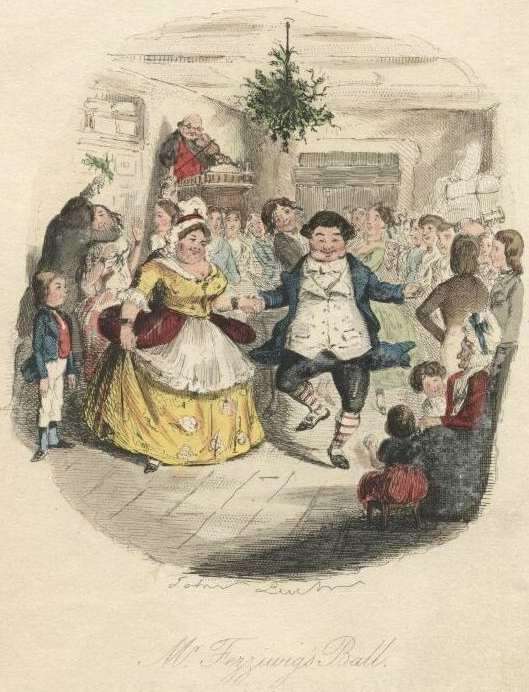
Of course when most of us who love your work, think of Christmas, we think of your greater known work, A Christmas Carol. That story, too, has much to say about business and the bad business of Scrooge. But today, I'm thinking about that good businessman you created, Fezziwig, who had "the power to render us happy or unhappy; to make our service light or burdensome; a pleasure or a toil…The happiness he gives, is quite as great as if it cost a fortune.”

In an economic period that is fraught with Scrooges and business people flinging the Gift of God and good from the  inn to the stable or Zuccotti Park, I wish that the spirit of Fezziwig might occupy Wall Street and our own hearts too.

Betsy

Wednesday, November 30, 2011

Advent and Homelessness

Dear Invisible Neighbor,

When Jesus came he found himself temporarily homeless, sleeping in the O AD equivalent of a garage.

Have you ever had to sleep in a garage? Are you considered homeless if you still have a garage that you can sleep in?


Little Lord Jesus, no crying he made, on his manger mattress.

My friend John was interviewed by the Associated Press the other day about homelessness. John works for the Association of Gospel Rescue Missions. He said, and the Washington Post quotes John saying that one-third of homeless shelter residents are newly homeless. I guess if Jesus came today, he would fall into that group of newly homeless. Plus he would fall into the increasing statistical category of women and children. This is a category that has doubled in the last two years.

Christmas has always been associated with good-deed doing for the poor and homeless. From Saint Nicholas to Good King Wenceslas, who on the feast of Stephen gave flesh and wine and pine logs to the poor peasant living in not much more than a stable between a forest fence and a fountain, neighborly folks with excess goods, have found that winter's rage is tempered by benevolence.

If the homeless, like Jesus, are sometimes invisible, let's pray that the Advent season gifts us with eyes to see and ears to hear.


Betsy

Tuesday, November 29, 2011

An Advent Journey of the Magi

Dear Magi,

So, you had a cold advent, and a long excursion, regretting the summer palaces, but not the trip altogether. I suppose we all do that as the journey drags and lags and passes into retrospective. We monkey around in our minds with the things that have been steeled to confuse us. Birth and Death.


Time present and time past
Are both perhaps present in time future,
And time future contained in time past.
If all time is eternally present
All time is unredeemable.*
Or perhaps all time is redeemable in that one moment, not a bit too soon, that was satisfactory to all that needed satisfying. And redeemable in that one baby, arriving ready to teethe death.

Wholly remarkable.

Betsy

 *Burnt Norton. T.S. Eliot's First of Four Quartets.

Monday, November 28, 2011

Advent

Dear Shepherds,

I had been waiting. That is a phrase filled with. . . but of course it is. And you were there, waiting as if you were hoping all your lives.
All my life I’ve been waiting
for something unusual to happen.
I may yet come into a windfall,
National Endowment of the Hearts.
All my life I’ve been expecting
a grand finale, an awakening, . . .*
And for you the grand awakening on a hillside in the middle of the night in the clear  was not so much a finale as a beginning that finalized everything else. So here, after waiting all your lives and finding the lowly shepherd lamb, you sing.


Thou must leave thy lowly dwelling,
The humble crib, the stable bare.
Babe, all mortal babes excelling,
Content our earthly lot to share.
Loving father, loving mother,
Shelter thee with tender care. 
Blessed Jesus, we implore thee
With humble hearts and holy fear,
In that land that lies before thee,
Forget not us who linger here.
May the shepherd's lowly calling
Ever to thy heart be dear. 
Blessed are ye beyond all measure,
Thou loving father, mother mild;
Guard thee well thy heavenly treasure,
The Prince of peace, the holy child.
God go with you, God protect you,
Guide you safely through the wild.
Holy Anticipation.

Betsy

*Harold Norse  in All My Life I've Been Waiting

**
Chorus of the Shepherds (L'Adieu des Bergers)
from L'Enfance du Christ (Berlioz)
From: VAI DVD 4303 L'Enfance du Christ
Hector Berlioz
With John McCollum, Florence Kopleff, Theodor Uppman, and Donald Gramm
Boston Symphony Orchestra and the Harvard Glee Club and Radcliffe Choral Society
Charles Munch, cond. (1966)

Saturday, June 25, 2011

Violence and Blood Meridian

Dear Dennis,

I told you that Blood Meridian was in the back seat of my car and that I feared it.

I had previously been comforted by your assurances that, if, (as I have not done) I did not finish the book Ulysses, by James (yawn) Joyce, I was not, necessarily, a shallow person. And I could not complete that course. Having stumbled through the first half of this scholastically well-rated tome, knowing sentence by sentence that it certainly was a well-worded set of paragraphs, knowing description by description that the worthy author had ably captured the vignettes of a day, knowing that as the Bloom-fanned pages fluttered and flipped, slowly, I should be appreciating it, I simply could not develop a plan to finally capture this Troy of a book. No hollow horse nor trickery could do it. So back on the shelf it has gone.

And as the sun set on that book, The Evening Redness of the West rose. You were correct. I was not, in the least, bored.

Then on the heels of that, I read, too, Hard Times, by Charles Dickens and was impressed by the fact that both of these books carried with them the air of the morality play.


Dickens, never shy in his naming of moral elements, takes us to the edge of Hell's Shaft in contrasting the lights of Sissy Jupe, Rachael, and Stephen Blackpool with the evils of Victorian industrial and utilitarian society. Certainly, the clouds of blackness that hung over the town of Coke were not less thick than those of the dust that rose under the hooves of the Glantons and Comanches of Cormac's meridian, if not as violent.

But I wonder if Cormac really sees his book as a morality play on the subject of violence, with the Judge, the Devil of War, rising from the shaft of an extinct volcano, able to tend bats and dance the naked totentantz.


Saint-Saens certainly developed the essense reflected by the Judge in his Danse Macabre. I was struck by Cormac's ability to present the picture of this group of men so clearly and yet so soul-lessly. I think he was able to make them seem so spiritually dead by refraining from giving us any picture of their inner lives, but only painting their actions and exterior beings. Only the Judge seemed reflective and animated from within, but the glimpses we were given revealed a black hole sucking light into darkness and life into annihilation.

Perhaps it is most fitting that the protaganist of this book, if there is one, the kid, dies a most demeaning death, non-descript and in the "jake". I find it interesting that critics and reviewers speculate about what indescribable violence the Judge must have inflicted upon the kid. Perhaps, they have fallen into the web of violence itself, seeking to create one worst thing, when the author himself was willing to spare us.

So what is the take-away from the morality play that studies violence? We aren't given the message on the kind of silver platter that Dickens would provide for us, with a nudge to the development of sensibilities that preserve the human spirit animated by kindness, generosity, love, and integrity. We aren't spared by C. M. the reality that has and does play out in every war and every willing maker or war. Nor does he urge us with a turn from alternative. Yet, it is the very bleakness, the desert of the heart of this novel, the thirst with which we are left, the nakedness that such imploding characters reveal, that turns us to the other.

Cormac has left his subject unmasked. There is no question for him, of the result of violence.

I am reminded of the words from Ephesians 2. "You were dead in your transgressions and sins, in which you used to live when you followed the ways of this world and the judge of the kingdom of the air, the spirit who is now at work in those who are disobedient." That is the morality play that Blood Meridian expresses. Like an illumination of a medieval manuscript, this story has revealed the hidden meaning of being dead in transgression. Goodness, it is not a pretty sight.

Betsy

Friday, March 11, 2011

Survey: What is the Greatest Novel of All Time?

Folks,

Though this blog is entitled Letters and Surveys, I must admit, that it has been, mostly, letters. However, occasionally I run a survey. I was hoping that this could be a venue for collecting information, but not too many people add comments.

In lieu of electronic participation, I use a more traditional form of polling. I ask people what they think. This is somewhat time consuming, because when I ask someone, "What is the greatest novel of all time?", the answer is usually only the beginning of a longer discussion of:
  • why this book is one that they love or were touched by

  • what characteristics make this book great

  • what other books might vie for the title of Greatest Novel

  • what are the worst books

  • who is the greatest novelist

  • why I am asking this question

  • and so forth

(I do like these discussions.) Here is the list I've collected so far. I will list them in the comments section. Readers, please add your votes.

My personal answer is: Les Miserables by Victor Hugo

Betsy

P.S. Even if your favorite is already listed, please feel free to list it again. In addition, your comments related to whys and wherefores are very welcome.

Tuesday, March 01, 2011

A People's History of Christianity: The Other Side of the Story

Dear Diana Butler Bass,

I heard you speak the other Sunday, but I feel like I've spent the week with you as I've read The People's History of Christianity.

So often, I've looked over my shoulder at the history of Christianity and I snap my gaze around again, quickly, to the future, not because I have great hopes, but because history, as typical history, is such a shame. The chapter titles are so grim and disgraceful. It is not disheartening that Christians were martyred at the point of swords, but that, so often, they held the swords and ran through the hearts of believers and disbelievers alike. It is not that they were thrown ignominiously to the teeth of lions, but that they were lion hearted. It is not that they were raped and plundered, but that they, with the shield of Christendom emblazoned, deflowered women, children, men, and regions in the name of salvation.

So, your book turns me round and lets me look with teeth unclenched and reminds me that, throughout the ages, there was another, truer history of faith that played out alongside the narratives of power and prestige recalled by biographers and annalists with credentials impressed upon an authorized version.

Betsy

Click on the Dore image - Richard the Lion Heart in Reprisal Massacres Captives - to see this image in sharper detail at artmight.com. Click on the tapestry to see similar works at quaker-tapestry.co.uk

Saturday, February 26, 2011

And the Prize Goes to W.E.B Du Bois for The Quest of the Silver Fleece

Dear W.E.B.,


The 2010 Ellstrom Award for Literature is late in being awarded. It is not that the decision had not been made. It was clear in my mind that this was a stand-out book based on the criteria set up for the award. That is, it is the book that I liked the most and was most deeply affected by during the reading year 2009. However, I stopped posting for longer than I care to think, and you were left waiting.

So, The Quest of the Silver Fleece by W.E.B DuBois is our choice.

This book is now in the public domain, so all of us are welcome to read it online for free. And it is a meaningful read. I believe that you described the overall affect best, yourself, in the introductory note.

He who would tell a tale must look toward three ideals: to tell it well, to tell it beautifully, and to tell the truth. The first is the Gift of God, the second is the Vision of Genious, but the third is the Reward of Honesty.

In the Quest of the Silver Fleece there is little, I ween, divine or genious; but, at least, I have been honest. In no fact or picture have I consciously set down aught the counterpart of which I have not seen or known; and whatever the finished picture may lack of completeness, this lack is due now to the story-teller, now to the artist, but never to the herald of the Truth.

And it is so, that you are not a writer of fiction who is fully matured and refined. Your sentences do not leave all of us in awe. Your story has some limits, though I have read far worse that were chosen from the New York Times best seller lists. But I am convinced that you have given us a picture of the angst and dignity of two creative young people, living, and wanting to succeed, in a time and environment that was difficult.

The wholeness of the characters, Zora and Blessed, is striking. We empathize with their dreams. We feel for their plights. They convince us. And they give us hope. And I suppose, in 1911 when this book was published, you, too, had those hopes.

Your dream lived within you until the day before Martin Luther King spoke the words, "I Have a Dream," but by that time you had left us for Ghana, finding, perhaps, at least for yourself, a better vantage point to see your dreams unfold. Perhaps, were you with us today, you could help our country build a new and better quest for interracial relationships that address the complexities of our lives today.

Thanks for your soul and your words.

Betsy


Books and Music 2011

Dear Book Lovers,

This year my reading goals are going to include a genre of books that are difficult for me--long books. Most of my reading in the past couple of years has been centered on the classics of new and old literature. However, I have always used one qualifier. It can't be too.o.o.o.o long. This year, I plan to head into that storm of excessive wordiness, letting the howling sentences plash upon the prow of my vessel, setting myself adrift upon the endless roll of interminable ideas and utterances. Simply, I will read some long books. I will also read some others.

Books like Ulysses and War and Peace, even In Search of Lost Time, have long been on my list of "I couldn't get through that" books. Maybe, after this year, that list will have diminished. So far, I'm halfway through my first. I might even try to dabble in The Eight Dog Chronicles, though I don't think I want to commit the next 30 years of my life to them!

And here's a list to choose from.

Books

The Public Domain by Stephen Fishmen

Complete Copyright: An Everyday Guide for Librarians by Carrie Russell

Broken Glass by Alain Mabanckou

American Mind Part I by Allen Guelzo

Ulysses by James Joyce--first 1/2 and I'm taking a break!

A People's History of Christianity: The Other Side of the Story by Diana Butler Bass

The Five Most Important Questions You Will Ever Ask About your Organization by Peter F. Drucker et al

North and South by Elizabeth Cleghorn Stevenson Gaskell

A Spirit of Tolerance: The Inspiring Life of Tierno Bokar by Amadou Hampate Ba

The Alchemyst: The Secrets of the Immortal Nicholas Flamel by Michael Scott

Strengths Finder 2.0 by Tom Rath

To Have and to Hold by Mary Johnston

The Dark Child by Camara Laye

The Razor's Edge by W. Somerset Maugham

The Truth about Muhammad: Founder of the World's Most Intolerant Religion by Robert Spencer

The Enlightenment: Reason, Tolerance, and Humanity in The Modern Scholar Series by James Schmidt

The Moon and Sixpence by W. Somerset Maugham

The Reivers by William Faulkner

The Theory of Everything: The Origin and Fate of the Universe by Stephen Hawking

Blood Meridian by Cormac McCarthy

Hard Times by Charles Dickens

The Wind in the Willows by Kenneth Grahame

The Chronicles of Barsetshire by Anthony Trollope

Clan of the Cave Bear by Jean M. Auel

The Life of an American Slave by Frederick Douglass

Racism Explained to My Daughter by Tahar Ben Jelloun

Islam Explained by Tahar Ben Jelloun

True Grit by Charles Portis

Life and Operas of Verdi - Course 1 by Robert Greenberg

Life and Operas of Verdi - Course 2 by Robert Greenberg

Steppenwolf
by Hermann Hesse

2 States, The Story of My Marriage by Chetan Bhaghat

Heaven is for Real by Todd Burpo

Life and Operas of Verdi - Course 3 by Robert Greenberg

Haroun and the Sea of Stories by Salmon Rushdie

Muhammad: A Prophet for Our Time by Karen Armstrong

Blue Like Jazz by Donald Miller

Midnight's Children by Salmon Rushdie

Wednesday, May 05, 2010

Ellstrom Award for Literature - 2010: The Field

Dear Readers of All Stripes,

Last weekend was the event called, The Most Exciting Two Minutes in Sports. It's the Run for the Roses. It's the Kentucky Derby.

Well, perhaps, the announcement of the Ellstrom Award for Literature, 2010, is not the most exciting two minutes in literature, but it is one that I prepare for during the course of a full year. The Derby and the Ellstrom award have two things in common. They both have a great field! By that I don't mean the track, for the Derby track was pretty soggy this year. I mean the "horses" in the running.


I studied the horses that ran in the Derby this year. And then I placed a bet ($6.00) on Paddy O'Prado to win, place, or show. At the end of two minutes, I was $3.40 richer. (Paddy showed.)

During the course of the 2009 year I studied a different, but equally pedegreed, field. And I was far richer for the activity. This field of authors includes some of the very best. (See full list.) The contenders for the award are:
  • Fyodor Dostoyevsky on The Brothers Karamazov
  • Diane Setterfield on The Thirteenth Tale
  • W.E.B. DuBois on The Quest of the Silver Fleece
  • Sylvia Plath on The Bell Jar
  • Bertoldt Brecht on Mother Courage
  • Leo Tolstoy on The Death of Ivan Ilych
  • Antoine de Saint-Exupery on The Little Prince
  • Kurt Vonnegut on Slaughterhouse Five or the Children's Duty Dance with Death
  • John Steinbeck on Grapes of Wrath
  • Thomas Hardy on Jude the Obscure
  • Victor Pelevin on Oman Ra
  • Zora Neale Hurston on Seraph on the Suwanee

The also-rans were notable with William Faulkner, Theodore Dreiser, and Joseph Conrad being eliminated at the gate.

So now is the time to place your bets. Which of these stellar authors, new and old, will take the prize, will win the roses?

BRD

P.S. To sweeten the pot--for anyone betting on this race who also comes to visit me at my house before I announce the winner of the 2010 Ellstrom Award, I will give you a book from the DeGeorge family library. And, yes, I will inscribe it appropriately!

Saturday, March 20, 2010

Catch-22 (A Review Continued)

Dear Joseph Heller,

Perhaps you were aiming at this.

And in a way, you succeeded. Certainly, you called into question the military machine. Still in a landing pattern after the second war to end all wars, the machine was gearing up for Korea, then Vietnam, without so much as a touch-down or reverse thrust. It was, is, as illogical as your Catch-22. We were desperate for an anti-war novel and absurd was the correct form, with your story and sentences wandering around and around popping out from insane fox holes. In a way it is an appropriate bit of banter.


And you did discuss some important issues: justice, fate, mediocrity, the frailty of humanity, non-conformity, perseverance, but the pacing is pretty unendurable. My reaction was that you would have to be under orders to read the whole of this.

Our cultures do need the words against war so desperately, and your book doesn't fall apart, it maintains its form, excruciatingly, to the end. So that is something. But the book ends where it begins. It talks against war, but in the end, there is no alternative offered. You have gone AWOL. One by one the troop is taken, shot down, mutilated, and we are left yawning. You have not even made us care.


And in the meanwhile you have uglified life, uglified women in particular, ascribing no dignity, even off-handedly, to any female character in the book. You may, like Henry Higgins of My Fair Lady, defend yourself and say that you gave no dignity to any character in the book, but that is not true. Your ending does grant dignity to Orr, Yossarian, and the chaplain, but ends with one last denouncement of a female character as, at best, maniacally dangerous.

Catch-22 is unkempt, unfair, and ridiculous. Absurdity is not inappropriate, but it does not stand on its own. You have given us a few helpful vignettes with Clevinger revealing an underbelly of injustice, Wintergreen posing as the erratic hand of fate, Major Major exemplifying the horrifying result of exulted mediocrity, and Milo Minderbinder giving us a frightening look at unbridled capitalism. However, I am mystified that it is rated highly on either of the Modern Library lists.


BRD

Friday, February 26, 2010

It's a Catch-22

Dear Joseph Heller,

I was a victim of circumstance, you see, and I never wanted to be a victim of circumstance. It was a catch, a Catch-22. I had decided to read each of the novels on the Modern Library's two "Best 100's" lists. (The Board's and The Reader's Lists) Actually, it is Annie Dillard's fault. In her book, An American Childhood, she talks about how difficult it was, as a child, to decide which book she should choose from the shelves of books at the Homewood Library. She finally found a way to choose good books. Dillard says,
"On its binding was printed a figure, a man dancing or running; I had noticed this figure before. Like so many children before and after me, I learned to seek out this logo, the Modern Library colophon."

So, I read your novel, Catch-22, which holds place number 7 on the board's list and 12 on the reader's list. I didn't read Ulysses, the most highly rated double-listed book (Board-1, Reader's-11). It is very long. Plus Annie Dillard said that it's awful, although my son-in-law loves it, so I may, yet, give it a go. Anyhow, I was stuck, for weeks, slogging through the amputated prose of Catch-22.

I kept asking myself, "Who would actually like this book?" Don't get me wrong, I was raised with runs and reruns of MASH within hearing, but this was too, too. . . long. It was a bit like hearing the Who's on First sketch repeated 500 times consecutively.

Now Yossarian and Doc Daneeka of your novel are the revealers of the Catch-22 concept.
Yossarian looked at him soberly and tried another approach. "Is Orr crazy?"
"He sure is," Doc Daneeka said.
"Can you ground him?"
"I sure can.
But first he has to ask me to. That's part of the rule."
"Then why doesn't he ask you to?"
"Because he's crazy," Doc Daneeka said. "He has to be crazy
to keep flying combat missions after all the close calls he's had. Sure, I can ground Orr. But first he has to ask me to."
"That's all he has to do to be grounded?"
"That's all. Let him ask me."
"And then you can ground him?"
Yossarian asked.
"No. Then I can't ground him."
"You mean there's a catch?"
"Sure there's a catch," Doc Daneeka replied. "Catch-22. Anyone who wants to get out of combat duty isn't really crazy."

There was only one catch and that was Catch-22, which specified that a concern for one's safety in the face of dangers that were real and immediate was the process of a rational mind. Orr was crazy and could be grounded. All he had to do was ask; and as soon as he did, he would no longer be crazy and would have to fly more missions. Orr would be crazy to fly more missions and sane if he didn't, but if he was sane he had to fly them. If he flew them he was crazy and didn't have to; but if he didn't want to he was sane and had to. Yossarian was moved very deeply by the absolute simplicity of this clause of Catch-22 and let out a respectful whistle.

"That's some catch, that Catch-22," he observed.
"It's the best there is," Doc Daneeka agreed.
I am not the first to quote this portion of the Catch-22 text. After I had read that, I could have said, "No need to slough through more." I use the word slough, because I must say, it is a pig-pen of a book. Is that what gave it the enormous popularity during the early years? That, plus quite an advertising splash in the New York Times. Those were the days. Ginsberg and Ferlinghetti were lighting censorial fires.

The 60's were a time ripe for disrespect, obscenity, and absurdity. It was a time for hatching such things as Monty Python's Flying Circus (1969). It was the best of times and the worst of times. The worst of things were released and tolerated in the name of the best of things.

Perhaps that is what this was about, with the old lady playing the part of Alan Ginsberg.


I guess this letter has become quite disrespectful to you. I'll take a break and see if I can finish in a more respectful tone later.

. . . to be continued

I'm Fifty and I Don't Know Nothing


Dear Alice and Violet,

I heard about you quite a while ago, and I thought about you deeply at that time. Toni Morrison is the one who was telling me. . . about you, about your lives, about the songs your lives were singing in a blue, blue melody with overtones so pure and so sad.

Well, dears, I just want you to know that I understand and the questions you raise are. . . well, I just wanted to tell you you're not alone.

Here's what you said that caught my ear. Toni was talking, telling me, and I just started writing it down. I was driving at the time. (My writing gets so squiggly when I'm driving, like the line of a saxophone solo, and the sentences get out of place.)

For instance, "I'm 50 & I don't know," is what near-onto stopped me in my tracks, that is, if I hadn't been driving about 70 miles an hour past the big Watt Road truck stop. Now, there is a place NOT to stop in your tracks, with those double-semis roaring across lanes. The lanes from Nashville join in right there. Some lanes hot-foot-it up from the south and some come in from the west. Those drivers are not fooling when they hedge you, in a flash, with a blinking light saying, "Want over! NOW!"

"We born around the same time, me and you," said Violet. "We women, me and you. Tell me something real. Don't just say I'm grown and ought to know. I don't. I'm fifty and I don't know nothing. What about it? Do I stay with him? I want to, I think. I want. . . well, I didn't always. . . now I want. I want some fat in this life."

"Wake up. Fat or lean, you got just one. This is it."

"You don't know either, do you?"

"I know enough to know how to behave."

"Is that it? Is that all it is?"

"Is that all what is?" There's more of this conversation excerpted here.

I do understand, Alice, Violet. Getting old is no trick. And sometimes you look up from your reading, or driving, or laundry, or sewing, or music, or writing of blogs and say, "Hey, wait a minute. Is this it?" And you're not sure what "behaving" has to do with it.

Well, I want to encourage you, not that I'm sure of everything, because I'm just me, but I've lived and come from a family of folks who have lived a long time.

My husband calls me a Communist, but I'm not. I'm just a socialist. And I'm not even a good socialist. I haven't even read Karl Marx. But I kind of believe that in some ways all things are equal. The sky up above our heads and the solid pavement or earth beneath us lend some equality to all things. And, it is the embrace of this equality and availability of good things that can grant to us the opportunity to say, "Yes. That is all there is. Isn't it fine!"

My mother said, the other day, that she was thinking about heaven. She said, "It's so close!" She wasn't fearful. She meant, "Isn't it grand." I was out the other day and saw eight deer in a field. My children were together at Thanksgiving and played kickball in the cold. They let me play even though once they observed my running style, they thought I'd better be the pitcher for both teams.

In spite of what you hear from various sides, both conservatives and liberals, "behaving" does have something to do with living a happy life. You can't spend up your capital. . . energy and money and emotional engagement on foolishness. You can't shut your window and breathe fresh air. You can't run after what doesn't exist and find it. How do I say that in the terminology of behaving? You can't covet something you don't have and enjoy what you've got. You can't be unfaithful to your husband, wife, and family and experience the delights of your husband, wife, and family. You can't lie and still believe. You can't curse and be blessed. You've got to behave yourself.

I'm way over fifty now. I don't know much. But, as much as I know anything, I know that love and faithfulness, beauty and truth, goodness and justice, with a good dose of humility thrown in are investments whose payback is the only payback. So that's what you invest in.

BRD

P.S. Christianity is, by the way, about second chances. That's why I believe in the gospel of Jesus. The story there is of redemption. A second chance at the fat of life. Today is always the day for new investment in that which is the real fat.

There is a commonly known passage from the Bible that talks about enjoying the beautiful fields of our lives and following after God and spiritual things in a way that brings fulfillment. It ends with these words, "Surely goodness and mercy will follow me all the days of my life, and I will dwell in the house of the Lord forever." How fat is that?


Tuesday, February 23, 2010

Crossing the Partisan Divide

Dear Republican Senators Scott Brown, Susan Collins, Olympia Snowe, George Voinovich, Christopher Bond and Democratic Senator Ben Nelson,


The Continental Divide of the Americas, frequently called the Great Divide, is a hydrological divide of the Americas that separates the watersheds that drain into the Pacific Ocean from those that drain into the Atlantic Ocean. There are other continental divides on the North American continent, however the Great Divide is by far the most prominent, well, at least hydrologially speaking. One blogger posted a picture of himself at a sign in the Rockies that announced "Continental Divide". He noted that if he spit in one direction, his saliva would wend it's way to the Pacific. If he spit in the other, the expectorant would find itself reaching the Atlantic Ocean.

There is only one greater divide cutting through the United States at this time, and you, Scott, Susan, Olympia, George, Christopher, and Ben, are our only hope for eroding it. That Greater Divide is the partisanship that defines and divides all of politics these days.

And I want to say "Thank You", to you six, for taking your pick axes and shovels and, at least for one day, one vote, making rubble of the partisan divide that is rendering our political system impotent.

My New York Times headlines this morning recounted the story of your defection from politics as usual. With G.O.P. Help, Senate Advances Jobs Bill, it said. "A rare bipartisan breakthrough," the article stated. It said the Republicans broke ranks and that one Democrat did too. I cannot thank you all enough. What I am impressed by, is your willingness to do what the rest seem unable to do--THINK FOR YOURSELVES!

Water runs downhill. The continental divide marks something that is inexhorable. But people, even congress people, can walk uphill. You have demonstrated that this is possible. I can't thank you enough.

BRD

Saturday, February 06, 2010

When I learned to curse...***with added cursing fun***

Dear Sailors all over the world,

You have been given the status as the worst cuss-ers ever, so I address this letter to you, hoping you may find it an interesting break from the monotony of your ocean voyages.


So, we all know the scene from a Christmas Story, the one where Ralphie is helping his dad change the tire and something happens and he lets out the F-bomb (nicely disguised as FUDGE!) loud and clear for all to hear. And when his mom asks where he learned such a word, but he can't give the obvious truth that his dad swears like a sailor all the time. So he blames it on a friend.

So I was listening to an interview about a new book called the Hidden Brain today, and I don't know why but it got me thinking about when I learned curse words. I don't mean learned how to curse. That, obviously, happened at the dinner table when I had immunity. But I mean learned what curse words meant.

I find this interesting (and understandably you may not) because it seems that I had some pretty strong emotional responses to these words, or else how could I remember these scenes so clearly?

The first scene is when I learned what the D-word means. I remember being probably 8 or 10 and being in our kitchen. My dad and Aunt Dee were sitting around making jokes about the "dam road", literally talking about a road that runs by a dam. And I couldn't understand what was so funny (well, it wasn't actually that funny, but a lot of laughing happens when DeGeorges get together). So I remember asking "What does that MEAN?" and finally my Aunt leaned over and whispered in my ear "it means being sent to Hell." Enough said for me. But the thing that is so wild is how I can still almost feel the breath as she whispered in my ear. The memory is just that clear.

When I was working as an intern with a psychologist, she told me the story of a woman who had extreme difficulty talking. She stuttered and could not clearly say words.
Except for swear words. She almost had tourettes, but when she would start swearing, she did not stop or stutter as she usually did, but could go on clearly with no problems. But why, I want to know. What is the difference with those words. They mean the same thing as many other words, so what gives?

It makes me think about the Sh word. I mean, what is the difference between these words? (Note, as you can tell by how I type, I am SPELLING here, so this is allowable...) S-H-I-T, C-R-A-P, P-O-O-P...I mean they all have 4 letters and mean the same thing. So what is the emotional difference of the first?

So here is what my brother said about curse words in our family...As I said before, spelling is OK, and quoting is OK, too.

So now for a biggie. The F-bomb. I don't actually remember this one, but I have been told it so many times that it is part of my history. Just imagine your young kindergartner riding in the back seat. And you hear her using her phonics skills

newly learned in school. eff---uhhh---kkkk. YEa, don't sound that out loud!! First the sounds are separate and slow, then, as the child grows in confidence, they are slurred together to form the word. And then it is proudly repeated with confidence. I can just imagine my mother going, "No no, honey no, we don't say THAT word. But good reading!"


I do remember, however, asking my dad what the F-word means. We were out at the barn dealing with the animals and he turned toward the rabbit cages. "Remember", he said "when we saw those rabbits trying to make baby rabbits?" "Yea, dad, I remember". "Well honey, that was what the F-word is."

Do parents mess with kids minds on purpose or what? But really, that was sufficient. Between that and Websters dictionary, I got it. Thank you Webster, for your clear concise definitions! After that experience I stuck to Noah for further definition needs. But you know, thank goodness I had the book and not the online dictionary, because who knows what would have come up!

Sucks, which used to be a curse word, but apparently isn't anymore, was written on a sign near my school. The graffiti said "School Sucks". I got that one without any explanation!


I could go on about when I learned the word bitch and proceeded to go to school the next day saying to other kids and telling them it was not bad because it's just a word for female dog, but I think I should stop here and do some real research about this phenomenon. And maybe I will read the Hidden Brain too. Any interesting stories about how you learned how to cuss?

Yours,

CaDh 8

PS. I almost forgot to tell a story of my first use of the word "Ass". Now, I must say that ass is a word that I learned early... "The ox and ass kept time, pah rum pum pum pum..." One of those duel purpose words that you learn once and then you learn again. They are confusing words to children. But I was truly an innocent child and really did keep my mind fairly clean for about as long as it is possible. So one day our teachers at school told us that we were not to call each other "inanimate objects". Yes, it sounds silly, but anyone who remembers junior high and has any imagination can see how some fairly good teasing (we'd probably call it bullying today) could be done and hidden by using code words of common classroom items. So apparently this was going on. Of course, as soon as we were told NOT to do this, we went onto the play ground at recess and started calling each other every name in the book. Think of a play ground..."You kick ball!" "You shoe!" "You lunch box!" "You asphalt!!!"...I think the whole playground got quiet after that left my mouth. But I was clueless. I didn't even know what I said. The recess monitor came and got me and told me I was in big trouble. Why? I mean, yea we were doing something we had been told not to, but why just me? Thinking back it is kind of funny that that woman had to tell my father (the principle) what I had said, and was more embarassed to tell it than I was! I really innocently thought that my dad would understand that I would NEVER intend such a double meaning, but that I was just using the proper term for the pavement we were standing on!
Well, I don't know if my dad believed me. I would not have. But the worst behaved boy in class did come to my defense and told him I would never do such a thing. I thought that was pretty cool. Now it is a standing joke in the family and it is always OK to call someone an asphalt!!