Sunday, May 24, 2009

Discourse in the Breakfast Room at the Hotel

Dear 4 Ladies in the Breakfast Room,

I just wanted to thank you for letting me overhear and record your conversation here in the breakfast room at the hotel. I couldn't have been more entertained. Hope you have a good trip home. Perhaps you should rent The Princess Bride. Action, romance, and the folks who die are only mostly dead.
This man I know bought a pet cemetery. He buried a horse one time. It's not like you can say, lead that horse. Walk over here, die over here. We've got one in the yard. The kid's playground is over there and the garden.

Oh, we had to do that one time. My poor daddy. I had a pick axe. He walked over to the big sugar maple. He said. 'We're not burying him there."

Our family pet died, the one we had from the time I was eight or nine. He was the sweetest thing. He died when I graduated from high school. My mama and daddy, they had gotten up and he had died. It was like a death. My daddy got up and dug a grave.

Brenda is way past her prime. We fix her omelets. She hates it when she has to go to the kennel. Um.m.m It's too much, I'm sure.

We've got to leave before it's too late. We can't drive late into the night. We'll each be driving thirty minutes and say, "OK, it's your turn."

Well, we can just sing. That'll keep you awake.

Let's get a movie. We can listen to that.

OK, but we have to get an action movie, one with lots of mysterious music, "Da, da, Duh."

Yes, nothing that's quiet. Not the Notebook. That will make me cry. I couldn't even watch that, my children watch it, but I can't watch that. How about Martian Child?

Oh, no. Not about a child. Anything about a child is real.

I can't watch movies like the Horse Whisperer, "I cry!" That horse died. It reminds me of when I was trying to get my mare pregnant. We had a beautiful stud palomino! She finally got pregnant and had the cutest little colt. He would just follow me. I'd go out and call him and he'd leave his mama and come to me. Then in 2000, that tornado come through. They come and say, that little horse won't lead. I go out and he's paralyzed.

The next day the vet comes and puts him down. I just couldn't stand there and watch that.

We could stay here another night!

I'm not thinking about that yet. When we get home I have to give away 4 kittens.
Have a great trip.

BRD

Wednesday, May 13, 2009

Female Rickshaw Driver

Dear Sunitha Choudhury,

For those of us who have read books like The Space Between Us by Thrity Umrigar and have seen movies like Water, directed by Deepa Mehta, your story is especially wonderful. I wish you well in your bid for a seat in Parliament.
BRD

Note: Read about Sunitha Choudhury at Al Jazeera's English version

"First she escaped a violent child marriage to achieve the unthinkable - becoming the first and only woman to drive an auto-rickshaw on the streets of the Indian capital, New Delhi.

"Now she wants to become an MP.

"Sunitha Choudhury says she wants to be in parliament so that she can represent the poor.

"When she trudges around the slums and poor quarters of the suburb of Malivya Nagar, she tells the poor that she has the "same roots" as they do and, unlike other rich candidates from the established parties, understands their needs and sorrows."

Tuesday, April 28, 2009

Grandchild of Zorro, a Raccoon off the Old Block

Dear Little Visitor,

With all the temerity of your grandfather Zorro, there you came, walking right up to the door in bold daylight, saying, "Got any cat food?"

I certainly was glad to meet you.


Come again soon.

BRD

Thursday, April 23, 2009

Survey: Public Discourse and the Internet

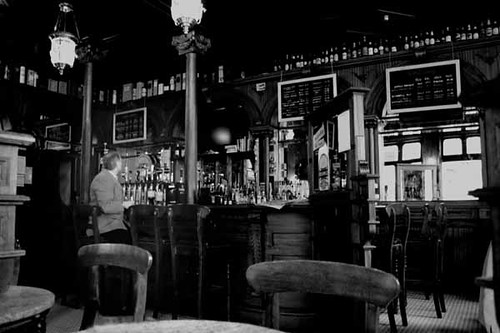
PubIn olden days, people hashed out their differences at the pub or the inn. Granted, the availability of alcohol might have led to some fist-fights, and women were frequently absent from the process, but people had their debates and came to relatively civil conclusions.


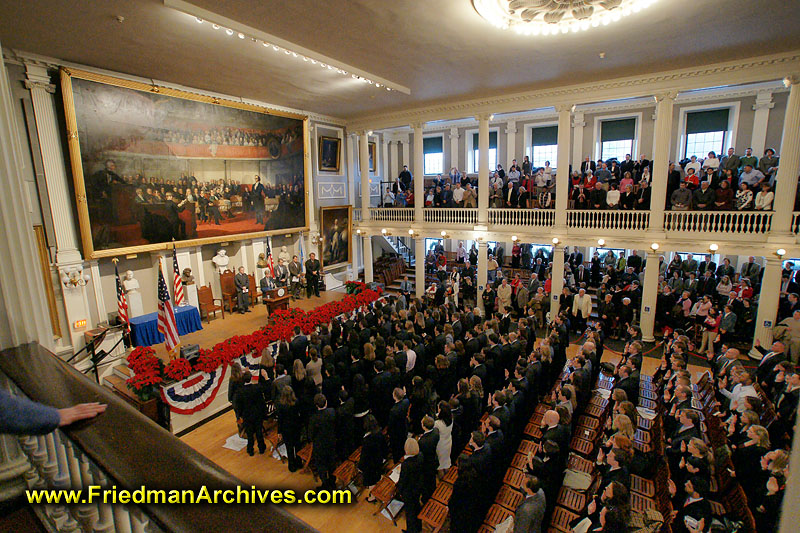
Faneuil Hall, BostonA while later, the idea of civil society emerged: small groups (think Kiwanis, Rotary, or your local Small Business Association) with common goals would join forces to discuss matters of public importance. Assisting this end was the formation of public halls, like Faneuil Hall in Boston. Such places were formal outlets for public discourse, and allowed debate in a structured environment.

Hardball with Chris MatthewsFast-forward to the industrial era, and debate happened on TV and the Radio. As people retreated into their living rooms, the media were bestowed with the responsibility of bringing important matters to the attention of the public, whether through Fireside Chats, Hardball interviews, or scathing exposés on the nightly news.

Today, the Internet has changed much of that. While many of those other media for public discourse still exist today, most people connect with each other and keep up with the issues they care most about via the Internet. Whether news aggregators, RSS feeds, or online forums, people turn online now for their public discourse.

My question is this: Does the internet allow for healthy public discourse, or does it encourage segregation by allowing people to connect solely with those with whom they already agree?


Once you've answered the poll, please comment with your thoughts! Thanks!

TheUkieVillain

TheUkieVillain

Monday, April 20, 2009

A Week for Underdogs

Dear Overdose,

I am a lover of horses, so I was quick to become a fan when I heard your story. Plus, my husband and I are fans of all things Hungarian since visiting Budapest last year.


I guess that in reality, you are no longer an underdog, though you started out as one. With a purchase price of under $4,000, even your owner wasn't expecting a phenome. You were a long-shot in Rome and Baden-Baden, Germany. “We didn’t expect anything from the horse when he arrived,” said Sandor Ribarszki, the horse’s trainer, who has called Overdose “short” and “kind of ugly.”

But now after winning 12 of 12, they are calling you unbeatable. And in the midst of these depressing economic times, they are also calling up comparisons with Seabiscuit. That makes sense too. At any rate congratulations on your latest win.


No, doubt, if you have an in-stall computer, you've seen the other underdog of the week, whose YouTube vids are sweeping the world. It is another "blast of wonderful" for those who just need a "shot at it." Susan Boyle may have looked unlikely too, but at least this week, she is a runaway winner in the world of music and in the hearts of the public who rejoiced at her success.


I hope you both continue to run well. You have already risen to the top and are doing more than just entertain. You are serving to bring us all hope for life and future.

Thanks.

BRD

Thursday, April 16, 2009

April 15 Isn't Just for Taxes Anymore

Dear Steve,

Thank you for making April 15 something more than a day to pay taxes. And thank you for your love.

The gift of this heart-shaped necklace with diamond chips was so sweet. You and I were never much for pomp and circumstance, so sliding a plain white box over beside my dinner plate last night was as formal as we've ever gotten with our romance. Perhaps we are like the couple that Rogers and Hart were thinking about when they wrote, My Romance.


Gee, hearing Bernadette sing, reminds me of that time we watched her sing Send in the Clowns and as she did tears, real tears flowed down her cheeks, and we were charmed and touched.

Extraordinary moments occur ordinarily. An evening, in a go-green apartment, a rowdy puppy-dog romping, tax forms, receipts, Schedule C's, W-2's, seemed to matter intensely. The forms were so critical. And then the things that only appeared to be making April 15 extraordinary fell away, with a few words.

And then we were thinking, not backward on the economic exigencies of the last 12 months, but forward to a life, potentially, entwined and returning jointly, for as long as we both shall live. We will live, (if I said yes?) uninterruptedly together, always, with memories of the first dinner in that crazy basement apartment, you and me, oh, and Phil was there, too, and Leah the dog, and we talked and Phil walked me to the train station, and Phil scolded you for being rude, but I was, nonetheless, enthused about you and wanting to meet again soon, even though my thin shoes were wet from the walk in the rain.

And then we were thinking forward to a marriage, but Leah bounded in with that first interruption to prove that together is never without interruption even by dogs needing to be walked in the back alley of a big city where, even then, there was not privacy but the passing company of a gregarious neighbor with a doberman. And the mist of the evening glowed in a distant lamplight and our breaths took in, not just the night breeze, but the alley-air reminders of yesterday's supper-trash from apartment 12g and even the diaper refuse from 8b. But that was long ago and prescient of other interruptions to come.

And back in the apartment I said, "Yes, yes," and we fell together into loving arms. But not for long, did we embrace, because it was, after all, April 15, and we had yet to check the filing status box, "Single," and walk to the post office before the midnight deadline.


My darling Steven, I am so overwhelmed that you chose me to be the one and only one with whom you would say, "Yes, married filing jointly" for the rest of your life. Thank you for that, for the beautiful necklace reminder, and for your love.

XOXOXOX
Betsy

Wednesday, April 15, 2009

Tax Day Tally

Dear Secretary Geithner,

April 15 CalendarToday is tax day, though I paid my taxes a week or so ago.

Each year, April 15 gives me pause, since I am forced to actually look at my finances and think about the money I send on to the government. Most years I get a refund for amounts I've overpaid. Getting a big pile of money is generally a happy thing, and I tend to focus more on what I'll do with that stack o' cash than the money that I've already paid.

However, this year I had the dubious privilege of writing a check. And as I wrote that check, I began to think a bit harder about the sum total of the taxes I pay. And not just the complexities of the tax code, such as the difference between marginal and effective tax rates, which we've talked about before.

I started with my Federal and State (Illinois) income tax, thinking that would be a pretty big dent in my family's finances. I was a bit surprised, as we only paid about 16.8% of our total income to income taxes. Not bad!

My Income Tax Rates
Then, I realized that this was not the end of my tax payments. Indeed, every time I make a purchase, I pay 10.25% in various sales taxes: Illinois takes 6.25%, Cook County takes 2.75%, and Chicago takes an additional 1.25%*. That's nearly as much as the amount I pay in income tax! Yikes! Thankfully, I'm not a homeowner, or I'd be paying property taxes too!

My Sales Tax
But then, Mr. Geithner, I started thinking about all those tax dollars and the things that are accomplished with them. Besides paying for Blagojevich to take his family to Florida for a last fling before he goes to jail, my tax dollars help build roads, provide health insurance to poor people, and make sure my peanut butter stays free of salmonella. I'm pretty sure at least three of those are good things.

Salmonella Peanut ButterYou know what I realized? I realized that the taxes I'm paying this year don't come close to paying for all the things that my government does. Chicago, Cook County, Illinois, and the USA are all dealing with the fact that they've spent more than they 'earned,' and they are now looking for ways to close that "budget gap." Illinois is likely to raise the state income tax to 4.5%. The Federal government will probably just sell more T-bills to China.

And all of that money will need to be paid back someday. So eventually, I bet we'll have to raise taxes to cover that as well. Let's just call this a "Future Tax." Here's what it looks like, split out per person.

Personal Debt
Oh, my! That's a lot of money! I'm not sure where the government is going to get all that. I sure don't want to foot that bill, though I suppose I already am in some form or fashion. Perhaps this is why there's such outcry against taxes this year, in the form of "Tea Parties" and the like.

Mr. Geithner, I really hope you can come up with a plan to help pay down some of this debt. Our country can't live on credit cards borrowed money forever. And the amount I'm paying in taxes have to do other stuff besides pay interest, like pay the Navy to fight pirates.

And, as the House of Representative's own Harry Reid says, our taxes are voluntary anyway:


So, I guess my point in all this is that while you guys in government have managed to keep our income taxes pretty low, it would be nice if you kept the other, less visible taxes low as well.

And as a helpful reminder, don't forget to file your taxes today! I've heard you've had troubles with that in the past!

TheUkieVillain

TheUkieVillain


P.S. If anyone is interested, the research and sources for debt and such can all be found here and here. It isn't pretty, but you can at least follow it back to the source. Consider this a footnote.

*The sales tax is reduced quite a bit for buying food. But it's even higher than 10.25% when buying gas, alcohol, and cigarettes (glad I'm not a smoker!). Oh, and Chicago has an extra tax on bottled water, extra taxes on fast food in the downtown area (aka tourist tax), extra taxes on parking downtown (parking!?), and an extra amusement tax at many of the popular attractions, like Navy Pier.

Sunday, April 12, 2009

Easter Morning--Hallelujah!

Dear George Frederic Handel,

This morning our Easter service music included the beautiful Hallelujah Chorus.


Once again, we stood, listening to the beautiful music you composed in celebration of the the birth, passion, resurrection and triumph of our Savior Jesus Christ.

Thank you for this beautiful music, which fills our hearts with joy!

BRD

Saturday, April 11, 2009

Darkest Saturday

To All Those in Peril, All Those in Darkness, and All Who are Hopeless:

Scary nightIn times long ago, before we tried to insulate ourselves from the night with our electric lights and sound-proof homes, the nighttime was a scary place. The night held untold dangers, isolated one person from another, and was generally thought of as the time when evil most readily abounded. In short, it was the time when men had the least control over their surroundings, and had to trust most heavily in God to keep them safe--to sustain them.


Child prayingI'm no Luddite, but I sometimes get afraid of the night. Not because I'm scared of the dark, but because I like to remind myself how truly dependent I am on God to keep me and sustain me. It's like the old child's prayer--
Now I lay me down to sleep,
I pray the Lord my soul to keep.
If I should die before I wake,
I pray the Lord my soul to take.
That yearning to rely on God for preservation of my life is probably why my favorite part of the Book of Common Prayer is the Evening Prayer, or Vespers as the Roman Catholics call it. It's essentially the same thought in more developed prose. A moment in time as the sun begins to fade, and--lit only by candles if tradition has its way--we remember God's Providence and sustenance as the night falls, asking to be protected til the morning.
Lighten our darkness, we beseech thee, O Lord;
and by thy great mercy defend us
from all perils and dangers of this night;
for the love of thy only Son, our Saviour, Jesus Christ.

As I read that prayer last night, I imagined this day some 2000 years ago:

The despair of the empty cross For the disciples, scattered and afraid: The cross was empty, but there was no hope. Christ was dead and in a tomb. It was only a matter of time til they came for the rest of them. How could these men find faith in the midst of such despair? Where did they turn now that their Lord was gone? Where does their faith come from in the blackest night?

And for Christ, I cannot begin to imagine his thoughts on Friday as the black clouds blotted out the sun and the skies grew dark. Death drew nigh. Who, in all the universe, could Christ cry out to, asking for protection and sustenance as all hope fled? "Abba, Daddy! Why have you forsaken me!?" is the only prayer that could be offered.

But as I reflect on these things, I count myself lucky. I have a source to go to when things are their blackest. So today, on the Darkest Saturday of the year, I find myself offering this song as my prayer:


Let the Morning come soon!

TheUkieVillain

TheUkieVillain

A Dark Day...

Dear Jesus,

I have started so many prayers that way. Like a letter to a friend. But when I say "dear" to you, I mean more...you are more dear to me than any property, more dear than my dogs, more dear than my friends new and old, more dear than the family I was born to, and more dear than the husband I have chosen to spend my life with.

So, my dear Jesus, I commemorated your death by watching a 2 hour depiction of your suffering. I honestly was looking at my watch wondering how much longer this could go on, marveling at the evil cruelty man wrought upon you...that men are willing to bring against each other. Total depravity.

And I watched these images with a group of young kids. I don't know if I would have been allowed to watch this violence at their age, but they all scoffed at the idea that they could not handle it. They had seen worse, they said, as we prepared to start the film. But the other movies they had seen had not been real, and I think they were all struck with the reality of what happened to you. They were silent for two hours simply watching.

Two of the kids in the room are the newest Christians I know. They sat with rapt attention and few words afterwards. I wondered what was going through their minds in seeing what you had done. Most of the kids said that it was not what they expected. They were used to seeing a clean, beautific Jesus image with a little blood on each palm, his feet and a bit on his side, not the total body gore we saw.

One boy said he imagined You being more peaceful about the whole thing, happy to be providing salvation to the world. I am sure the God-ness of you was, but the Human-ness, well, was being tortured. You met physical pain and limitations, just like all of us do. You are our sacrifice and our high priest.

And then, something I never caught before this viewing of the movie, you thirsted. My mind jumped back to the woman at the well, and your promise to her, "All who drink of the water I shall give them shall never thirst, for the water that I shall give them shall be a well of water springing up to eternal life." (John 4:14) You, the source of that eternal spring, suddenly burdened with all of our sin, thirsted. Oh, Jesus, the pain of that moment must have blotted out all the beatings and pain your human body experienced.


So today is the dark day, the day we wait for your victory and return. Those who waited long ago did not know you would be back in three days. And we do not know either, the date of your long awaited return. But we wait and hope in a "church service" that never ends looking forward to the time that we will be with you.
Thank you for all of this, for those who do not deserve it. Now it is we who thirst for you and your return.
Love,
Your Child, CaDh 8

Thursday, April 09, 2009

Good Friday

Dear Mary,

This lenten period I have been reminded of the various perspectives from which different people view the passion of Christ. This beautiful piece with it's strange lyrics remind me of your perspective of the crucifixion.


The Crucifixion
Samuel Barber

At the cry of the first bird they began to crucify Thee, O Swan!
Never shall lament cease because of that.
It was like the parting of day from night.
Ah, sore was the suffering borne by the body of Mary's Son,
But sorer still to Him was the grief which for His sake came upon His Mother.
—from the Hermit Songs, Op. 29

The birds began to cry.

Some birds have songs, I know, and those we all enjoy. But others have cries that cut the air. Hawks and eagles have piercing cries. And they are portentious. And that cry that cut the air, that cut day from night, was a sign of the grief that flooded your soul the day Christ died, for he was your Savior, too, and your baby boy.

The text for Barber's Crucifixion derives, I am told, from an ancient collection of Irish homilies known as The Speckled Book (Leabhar Breac). They were written partly in Latin and partly in Irish and constitute the most remarkable Irish ecclesiastical record of the period. An unknown Christian scribe wrote the vivid words of this passion scene sometime in the 12th century. The "cry of the first bird" is a musical motif throughout the brief composition.

And the heritage of this song reminds me again of perspectives, the Irish, the Romans, and the mutts of the world who look at this scene and who know that in their hearts, too, day is being cut from night, and we are lost, left standing at the place of the skull.
And it was now about the sixth hour, and darkness fell over the whole land until the ninth hour, the sun being obscured; and the veil of the temple was torn in two. —Luke 23:44,45
Where I am, this morning in Tennessee, it is raining, and lightening is cutting through the sky and thunder is shaking the windows. And the sky, which otherwise would be brightening with rays of the sun, is still like night. It seems appropriate for Good Friday.

BRD

A Maundy Thursday Haiku

Dear fellow struggler,

Today is our day of failure, and yet, the day we begin our turn to redemption. Today is the day we remember how we fell away, made the wrong choice, let others down, let ourselves down. Today is the day that hope goes dark, that we are overwhelmed, alone, and sad. We are doing that thing we said we would never do, we are running to the familiar comforts we said we had given up, we are betraying those we love the best.

But even as we do, even as we turn, ignore, fall away, and betray, we are witnessing the act of redemption and forgiveness. Even as we are at our very foulest we are in the presence of utter purity reaching out to our sullied bodies to wrap us in His love and provide the way of our cleansing. It is our day of shame, yet His day of glory. The day we turn away is the day he says to us "I will NEVER turn away." Wow.

So here is my lousy attempt to express how I feel about this day,


"Maundy Thursday"


My will, His will
Mind Body Heart Soul; Battle
Everyday, This day, A day long ago; Maundy
"Not my Will"**


I found out that "Maundy" means command. I feel like Jesus was commanded by His Love, and then now we are commanded. And what is that command?

Not my will--Love the Lord Your God--Not my Will--Love your neighbor--not my will--Resist temptation--not my will--Clothe yourselves in righteousness--not my will--feed the hungry---not my will--clothe the naked--not my will--you cannot serve two masters--

NOT MY WILL


It is the same command Jesus faced that night in the Garden so long ago. And he chose to love us and echo those words as he turned to begin His journey on the Redemption Path for all the world.


That is my prayer today. Not my will, Lord, but yours. Let us remember that in three days the candles of hope will again be lit, and now with an eternal flame.

Thank you Jesus.

In sorrow today, but in expectation of Joy,

Cadh 8
**I know, this is not a real Hiaku. There are rules for REAL Haikus. But this is just really a short poem. But here at Letters and Surveys, we really aren't picky. :)

Tenebrae

Dear fellow travelers through the season of lent,

The days that end the season of lent are dark ones. Dark indeed.

There is a service that is designed to express our reaction to that darkness. It is called Tenebrae, the Latin word for darkness or shadow. The experience is moving. The church hall is lighted only by candles.
1 My God, my God, why have you forsaken me?
Why are you so far from saving me,
so far from the words of my groaning?

2 O my God, I cry out by day, but you do not answer,
by night, and am not silent. --Psalm 22
As scripture is read, one by one, the candles are extinguished until only one white candle is lighted, the Christ candle. Then, that one also is damped.


At the end of this service, all file out quietly, with our thoughts and hearts crying for mercy.

Pie Jesus Domine

Pie Jesu Domine, dona eis requiem,
Blessed Lord Jesus, grant them rest,

Pie Jesu Domine, dona eis requiem,
Blessed Lord Jesus, grant them rest,

Pie Jesu Domine, dona eis requiem, sempiternam.
Blessed Lord Jesus, grant them eternal rest.

Agnus Dei

Agnus Dei, qui tollis pecatta mundi:
Lamb of God, who takes away the sins of the world,

dona eis requiem.
grant them rest.

Agnus Dei, qui tollis peccata mundi:
Lamb of God, who takes away the sins of the world,

dona eis requiem.
grant them rest.

Agnus Dei, qui tollis peccata mundi.
Lamb of God, who takes away the sins of the world,

dona eis requiem sempiternam.
grant them eternal rest.

BRD

Monday, April 06, 2009

The Gospel According to H.V.

Dear H. V. Shellmeier,

My husband has spoken of you many times throughout the years of our marriage. You gave him his first job, picking peaches in a New Jersey orchard.

During the years when we lived in N.J. We passed your homeplace many times, and when we did, my husband Steve would tell H.V. stories. I've heard about your truck and your temper, your employees and your obsessions. He has quoted verses of your wisdom from what he called, The Gospel According to H.V. such as, "Don't eat the peaches when they are hot," and "I remember when you could hire a good worker for 35 cents an hour."


Today, Steve told me of the time you watched a beautiful box of grade A peaches spill across the packing yard. Now, anyone who has ever watched peaches being packed, knows it is an interesting and automated process. Peaches arrive from the fields in sun-hot crates. The peaches are hard, not quite ripe. Now, there is nothing like a tree-ripened peach. You do not get those in a grocery store. Ripened on a tree, a peach glows with sweetness. The first bite of such fruit explodes with a holy flavor that blesses each tastebud with glory. Business is business, though, and tree-ripened fruit doesn't sell. Too fragile.

From crates, the peaches are dumped into pools of cool water to be cleaned, chilled, sorted and checked. Each box is precious especially to a man like you, Shellmeier, who has framed your years around the seasons of clingstone and free stone.

But a clumsy set of hands dropped one of the solid waxed cardboard boxes with peachy forms on the lids and Shellmeier Farms on the sides. In response, you stopped, bowed, stooped and knelt, turning from all else to the task of the salvation of many of the the Flaming Fury variety peaches that had not been marred by the gravel of the driveway, minding not at all the cracked stone boring the epidermis of your own knees. You brushed off the surface and eyed them for bruising, tossing the loss in the little bin that held rejects, and carefully replacing the still perfect peaches in the box.

Yesterday, as our family read together the story of Palm Sunday, we were once again reminded of the words and times of H.V. We read that Jesus had retraced the two miles from Jerusalem to Bethany after the parade of palms and the action at the temple. He relaxed there with his friends Lazarus and Mary and Martha. But in the morning,
Matthew 21:18 Now in the morning, when He was returning to the city, He became hungry.

19 Seeing a lone fig tree by the road, He came to it and found nothing on it except leaves only; and He said to it, "No longer shall there ever be any fruit from you." And at once the fig tree withered.

20 Seeing this, the disciples were amazed and asked, "How did the fig tree wither all at once?"

21 And Jesus answered and said to them, "Truly I say to you, if you have faith and do not doubt, you will not only do what was done to the fig tree, but even if you say to this mountain, 'Be taken up and cast into the sea,' it will happen.

22 "And all things you ask in prayer, believing, you will receive."

At those words we were back again in the Gospel of H.V., in an orchard looking at trees, not yet bearing fruit, but with a man who loved fruit; loved it enough to kneel and bow for it.

"Boys," he was saying to my husband and his brother, "Boys, we've got to take out these trees, now, while they are still in blossom and we can tell which ones are which." The boys, who knew the painstakingly slow growth of trees were stunned at this new task, so unlike the tender instructions they had been given in the past, such as, "And if you break one of the limbs of those trees, I'll break your leg." But you were serious, and by the end of the day, seven trees were hacked, stripped of limbs and blossoms, and down.

Why would a man who loved his trees and loved his fruit take such action? In this case, my husband explained, it was because those trees bore lesser fruit than the trees in the rest of that orchard. And that fruit tainted the pickings of the whole. The only solution was to remove the trees while they were in blossom and it was clear which fruit was which.

I suppose that Jesus was doing something like that, in this passage from Matthew. And he was teaching his disciples how to do it too. "Boys," he said, "This is how you tend fruit. Really good fig trees bear fruit all year round. That is the kind of fruit we want to grow."

So, thanks for the illustration of what it means to tend fruit and do it painfully right.

BRD

Sunday, April 05, 2009

From Donkey to Temple...

Dear Salvador Dali,

I ran across your series of biblical art this week, and to be honest it captured my imagination far more than anything of yours I have seen. You took familiar stories that I have heard from birth and removed them from their typical construction and presentation, giving them movement, metaphor and still allowing the shape of them to remain recognizable (well for the most part).

And when I found out that these works were commissioned in an attempt by your patron to bring you to salvation (specifically to the Catholic Church--oh will we ever hold Christ above denomination?) I became even more interested. I wonder what you thought of your works when they were done? What did your wife (beyond hope, according to your patron) think of the works? Did the hope of Christ shine in?

I was searching particularly for a depiction of the cleansing of the temple, and this piece stood out on a web page full of artistic depictions of this scene. Now, how much lee way do you give us to read into your work? Everyone is a critic, they say, and the nature of your free form style lets us fill in the gaps as we stand and look. So if you disagree with anything I say here, please write back.

I was struck by the movement of the piece...people are clearly filing out. And Jesus does have a whip, and in the background there is what appears to be an evil presence. It could be the pharisees, who are really the other main characters of the story and the evil look is a representation of their intentions. Or it could be Satan depicted here as losing this battle, but hoping to win the bigger war. I don't know. Does the circle around the figure depict the whip, which seems to hang at Jesus' side but is really beginning to tighten around the devil as Victory for Jesus comes closer?

One thing that is clear and sets this picture apart from others I found. Jesus does not seem very angry. He is ushering them out, as if he is indicating to the people that "my fight is not with you, but those who stand on high, those who should be leading the flock, those in power who should know what is right and do not do it." And we know that even as he cleared away those who would use the temple for wrong purposes, he opened his arms to the weak and sick and brought healing to that place, literally and figuratively. Jesus showed us that there is no room in His dominion for the money changers and salesmen, but it is open to the weak and sick and lame and blind. (Matthew 21:14)

But back to your work, Sal. I do want to say, that I think the beauty of your work is that it gets us thinking about the familiar stories and about Jesus in a different way. And whether you intended it or not, this is exactly what Jesus was prescribing in this story. We cannot just continue life as it is, accepting the hard lines of reality and not choosing to question them. No, Jesus calls us to a complete phase shift--a new perspective. One where those who would act in greed are expelled and those who wield God as a tool for power are thrown down. And then the weak receive mercy, the broken and ill receive healing. Jesus cleanses both the building of the temple and the bodies of His Temple, the temple of our hearts where he desires to dwell eternally. The physical walls were thrown down, but that opened the new covenant written in Christ's blood providing for a salvation through the temple of His body.

Jesus answered them, "Destroy this temple and I will raise it up again in three days ." The Jews replied, "It has taken forty-six years to build this temple, and you are going to raise it up in three days?" But the temple he had spoken of was his body. John 2:19

Jesus opens our eyes to a reality where a Lion comes in power to become a Lamb, slain, and then again becomes a Lion in Victory. Thank God for this new vision, this new reality. And I pray that this week will be a time for the cleansing of each of our temples in order to usher in God's glory and righteousness in our lives.


So Sal, thank you for helping me to think differently about Christ, and I hope that as you painted this series about Him that you, and your wife, found this revolutionary truth as well.

To turning over the tables of our lives,

CaDh8

Palm Sunday


Dear Gustave Dore,

It has been a long time since I have written, but the season and the weather and your image make me want to talk with you, briefly. Yesterday was beautiful. I was able to go out to the farm where my horses live with Cadh8. We didn't ride, but we worked with the horses in round pen. When I arrive at the farm, I whistle, and wherever my two boys are in their pasture, their ears perk up, their heads swing around, and they come to me. It is a marvelous thing.

You were an illustrator. One of the best. Here is my question. What made you choose to illustrate the images you chose? In the book I have, The Dore Bible Illustrations, 241 Plates by Gustave Dore, you committed 23 to Passion Week. And the passion collection begins with this one, a portrayal of Jesus on a donkey.

As a woman who owns and rides horses, this illustration is especially interesting to me. A parallel question exists in the minds of all horse loving people to the one that justly captures the thoughts of many spiritually minded people. What would Jesus ride? You have placed Jesus on a fairly good-sized animal. In spite of my fascination, your interest may not have been to capture an authentic portrayal of the equine mode of transport that Jesus chose.
And the multitudes that went before, and that followed, cried, saying, Hosanna to the Son of David: Blessed is he that cometh in the name of the Lord. . . Matthew 21:9
Your work seems to feature the folk, not the animals--And the folk are responding to the presence of the Son of David. (Well, they should.) The gospel writer notes that the folk are everywhere, before and behind, and raising a ruckus of Hosannas to the one who had come in the name of the Lord. The folk are noisy and kneeling and prostrate and silent and waving and running and curious and breathless. They are energetic and ecstatic and swarming.
But I'm looking at the donkey, ears relaxed and plodding in the midst of mayhem and the colt, that was with her. Now this is all taking place, Matthew says, because of something that Zechariah predicted.

Rejoice greatly, O daughter of Zion!
Shout in triumph, O daughter of Jerusalem!
Behold, your king is coming to you:
He is just and endowed with salvation.
Humble, and mounted on a donkey,
Even on a colt, the foal of a donkey.

You decided to place Jesus on mama donkey rather than the colt, but you didn't leave the colt back at the village. He is there too, attending the king endowed with salvation.

My horses would not find the situation that Jesus has ridden into a pleasant one. Their noses would flare and their feet would be nervous. The ears would be twitching this way and that, sensing the man to the rear left with an upraised switch and the one to the right front who had just collapsed in a heap. "Watch out, fast motion to the far left. Oh, what about the guy with the stick ahead and to the near right."

No, my horses would not have liked this at all, and eventually their ears would tense and lie back and they would decide they had had enough.

But Jesus does seem to have this animal under control and exhibiting a rider's posture, he is pretty relaxed in his seat, quickly flashing the "One Way" sign to the little child ahead of him on its mother's knee.

Zechariah says some other things in the passage that Jesus had in mind the day of his ride to Jerusalem.
The Lord their God will save them in that day as the flock of His people.
Another animal metaphor. Later he says,
The Lord of hosts has visited His flock, the house of Judah and will make them like His majestic horse. . .
So Jesus does have a horse!

But the part I like is this.
I will whistle for them to gather them together, for I have redeemed them.
There are plenty of images that scripture uses to elicit the devotion of the people of God. This one, I think, is for me.


Gloria!

BRD

Sunday, March 29, 2009

Pauline Oliveros Duet with Dog

Dear Jackson and Jasmine,

I heard this and knew that you would love it.


The performer is Pauline Oliveros, one of the grand dames of the experimental music of the 20th century. She always talks about deep listening. I think that the dog in the background was listening more deeply than anyone in this audience, although everyone seemed to be paying attention.

Apparently she likes dogs.

The performance reminded me of John Cage. I remember discovering his music when I was in college. I found a book by him at the library. It contained pieces of fur. It was designed so that the reader/performer could stroke the fur and the experience was music. . . fur music. I can't find any information about this book online. Perhaps it is out of print? If you two were here, sitting by my side, I could play fur music with you. I would stroke your heads, (music for two hands) and listen, and feel the rhythms. You might add your own vocalizations.

I heard a story about John Cage once, a myth perhaps. Once upon a time he was playing a piece for a friend but the window was open and the traffic passing by distracted the listener. That person asked if he could close the window and if Cage would play piece once again. "We can do that," Cage said, "but it would not be the same piece."

Cage wrote instructions for the work he composed entitled, Empty words. The instructions are as follows, "At this point all the doors and windows are to be opened, allowing the sounds of the morning to enter.
One reviewer recounts that he was listening to Cage perform Empty words on the radio in 1981.
"I did as he suggested in my own apartment. The bird songs mingled with his own vocalizations — inside and out, everyone was singing together." This approach to music does work. It doesn't work like Bach or Beethoven, but it does work, and in a very inner way, it may work better than the tunes of those old masters.

In 1960, John Cage, a good humored man, made an appearance on the TV show, I've Got a Secret, and performed a composition entitled Water Walk. The audience at that performance added their innovation to the opus, which as you can see was pretty unforgettable.


Bow Wow!

BRD (Nana to you)

Saturday, March 21, 2009

Jude the Obscure, Sue Bridehead the Not-Feminist, Richard Phillotson the Seducer

Dear Thomas Hardy,

Well, I finally finished reading your story, Jude the Obscure. My! Thomas the Long-Winded, you really took your time telling all the details, didn't you? Occasionally, I've been paid by the word for my writing, so I know the temptation of unnecessary elongation, but apart from the checks that accompanied each volume of the serialization [Jude was published in serial form in 1894-1895 and then as a book in 1895] I think that there was really no justification for the excess. However, this is all I'm going to say on that subject.

I have thought so much about this book that I believe I could be tempted to write several letters. I would like to question Jude and Richard about a few things. Then I would really like to talk with Sue. It is she who really worries me.

I have been corresponding with a friend about your book, and especially about Sue. She has helped think through a few things.

Believe it or not, she thinks you are a fatalist. This is what she says.
Hardy is a fatalist.

(That's how I came to tell the difference between which books were his and which were George Eliot's, actually, as they were from the same era and struck me as having similar writing styles and themes: if the main character died or was otherwise totally mortified by life at the end of the book, it was Thomas Hardy; if the main character learned something and grew as an individual through her trials, coming to accept her lot in life, it was George Eliot. Eliot, for instance, teaches Silas Marner that money isn't everything, and subsequently gives him back his money; Hardy teaches the Mayor of Casterbridge that one major alcohol-induced mistake made years ago can't be escaped no matter how hard you try.)

So the fact that I love fatalism about as much, and in much the same way, as George Eliot's sense of redemption and balance, probably has a lot to do with why I feel such simpatico with Sue Bridehead.
You can see from this brief excerpt that my friend is quite fascinating. She is really my daughter's friend from college and we could attest that "It is not often that someone comes along who is a true friend and a good writer." She is both.

Were I to sit down with Jude, I would say,

"Jude, poor you. Calling yourself a seducer, when it was you who was seduced by Richard, who in the first pages of the book stated:
You know what a university is, and a university degree ? It is the necessary hall-mark of a man who wants to do anything in teaching. My scheme, or dream, is to be a university graduate, and then to be ordained. By going to live at Christminster, or near it, I shall be at headquarters, so to speak, and if my scheme is practicable at all, I consider that being on the spot will afford me a better chance of carrying it out than I should have elsewhere.
"That wink of a statement was, for you, the temptation upon which life hinged. This seduction drew you in, wooed you, and by it you were inescapably corrupted. Poor Jude. The later seductions of Arabella and Sue were nothing in comparison with this flirtation that became the obsession of your life. To be a part of Christminster, the established intellectual and spiritual center of your known world--that became the driving force you just couldn't shake. And when you did turn aside from this paramour, all other visions and decisions were askew, tainted by your illicit love for learning."

Then I'd like to talk with Richard Phillotson. "Richard, what a fool you were too. Almost as big a fool as Fawley. And though your temptation for Christminster's powers did not become obsession, they did steal your enthusiasm for learning and giving, if not your inner kindness."

But Sue, it is she who really steals the stage and plays them all. I have read a few critics who call her a feminist. She was, in fact, no such thing. A feminist believes in equal political, social, sexual, intellectual and economic rights regardless of gender. A feminist also believes in equal political, social, sexual, intellectual and economic responsibilities regardless of gender. But Thomas, you failed to grant Sue even a wisp of ability to take responsibility for herself. Whatever her ability in terms of thinking outside of the box, she could not live with the responsibilities that her thinking and actions demanded.

Jude always referred to her as his little Sue. She seemed to glory in that. She was glad to be on his pedestal, (and on Richard's) and glad not to take any responsibility for her power and intellect and influence. Arabella was more of a feminist than Sue. She looked out for herself. She up and went to Australia. She worked fearlessly. She even cared for Jude, if poorly, to the end of his days, the best of which Sue had used up and tossed away.


So Thomas, what is it that I'm trying to say to you? Perhaps, that for all the long-winded irritations that the plot of this book brings, it also brings unforgettable characters whose ambivalence and deep hurt make us feel deeply for them. And it makes us, especially those of us who have lived a while, remember the first blush of excitement for learning and becoming, and remember some of the disappointment in the realization that what we had meant to become, hoped to become was not all to find fruition. Ah, that's like a slap in the face with a piece of pig's hide, isn't it?

And though, I don't believe that Sue Bridehead was a feminist, I do think that you were on the cusp of becoming one, for it was you, not Sue who struggled with and in some manner broke with convention in Jude the Obscure.

Always,

BRD

Tuesday, March 17, 2009

Speaking of Economics and AIG Bonuses

Dear Attorney General Andrew Cuomo,

I hear you are mad as a wet hen. Me too.

AIG has been playing, Who Wants to Be a Millionaire again. And this time 73 of the folks who helped create the worst financial crisis in modern economic history, won the big prize.

Thank you for revealing the following information about the AIG bonuses.
  • The top recipient received more than $6.4 million;
  • The top seven bonus recipients received more than $4 million each;
  • The top ten bonus recipients received a combined $42 million;
  • 22 individuals received bonuses of $2 million or more, and combined they
    received more than $72 million;
  • 73 individuals received bonuses of $1 million or more; and
  • Eleven of the individuals who received "retention" bonuses of $1 million
    or more are no longer working at AIG, including one who received $4.6
    million;
These payments were all made to individuals in the subsidiary whose performance led to losses causing the near failure of AIG. Therefore, what we are seeing is that the individuals who lost so much money that it brought the firm to the edge of bankruptcy, forcing a taxpayer bailout, are the very people who are receiving bonuses. Something smells fishy, doesn't it.

The contracts under which AIG decided to make these payments contain a provision that required most individuals' bonuses to be 100% of their 2007 bonuses. That means that last Spring when AIG identified the coming crash, they locked in bonuses for 2008 at 2007 levels knowing that their real performance would be disastrous in comparison to the year before.

I've heard that you are taking a hard look at all this. Does that mean that you, like me, think that all of this sounds, well, criminal?

Some writers from the Huffington Post suggest this solution.
The trustees need to split off the derivatives unit from the rest of the firm and separately incorporate it. This step leaves AIG's other businesses free to operate as usual. If the recipients of the bonuses refuse to waive them, then the derivatives unit should at once be thrown into bankruptcy, terminating all obligations to pay them. Right now, press reports suggest that the firm's top management waited until the last minute to inform the government of what was happening. AIG CEO Edward Liddy, accordingly, should be asked to resign at once, for the sake of public confidence and to send a clear signal that gaming the system is unacceptable.
Barney Frank seems to think some strong tactics should be used to call a halt to this too.


Well, thanks for working on this problem. I hear that President Obama has your back.

BRD

Sunday, March 15, 2009

Econom-nom-nomics Part I: Bubbles, Past and Present

Dear Frank H. Fleer,

You invented bubble-gum, so I'm assuming you're an expert on bubbles. Perhaps you can shed some light on our current situation. See, our economic bubble just popped, and I don't get the rationale behind our government's actions in reinflating it.

Perhaps some background is in order. Let me explain:


So that's how we got here. The government lowered interest rates back in the early 2000s to avoid the painful process that naturally happens when a bubble bursts. The bubble reinflated (more so, really) and then popped again in 2008. And again, the government is throwing everything at the problem to try to avoid the pain: Bank Bailouts, Auto Bailouts, Mortgage Bailouts, Stimulus Plans, and Spending Plans. All of these things are designed to keep the bubble growing bigger.

But Frank, all these programs, initiatives, and efforts cost a LOT of money. And President Obama doesn't seem to mind. Here's what he's decided to spend in 2009:


Thanks Economist!Now, if that goes through, here's what our national deficit will look like, compared to the past few years:

Eek! That's a LOT of money we're spending as a nation, and all with no guarantee that any of it will work.

Indeed, I worry whether our government's reaction will lead the country to become something akin to a socialized, command economy, where the government controls all the functions of production (a la China). This, in my mind, would be a bad thing, as it reduces the incentive for innovation and achievement, and treats people and their work as cogs in the government's machine.

It puts a tough question to our country's leaders right now: Is the bottom line growth of the economy the only thing that matters, or should we be concerned about the direction our country is taking on a deeper level?

Frankly, Frank, it seems that our country right now is so wrapped up in 'fixing' this problem that it is failing to consider the consequences--short- or long-term--of the policies it is establishing. And who knows how that bubble will end up popping?

TheUkieVillain

TheUkieVillain