Saturday, January 30, 2010

And the Prize Goes to: Invitation to a Beheading by Vladimir Nabokov


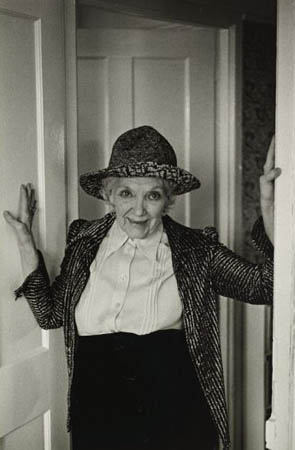
Caption: Vladimir Nabokov receives the J.J. Ellstrom Award for Literature, 2009.


Dear Vladimir Nabokov,

When the applause dies down, every award winner, sits down. Their smiles twitch and relax. The tight buttocks widens on the seat of the chair. Still nodding to their peers and compatriots, still squeezing the hand of the one they love, still tightly gripping the statue, certificate, or badge, they think the thought, the one thought that is not really a spoiler, any more than winter is a spoiler to spring.

They think: "Why me and why this?" For you, the question, certainly becomes "Why this work, when I wrote Lolita and Pale Fire?" This work is hard to find. It is obscure and indeterminate. It is the least of these, my brethren. But of course, you know the answer, for this was, perhaps, your favorite work.

Timothy Langen from the University of Missouri says: "Of all of Nabokov's famously fertile works, Invitation to a Beheading has yielded perhaps the greatest bounty of plausible interpretation." Yes, I think that is true. As Invitation is an ambiguous book, providing for students and experts such a slippery surface for academic pursuit, I have put on my skates and worked my figures on the ice. Here is what my mind has etched as I thought and thought, like Cincinnatus C., over the past year.

I think that Invitation to a Beheading is a very personal internal portrayal of the topic of obsession. Like Humbert Humbert, in Lolita, our protaganist is manacled by and absolutely defenseless against his own personal obsession. HH's fixation is delineated for us. But CC's is left to our imaginations and our soul's empathies. We may fill in our own blank. Hopefully, ours will be less horrific than the one described in Lolita, but the imprisonment is the same.

The prison analogy that you, Vladimir, have used in Beheading, is a reversal of the one you chose for Lolita where HH is only freed, really, once he is behind bars. CC, on the other hand, eventually works through his obsession and in a final decapitation of much that he conceives to be himself, he finds himself free to live once more.

It may be CC's inability to fit society's mold, his "gnostical turpitude," that is the precipitating cause for the obsession that confines him to the cell of his unreal reality, but it is the obsession itself that holds him there, awaiting and hoping for the end of both the obsession and the only life that he can embrace while in it's grip. What day will this end? How long will this beloved horror continue? That is the question you have raised, isn't it? That is the tale you have woven in this curiously beguiling novel. Here you have analyzed the perverse intrigues of the heart and mind that is incarcerated by a forbidden enchantment.

One of the most interesting moments of the book is when it is revealed that CC can leave his prison, and that he does so, briefly, only to return rather accidentally but deliberately.

Somehow our hero reaches the end, his end, the end of his obsessed form of living. (And so does HH. And so do you, and me, and all of us.) By an act of will, or circumstance, or chemical recession, the obsession subsides and we walk away, finding that the spider was not real after all, though the experience certainly was. And life, though bereft of obsession, is once again his own.

Vladimir, because you have woven such an interesting psychological explanation of that which is impossible to explain, I have awarded to you the 2009 Ellstrom Award for Literature. Congratulations!

BRD

Friday, January 29, 2010

The J.J. Ellstrom Award for Literature, 2009

Dear Readers Everywhere,

All of this year I have been putting off a decision. It has been too hard. It has been fearful. I was scheduled to make this decision last March, but I delayed.

The Ellstrom Award for Literature is auspicious. It is the award for the best book of all the ones I read during the course of a year. 2008 was a competitive year. See the list of potentials at Books and Music in 2008.

The competing authors are like a list of who's who in writing: Ayn Rand, James Joyce, Mark Twain, Herman Melville, Langston Hughes, F. Scott Fitzgerald, Juan Rulfo, Harper Lee, Toni Morrison, Ernest Hemingway, John Steinbeck, Cormac McCarthy, Zora Neale Hurston, Don DeLillo, etc. And the books are among the best of the authors in question. These are some of the best books in the canon of American Literature. So before I announce the winner, let me do homage to those who also ran.


J.J. Ellstrom, for whom this award was named would want the other renowned authors named here to receive their proper nod. I remember his sense of respect. My grandfather was straight and gruff. To me he was tall, though I have no record of his physical measure. The house in which he lived in Altoona was light green. The wooden kitchen table was also green. I remember that table covered with flour and dough while my grandmother kneaded a sticky rye bread dough. I remember sitting at that table, spooning up delicious chicken noodle soup. And at that table my grandfather taught me to respect.

We never had much money, so a dollar bill was wealth. One afternoon, my grandfather called my sister and me to the table. He was prepared to bestow upon us a fortune. In his hands were ten crisp dollar bills. One by one, he counting them out, alternately placing one before my sister and one before me. Five dollars! For me! Then he called for our wallets and began instructing us how to place those bills into the pocket. "Never," he said, "place the head of our president upside down in the wallet. Make sure every head is up and facing front. These were the leaders of our country. Treat them with respect."

So, with that same measure of respect, I want to give homage to the greatness of the works of literature that I have read, not this last year, but the year before, during 2008.

Pedro Paramo by Juan Rulfo is an incredible example of Latin American magical realism. It held me fascinated. I am not sure I totally understood it and so may reread it next year. Perhaps it will take the Ellstrom honor second time around.

Moby Dick by Herman Melville is held in such high esteem that I must mention it here. I was extremely impressed by parts of it. I loved most especially its description of courage in Chapter 26. As a whole, however, I didn't think it held together. Some call it the Great American novel. I think that perhaps it is the Great Ocean novel.

The Great Gatsby by F. Scott Fitzgerald was a good read for me, but I loved, better, Fitzgerald's Babylon Revisited, which I read in 2009.

If any book contended for the 2009 Ellstrom Award, it was, for me, Harper Lee's, To Kill a Mockingbird. This truly is one of the finest stories that I have ever read. When Harper Lee was asked why she never wrote another book, she stated that she had said everything she had to say in To Kill a Mockingbird. And she said it well.

Huckleberry Finn, likewise, is a wonderful story and a great novel. Mark Twain gave a great gift to literature in this book. The ending kind of falls apart, deteriorating into some kind of tall tale. I'm not sure why Twain let it peeter out. It's unfortunate.

Their Eyes Were Watching God by Zora Neale Hurston is a stunning book. I liked it very much. This book, as well as the study by Brannon Costello in the book Plantation Airs led me to her other, more mature book, I think, Seraph on the Suwanee, which is in contention for the 2010 Ellstrom Award.

Tambourines to Glory by Langston Hughes is perhaps not the weightiest book in all the world, but I think it is one that is overlooked. I would recommend this book highly.

Jazz by Toni Morrison is, I think, one of Morrison's best, at least in it's form. It mimics the Jazz form. I loved that about it and thought it was a marvel in that way. But the story wasn't as compelling. I'll have to reread it one of these days to figure out why it is both great and not quite so great.

Atlas Shrugged by Ayn Rand hugs the top of the list of best one hundred populist-rated American novels. I find that quite curious. I was fascinated by it, for sure, but the writing itself is not great. The combination of philosophy and novel is what makes it fascinating.

Dubliners by James Joyce is an amazing collection of short stories. Certainly if I were giving an award for the best short story, it would be The Dead from this collection.

The Road by Cormac McCarthy, stands with To Kill a Mockingbird as a book that certainly deserves an award. It is probably the best post-apocalytic book ever written. Though the movie was a bit disappointing, the book is spectacular.

So, that was the field. You can see why I was flummoxed.

BRD

Tuesday, January 12, 2010

Above the Eastern Treetops, Blue

Dear Libby Falk Jones,

I am so happy to hear that you are publishing a new book of poetry!

Publishing is an amazing thing really. I have spent the last few years facilitating publication, both print and online. Publication, I have often said, is a public form of communication. It is the transfer of ideas from one individual to another using some medium of exchange.


When that medium is poetry, well. . . the communication is pretty special. The poet condenses and distills ideas and then communicates and publishes abroad. The words become powerful, like nectar, like espresso, or like a dagger.

I love this poem that you have allowed me to post here.

October Tenth: For My First Son


At a surprise T’ai Chi class (the yoga
            teacher was sick) I breathe in, hold,
                        breathe out, willing my ribs to


expand, focusing on the knot
            in the floorboard, circling my hands
                        over the energy flame in my navel


as eighteen years ago today
            I panted your life into life,
                        my fingers circling my knotted


belly, my focus down
            and out, my core expanding, my
                        center sliding forward, until


there you sat, upright
            in the doctor’s palm, your arms
                        circling the universe.


                                                —Libby Jones


Again, congratulations on your new book: Above the Eastern Treetops, Blue, from Finishing Line Press!


Betsy

Thursday, January 07, 2010

Books and Music 2010

Dear Lovers of Books and Music,

This year, as in the past, I've decided to keep a record of the books I've read and significant pieces of music that I have listened to. I am not a fast reader, so this list won't grow quickly. However, I like keeping a record. My goal last year was to read a book a week. If you want to count, you will find that I did accomplish my goal, although, I had to search my memory to pull one last book out of the hat. (A children's book, but a book nonetheless.)

I'm rather committed to keeping most of my reading on a classic level. I am trying to catch up on the best of literature. Plus, I really do prefer books that have a lot of substance, even when I miss some of the points, which I often do. Other readers sometimes help me understand, and for their insights I am grateful. Regrettably, I don't have too many musician friends to help me with my musical passion.

Books

Maus II: A Survivor's Tale: And Here My Troubles Began by Art Spiegelman
Beowulf by Anonymous, Translation by Robert Kay Gordon
Manga Messiah published by Tyndale House
A History of God by Karen Armstrong
The Shack by William P. Young
What Now? by Ann Patchett
The Runaway Quilt by Jennifer Chiaverini
The Lifted Veil by George Eliot
Catch 22 by Joseph Heller
The Niagara River by Kay Ryan
Japanese Children's Favorite Stories compiled by Florence Sakade
The Illustrated Anansi compiled by Philip Sherlock
The Help by Kathryn Stockett
Puck of Pook's Hill by Rudyard Kipling
The Woman in White by Wilkie Collins
The Guernsey Literary and Potato Peel Pie Society by Mary Ann Shaffer and Annie Barrows
A Prisoner of Birth by Jeffrey Archer
Cinderella Tales from Around the World compiled by Ila Lane Gross
The Heidi Chronicles by Wendy Wasserstein
Bleak House by Charles Dickens
On the Road by Jack Kerouac
Pride and Prejudice by Jane Austin
A Mercy by Toni Morrison
Ender in Exile by Orson Scott Card
The Unexpected Mrs. Pollifax by Dorothy Gilman
We Make the Road by Walking by Myles Horton and Paulo Freire
Dracula by Bram Stoker
American Mind Part II by Allen Guelzo
American Mind Part III by Allen Guelzo
Frankenstein or The Modern Prometheus by Mary Wollstonecraft Shelley
Tinkering Toward Utopia by David Tyack and Larry Cuban
The Life of Our Lord by Charles Dickens
Silas Marner by George Eliot
The Castle by Franz Kafka
The Heart is a Lonely Hunter by Carson McCullers
The Amazing Mrs. Polifax by Dorothy Gilman

Music

L'Enfance du Christ by Hector Berlioz
The String Quartets of Shostakovich
Love's Twilight by Anne Sophie von Otter
Dvorak Symphony #9 conducted by Arturo Toscanini

Thursday, November 19, 2009

Survey: Which Requiem Mass is the Greatest?

Dear John Rutter,

Of course today, I say your requiem is best, for I have heard live at my own church.

But there are so many wonderful Requiems out there, and I have rattled on about them many times.

My surveys don't usually gather many participants (sadly), so this time I decided to join with a survey that someone else is successfully conducting and simply report their results here.

To vote for your favorite requiem mass, go here. Vote in the little yellow and blue box on the left. Someone who is interested can learn lots about requiems at that site, including yours, Mr. Rutter.

What I enjoyed about hearing the requiem in church was that it wasn't a show. We followed the piece through the service of worship. That is what it is about, and I would enjoy worshiping this way every single week, though I understand why choirs might resist. Even one full mass per year demands an inordinate amount of rehearsal.

But oh, it is so worth it. My favorite moment was when I found myself on my knees waiting to be served the Eucharist. It is such a beggarly moment each week, acceding to reality. And that was when your Agnus Dei broke upon my heart.

After the service, I chatted with one of the sopranos about the difficulty of singing this piece because the time signature keep changing from 4/4 to 2/4 to 3/4.


But it was not that brought me to tears, on my knees, as I received the body and blood of Jesus Christ. (Listen round about minute 3:20 and following.) It was not the drum, drum, drum, drum of the typany. It was not the critical blare of the brass. Or yes, yes it was that of course, partly. But more, it was the truth of those words:

"Whom may I seek for succour, whom may I seek for succour, whom? Agnus Dei, qui tollis pecatta mundi. Yes, in the midst of life, we are in death, but you are the resurrection and the life."

So, John, I don't really know who has written the best of the requiem masses, but I do know this: My soul is touched by this music that celebrates not death, but the life that rises from the death we experience in this life.

BRD

Friday, November 06, 2009

Grimshaw's History

Dear William Grimshaw,

Dear me, what a find and what an unutterable delight the other day I experienced browsing in the $2.00 book section of the used book room at the public library. There this was on the shelf, tucked near several copies of Harnett Kane's New Orleans Woman.

I find it remarkable that this tome has been around since before the Civil War. In fact it is so worn that I imagine it was carried in the pack of some erstwhile schoolboy who hoped to hide from the savagery of his current situation in your discursives of the savageries of the past.


The History of England, from the first invasion by Julius Cæsar, to the accession of William the Fourth, in eighteen hundred and thirty: Philadelphia, Grigg & Elliot, 318 p. This is the book from which school children learned of Julius Caesar and Richard the Lion Hearted in the middle years of the 19th century.

And though I could, through the marvels of Google, click through a volume online, I am thrilled to be able, carefully, to page through my own copy complete with pencil markings that have already brought me no end of great joy. I certainly agree with the reader who penciled the parenthesis below. Did she create the line as a mark of incredulity? Nonetheless, it is appropriate to draw our attention to the amazing longevity of men of Yorkshire and Killingsworth.


Grimshaw, your renown* is well deserved. It seems that you wrote and wrote, history upon history, factoid upon factoid. And if your research was less than demanding and meticulous than, perhaps, it should have been, it still gives us an accounting of stuff from the perspective of bygone days and bygone eyes.

But, it isn't really the history that I care about so much. I love the pages of text, mildewed and yellowed. I love the way the leafs of paper have become freckled, and wonder whether melanin in the pages increased from exposure to sun as some avid reader lay on the sand and paged through the perils of the Saxon Heptarchy that threw the Britains back to ancient barbarity.

I love to imagine that your histories, in this very book, in this very volume, touched and passed from pillar to post, from shelf to shelf over the years, starting from the Grigg and Elliot warehouse in 1843, somehow connect me with a string of actual people, actual readers over the years, from pupils to bibliophiles.

Am I related with this little tome, held between my fingers to someone in a Boston school rooms in 1858 or to a student in a farmhouse in New Jersey in the 1872? I imagine I can hear the breathing of a girl, stealing out to the orchards and climbing to a low branch to read of Ethelbald, Ethelbert, Ethelred, Ethelwolf, and Alfred. She wondered perhaps, what it was that made Ethelbald a profligate prince, and Alfred virtuous.

And though your book concludes with a list of eminent folk who died, including Lord Byron, in the reign of King George the Fourth, who himself died in June of 1930, my enjoyment doesn't rest on death, but on the lives of those whose minds and eyes fed their curiosity on the antiquities you preserved.

Bless you. Bless them.


BRD

*Appleton's Cyclopaedia of American Biography2, published in 1888. The following citation was provided:
GRIMSHAW, William, author, b. in Greencastle, Ireland, in 1782; d. in Philadelphia, Pa., in 1852. He emigrated to the United States in 1815, and lived many years in Philadelphia. Among his works were an "Etymological Dictionary" (Philadelphia, 1821); "Gentleman's Lexicon," and "Ladies Lexicon" (1829), "Merchants' Law Book," "Form Book," "American Chesterfield," "Life of Napoleon," and school histories in England, France, Greece, the United States, Rome, South America, and Mexico, with questions and keys. He also published revised editions of Goldsmith's histories of Rome and Greece, of Ramsay's "Life of Washington," and of Baine's "History of the Wars Growing Out of the French Revolution."

Thursday, October 22, 2009

Raccoon Family Dinners

Dear Lovers of Raccoons,

I suppose you, as do I, miss Zorro the Raccoon. He was a special guy and has been missed.

However, that does not mean that the DeGeorge household has been raccoonless. No indeed. And these, doubtless, are descendants of Zorro, though it is hard to keep track generationally. (Don't the little ones grow so fast!)

As an observer of raccoon behavior, it has been interesting to watch the group that comes to dinner. There are usually five. I think it is a mom and three babies and a tag-along, but I'm not sure who is who anymore.

The first of these videos is a little long. It is fairly peaceful though.


This second video is a little fuzzy as I captured it through the not so sparkling kitchen door. It shows the interesting raccoon behavior as the dominant one makes it clear who gets to eat first.


You've got to love raccoons.

BRD

Sunday, September 20, 2009

Bidding for Frog's Legs

Dear Nett,

It was raining--Not just a little bit of rain, but the kind of rain that keeps on coming, not in gallons, but in mists and light drops, in quick pours that demand scurries to cover and allow puddles to assert themselves, in short blows and dollops on shoulders and cheeks that make us shiver.

This is the kind of day for frogs and I was in a froggy mood having just watched an episode of Untamed and Uncut where one frog, clenched in the extended jaw of a garter was being slowly gulleted by the snake when another frog, apparently of heroic intent, pounced on the now monstrous double head, rescuing his amphibious friend. It is not easy being green. But today, with no snakes in sight, frogs were happy in Leiper's Creek valley.

And the rest of us were kicking back too, for this was the day of the annual fish fry at Bethel Community Center. Proceeds for the volunteer fire department seemed a secondary issue on a day like today. No fires beyond the coals under the giant fryer could ignite on this drizzly day. As you well know, spirits in Bethel Community just don't get dampened by a rainy forecast and apart from the specially constructed clear plastic walls being raised by the roadies of the Homer Dever Band, all went as planned.

The band had reason to be concerned about the dampness, for the instruments of pickin' can swell. Plus it had been whispered that a celebrity of "some notoriety" might make a guest appearance. You know all about such appearances of course, since your establishment casually caters to the likes of Judds, Urbans, and Williams.

So while we grinned and the other band, Highland Rim, picked, Homer Dever t-shirted men ceremoniously unfolded tarps and snagged grommits onto previously prepared hooks. The ladder was somewhat unstable. We used to call that "rickety" when I lived in central Pennsylvania. Here, we just say, "Dat dere got a wobble to it, don't it." Rather than finding a different step stool, a sturdy, four by four gentleman stood alongside the Dever boys. They steadied themselves with a hand on his balding head whenever the ladder tottered.Meanwhile, children flowed in and out of the pavilion, oblivious to all but the most intransigent expressions of meteorologic discourse. Oh, Nett. Remember the days when play was all and getting wet was just one of many dressings for a day, presenting not obstacles but adventures and mysteries. Faces upturned we investigated drops in tactile pleasure, gauging possibilities. This afternoon, little girls of Santa Fe were standing on picnic benches conscious of nothing but glory, I think, with their faces glowing after a quick dash through a sloshy set of indentations dug, throw by throw, on drier days by gnarly men with horse shoes.

I saw that Nett's Country Store and Deli participated in the other option of the affair, the silent auction. Now, a regular auction exerts no power over me. I can sit as stone while a rackety-rack auctioneer chants,

"l dollar bid, now 2,
now 2, will ya give me 2?
2 dollar bid, now 3,
now 3, will ya give me 3?
3 dollar bid, now 4,
now 4, will ya give me 4?"

Impassively, I think, "No dollar for you!" But a table silently sitting there offering an array of wares from cookie jars to country hams? Now that has me at hello. So my daughter and I walked about, low balling bids on necessities such as packs of Ivermectin wormer for my horses, 50 lbs. of high quality dog food, hand crocheted afgans, and a weed whacker with a 32 cc engine that can swing a 2.75 mm line, when I came upon your offerings. Perfect, I thought, and it's all for the benefit of the fire department. Dinner for two? Sunday buffet for the family? Supper on karaoke night? Which should I choose? On which line should I stake my claim, a solid bid that wouldn't be challenged by locals? Then, tucked behind the offering for a pedicure I saw the auction I would fight for. This is the page I would come back to over and again while listening to bands and munching on fried fish. This was the auction offering for which I would contend.

Nett's Country Store and Deli
Dinner for One
Friday Night Only
Frog's Legs
(Starting bid: $5.00)

See you very soon.

BRD

Sunday, September 13, 2009

What to Think About Theodore Dreiser

Dear Theodore,

Here is what I said to a friend the other night. "I love Faulkner's sentences, it is his chapters I dislike." Faulkner had a way with words all right. And if I were honest, I would have to say that many of his chapters are fabulous. I would also have to admit that his work has expanded writing styles and approaches in a wonderful way. But, when I read his works, I am always left disappointed. So much promise, yet, for me, so much disappointment.

I am wondering what I will feel about you and your work after I am finished reading and reviewing a few things. The hype is good. As you may know, I have, for a long time been searching for the "Great American Novel." I'm wondering if I will find the great American novel in the books that you have written. Larzer Ziff, some English professor who might be from Johns Hopkins or UC Berkeley, remarked that you "succeeded beyond any of [your] predecessors or successors in producing a great American business novel." Some people think that you succeeded "beyond any of [your] predecessors or successors in producing the great American novel." Hm.m.m. Perhaps.

Well, I'm not ready to vote on that yet. As I've been reading Sister Carrie, I haven't been impressed too much by sentences, but the chapters are faring better. And my gray recall of An American Tragedy is positive if not too clear. That is one I must review before I say much.

Anyhow, it is this quote from H.L. Mencken that got me writing this letter, because it reflects on something that is important in my thinking. He said of you, "that he is a great artist, and that no other American of his generation left so wide and handsome a mark upon the national letters. American writing, before and after his time, differed almost as much as biology before and after Darwin. He was a man of large originality, of profound feeling, and of unshakable courage. All of us who write are better off because he lived, worked, and hoped."

You made a difference, it seems. And that difference was more than the difference of sentence structure. That's what I like about it. Now, I have to repeat, I love a great sentence. Think about the sentences of Annie Dillard. Like the one about the Polyphemus moth walking away from Shadyside school. "He heaved himself down the asphalt driveway by infinite degrees, unwavering." Oh, my. And how about the last sentence of Gatsby, "So we beat on, boats against the current, borne back ceaselessly into the past." And Dickens two city "Best of times," "Worst of times." Do you think I should publish a survey to ask what the best sentence of all literature might be?

But sentences are an easy thing, I think, compared to the themes. And that, is what I contemplate. Is a book important because it has good sentences or because it has good theme? It is the difference between the artistry of style and the artistry of truth.

Sherwood Anderson of Winesburg fame, said:
Heavy, heavy, the feet of Theodore. How easy to pick some of his books to pieces, to laugh at him for so much of his heavy prose ... [T]he fellows of the ink-pots, the prose writers in America who follow Dreiser, will have much to do that he has never done. Their road is long but, because of him, those who follow will never have to face the road through the wilderness of Puritan denial, the road that Dreiser faced alone.

Well, I'm not convinced that you were alone. W.E.B. DuBois was there too, with some of your foibles, but certainly with some of your strengths. He had heavy feet, too, treading and opening roads to reveal what was being denied. You and he, did not have quite the strength of the sentence that I love, but you did face down traditional assumptions and called for a truly new way of being.

I hope that as I review your work I will find a new fearless hero of the written word.

Regards,

BRD

Wednesday, September 02, 2009

Sometimes It Really Works!


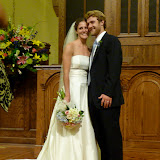
Dear Bride and Groom and Photographer,

Well, I have to say that sometimes it really works. And this time it did. I don't know that I have ever seen a set of wedding pictures that were quite so perfect.


Sure, we had one of the most beautiful brides ever to work with. Yes, we had one of the most handsome grooms ever. But goodness, what a photographer.


Thanks Jenny Evelyn for capturing the day in a most outstanding way!


Hey, Jenny, don't you love this couple?


BRD

Sunday, August 23, 2009

What is The Purpose of Art

This is NOT me on my bicycleDear artists of all stripes,

Recently, I commissioned a portfolio of photography. This was my first commissioning (and I'm so new to this that I don't even know if I'm using the terminology correctly), and I hoped to have my favorite photographer* collect some of the unique features of my neighborhood in Chicago. See, as I've been riding my bicycle around quite a bit this summer, I've noticed many objects that I consider art, though others might think of it as little more than a public nuisance.

Blago HeadBlago TorsoBlago FeetIn any case, I commissioned the portfolio of photography, and as I looked over the images, I began considering the reasons why people make art. What motivates the beginning of a creative work?

In the case of Ray Noland, I think the purpose is clear: to comment on the political. This, in my mind, goes along with the other commentaries (commentary on socio-cultural norms, art itself, materialism, etc). Blago Escape the CityBut here, through the spray-painted street art depicting the bad-guy-of-the-year, Rod Blagojevich, Ray has made commentary on all the corruption associated with a political figure. I can't say I disagree with his message.


Old Ukrainian GroceryOther times, I think that art is not the intention at all, even if it is the by-product. This is sometimes the case with advertising. In our neighborhood, even the lettering is often artistic to me, given that Cyrillic lettering is often used. I think of Andy Warhol's painting of the Campbell's Soup can, and how he turned an everyday brand into art. In the same way, I believe that everyday advertising is often art in its own right.

Door ArchSpiral StairsThis might go hand-in-hand with Craftsmanship-as-art, although I'd like to think that the art here is more intentional than that of advertisements. With craftsmanship, art is formed as part of the creative work of constructing something functional. Architecture largely falls into this category for me, and this is why I like the old buildings in my neighborhood much more than the concrete-brick, bland-facade that seems to be the norm in new condo construction these days. With craftsmanship, the maker creates something that is descriptive beyond the function of the piece, by adding something of himself to make the object unique.

Oh Shit! HighwayI really mean it!In a way, it is the craftsman's self-expression that creates the art. But self-expression can be so much more...direct...at times. Consider the various scribblings of some graffiti artist in West Town, who has managed to get his/her scrawl on many prominent locations (thankfully, without apparent gang affiliation). Why the comment, "Oh Shit!"? Is there a purpose beyond self-expression? Does there need to be a purpose beyond that?


Dripping to a watery reflectionAs I pondered the various rationales for art, it dawned on me that ultimately, art is self-expression. I cannot imagine an art form that does not in some way derive from the mind of the creator--even Jackson Pollock's random-seeming paintings are based on his choices of paint color and exist only because he chose to create them.

I think it is this self-expression that makes me enjoy art. Because, after all, how many other times do you have the chance to see someone publicly express themselves for all to see?

TheUkieVillain

TheUkieVillain


*My favorite photographer happens to be my wife, E. Stock. All of the photography in this post is hers, and she retains all copyrights. Please feel free to click through (ad-free Picasa photo album) and see the rest of the portfolio.

Sunday, August 16, 2009

Health Care Reform

Dear Jimmy Duncan,

I got your newsletter the other day. Thanks for sending it.

First, I want to thank you, once again, for your courage as a Republican legislator who did not vote to initiate the mess that we call the Iraq War. Had others listened to your wisdom back in 2003, we may find ourselves in quite a different world than we are in today.

Though you are far more conservative in your political positions than I am, I like the fact that you think for yourself and are not afraid to take stand that diverge from party politics.

But I want to talk with you about health care. You said in your newsletter that: "Until the federal government got heavily involved in the mid-60s, health care was cheap and affordable for almost everyone. Doctors even made house calls. We took what was a very minor problem and turned it into a major problem for everyone." You continued to imply that the existence of Medicare and Medicaid is causally related to the explosion of medical costs.

I guess that I have to disagree with that analysis. I think that the skyrocketing costs relate more directly to two or three other things.

1. Medical costs have increased because of the increase in technological advances that while providing miracle diagnoses and healing options are incredibly expensive to use. Treatment costs are far more expensive today than they were in the 1960's.

One reason that I will always vote for you (though I am a registered Democrat) is the kindness you showed to my family back in the early 90's when my daughter was fighting leukemia. I will never forget that your wife actually came to my home and cleaned the day before we returned home from the hospital. (Thank her again for me.) In the 90's there were treatments, expensive treatments, that saved my daughter's life. Until 1973, there were no treatments available for children diagnosed with leukemia. Children lived a few weeks and then died.

The medical advances we have enjoyed over the last 40 years have been wonderful but they are high ticket items.

2. The second reason that costs have skyrocketed is that the medical insurance industry has grown astronomically. It is the elephant in the room. Medical insurance executives earn far more than the finest surgeons. Who pays for them? Well, actually Medicare and Medicaid pay their share. Rather than costing out medical appointments and procedures realistically, doctors and hospitals are pulled into an enormous pricing scam that affects individuals without insurance, the government, and those with insurance.

Congressman Duncan, it is my opinion that insurance companies, not Medicare and Medicaid, are responsible for increasing financial costs.

3. The third reason relates to insurance also. And it relates to litigation. Doctors and hospitals have been forced to insure themselves very heavily because of rampant litigation. The insurance costs that have been foisted on medical professionals because the government has not placed appropriate caps on awards and has not acted to protect doctors from frivolous lawsuits, has significantly raised medical costs.

Don't blame Medicare and Medicaid. They are victims, not causes.

Before I end my missive, I want to say one more thing. I want health care reform. However, I don't want it this year. I want a little bit this year and a little bit next year. I want change over the next 15 or 20 years. I want reform that is thought through, not pushed through. I want legislators to say, "Yes, I read all the sections of this bill and I am voting for it based upon knowledge of it's contents." You said in your newsletter, of the Energy Bill that it was 1,428 pages long and that "no one who voted for it could have known more than a fraction of what was in it."

(To me, that is a very big issue. And I have heard other legislators say this of the health care reform bill. If you and your colleagues are not reading the bills you are voting on, then who is? Who is writing all of these words . . . undergraduates from American University on work study assignment? If the bills are too long to read, then they are too long to vote on.)

I would say that it is time to change the system in more than one way. For me, I would like Republicans and Democrats to put both party politics aside and actually think about what realistic health care might look like in 20 years. My thought is that the best we can hope for might look like something that already exists in Canada and Scandinavia. Perhaps, you could do some research about the best of what is working in those places.

Oh, well, have a good weekend.

Betsy DeGeorge

Monday, August 10, 2009

Stevie and Lauren Get Married

Dear Children,

And we were so happy!

stevie_lauren_wedding


Mom and Dad

Saturday, July 25, 2009

My Day

Dear Jean Rhys,

I picked up your book at the library the other day. I was looking for a book by Antoine de Saint-Exupery, but found that I needed to march to the children's section for Le Petit Prince. I did not pick up a book by Salmon Rushdie that I have been wanting to read. Too long. But when the corner of my eye caught sight of your name it turned my head and ordered my steps to the left, "Ah," I said, "I can read Jean Rhys in a single bite."

Surely, I should have read something by you before, but I have not. Do not feel slighted, alone, or offended. I read my first Vonnegut last week. I read my first Joyce this year. I am as old as your descriptions in Close Season for the Old? and I am still just scratching the surface of literature. Sure, it's my own fault. I will never catch up.

I loved My Day and was shocked to find a note at the back saying that you had published only 750 hardcover copies, 26 specially bound copies signed by the author, you. If that is true and there has not been a publishing correction of that decision, the Knoxville Library may never get this book back! It may become, it may already be, lost in the depths of the brd family library somewhere hidden from the road in Loudon County.

When I was young we would go to skating parties where Looby Lou, Looby Li was a feature. In an unsteady circle, youth, supported by eight wheels would skitter around to the music of a children's ditty. Looby Li on a Saturday night. No one ever called a halt to our fun, probably because the presence of wheels limited the potential of our antics. Perhaps your gang from Invitation to the Dance should have worn skates.

Now that I am old, yes, that I am old, I understand your thoughts, and the character of a good day. I am not alone, as you describe yourself, and so I am not as free. Just last night as I left work full of thoughts about a difficult rewrite for a story about research for a research magazine, (how hard could that be?), I thought, "Gee, it would be good if I could just be alone this evening, free to write, instead of waiting for family and family and family to come from three points of the compass." Then I thought of my husband and how I would be so alone without him and how grateful I am that he is my constant companion.

My husband talks alot. Two nights ago, I fell into bed beside him. I sleep well and could have drifted off quickly. But my husband was in a talking, almost a chattering mood. He was telling me about when he was young. He had asked a coach, "What can I do to run faster." My husband had been on a team. He wanted to do better. The coach pulled upon his bravado resources and said, "Run. If you want to run faster, run," and paced away. So, forty years later, my husband lies in bed, feeling hurt that a crotchety coach didn't have time to look a young man in the eyes and say, "What are your goals? How often are you sprinting? Run for me, let me see your gait."

Is that what old age is about, I wonder, pulling ourselves into a cave at the back of our minds where we can retire and think about 18 or 36 and what "they" said, what "we" said, or how we should have done it? Do we need a dog to guard us while we are in that cave? Or do we need a dog to guard the cave so we don't go in?

A couple weeks ago, I sat with my father. He is like Mrs. Pearce, the woman you described who had been taken to the "Old Persons Home." My father is in his own home with my mother. They are glad to be in their own home. The rest of the family is trying to make accommodations. That day, the day I sat talking with my father, I had attached toilet support rails to the commode. With these supports my father can maintain a modicum of privacy and dignity. I asked Dad, "Would you like to move to Tennessee, to live with us?" "No," he said without hesitation as he stretched back in his special lounge chair with a motor and mechanism that lifts the cushion whenever he wishes to arise. "No, I am comfortable here."

That was that. I understand that. I think you would too.

BRD

Thursday, July 23, 2009

Survey: What is the Condition of Racism in America?

The United States has elected a person of color as President of the United States.

Police in Cambridge are profiling to the extent that they enter the home of one of the most prominent black educators in the United States, Henry Louis Gates, and arrest him.

Cornel West and Carl Dix comment on this subject in the show Democracy Now.


What is your experience? Good, bad? Give examples.

Sunday, July 19, 2009

The Great Chicago Novel

Dear Julia Keller,

I just read your article about the Great Chicago Novel. I loved your thoughts. My friend and co-blogger, Ukie Villain, lives in your neck of the woods and he pointed the article out to me.

I particularly like your comments that address the time warp that happens in our minds when we try to choose which novel we think is the greatest of them all, for Chicago, for America (is that North or South America?), or for everywhere.

A couple years ago I started to ask people, when I found myself in a situation where I was groping for subject matter, "What, do you think, is the great American novel?" I then got a bit obsessed with the subject and began asking everyone, co-workers, waitresses, and family until my husband said, "Enough, already!" I did collect 'comment' responses, surreptitiously, for a while on my blog site:

http://letters-and-surveys.blogspot.com/2008/04/survey-what-is.html


At any rate, back to the point, I did find that people looked back. Twain and Melville and Steinbeck were mentioned far more frequently than, say, DeLillo or Morrison. Perhaps, we must look back. We are trying to find the novel that will stand the test of time, and so we look for something that has stood the test already. But, looking back isn't enough to satisfy that longing for the great novel of our own time period and locale: 2009, Chicago. And it seems you've identified a great one, in Elizabeth Berg's new novel Home Safe, capturing the spirit of the day and place. But isn't it curious, that the great ones, the novels that make us breathe deeply, the ones that make us need the novel form, circle back around to the great themes, such as "loss and change"?

If we looked for that theme, we would find it, over and over and over and over, in the novels that are great, no matter when, no matter where.

Thanks for the great review.

Betsy DeGeorge

P.S. What is it like to be the Cultural Critic for the Chicago Tribune?

Friday, June 26, 2009

The Naming of Raccoons

Dear T.S. Eliot,

You have pointed out clearly in Old Possum's Book of Practical Cats, the inherent difficulty you've found in the naming of cats:

The Naming of Cats is a difficult matter,
It isn't just one of your holiday games;
You may think at first I'm as mad as a hatter
When I tell you, a cat must have THREE DIFFERENT NAMES. . .

When you notice a cat in profound meditation,
The reason, I tell you, is always the same:
His mind is engaged in a rapt contemplation
Of the thought, of the thought, of the thought of his name:
His ineffable effable
Effanineffable
Deep and inscrutable singular Name.
Well, the same is definitely true of raccoons. Their names are both important and not always easy to come by.

But I'd like to introduce you to this little guy whose name is Stripes. It is a name quite right for him. When he first came to us, he seemed a little worn out, but with food and a bit of care, he is doing quite well, though his tail is a fright!


Even our cat, Bernice, to be exact and named, incidentally, after my great aunt, Bernice Johnson, who pronounced her name burn-iss with a good hiss sound, likes Stripes in her own catty way.

Inscrutably,

BRD

Monday, June 22, 2009

Beowulf and the Card Catalog

Dear Edgar Allan Poe,

I wanted to talk with you about the bust of Pallas. You and your Ravenian protagonist were men of books. He had, once upon a midnight dreary, while he pondered, weak and weary over many a quaint and curious volume of forgotten lore, vainly sought to borrow from his books surcease of sorrow -- sorrow for the lost Lenore who, unfortunately, remains currently nameless.

But, sore as we all may be for our friend's sorrow, I just want to talk about the bust, the one of Pallas above the chamber door. I am trying to track down a factoid about busts and books. Now you, Poe, said, in the voice of our sad friend,

Open here I flung the shutter, when, with many a flirt and flutter,
In there stepped a stately Raven of the saintly days of yore;
Not the least obeisance made he; not a minute stopped or stayed he;
But, with mien of lord or lady, perched above my chamber door
--Perched upon a bust of Pallas just above my chamber door--
Perched, and sat, and nothing more.

Then this ebony bird beguiling my sad fancy into smiling,
By the grave and stern decorum of the countenance it wore,
"Though thy crest be shorn and shaven, thou," I said, "art sure no
craven,
Ghastly grim and ancient Raven wandering from the Nightly shore--
Tell me what thy lordly name is on the Night's Plutonian shore!"
Quoth the Raven, "Nevermore.

Now the fact of the matter is that I am not studying your work right now, but it was playing in my head as I have been studying (and a long overdue study it is) the work of that great author Anonymous and the much ado-ed Beowulf. In the course of this study I stumbled upon J.R.R. Tolkien, for heavens sake, and not in Hobbiton for once. He, apparently was renowned for his knowledge of Beowulf. Well it certainly makes sense, when you think of all the gum stretching names he uses throughout his fantasies. Eomer, Hama, Helmings, are found in both pieces of literature, and even Beorn from the Ring trilogy is reminicent of the hero Beowulf himself. I think though, that it is the tone of the books that call to mind the sounds and poetry of Beowulf. But I digress.

I have tried, formerly, to wade my way through the Haethains, Hrethels, and Herebealds of Old English, and only concluded that the language was a Grendl whose lair was one I could not enter. It felt too much like hand to hand combat. So I have been surprised that now I am a fan, not of Beowulf as Nordic Superhero, but of Beowulf as Aged Contemplative.

Perhaps the only thing I knew of the Beowulf story was:

  1. It was one of the first pieces of true English literature.

  2. Beowulf fights and kills the monster Grendl (which, some say, is the template for the orcs of Tolkieniana)

  3. Grendl had a lair.
Come to find out, there is much more of poetry to this than epic and it contains fascinating contemplations about the values of life and the pain of episodes in life that are beyond our control.

I'm meaning to write a letter to J.R.R. about these things, but first I wanted to find out something from you about library cataloguing. Were you thinking of a room, in the Raven, as one with busts on top of every shelf? Did the gentleman in your poem enter the room and say, "I believe I'll read Sir Galwain, that would be 'Nero A.x.' Go to the bust of Nero, top shelf (denoted by A) and then the tenth book? According to a little book I'm reading about Beowulf, Robert Cotton, who preserved the original Beowulf manuscript organized his bookshelves that way and I thought that perhaps you did too, at least in your imaginings.

How beautiful it would be to enter a classic library and find one's books in such an artful way. Supposedly the great Beowulf manuscript is still kept in the British Library under the bust of Vitellius. My guess is that the public doesn't have free access. Ah to wander a library, unfettered, and see these amazing things. Wouldn't that be terrific? We do have great digital access, and I should be satisfied with that I suppose, but I would love to see the analog version. But, to quote the raven, "Nevermore."

BRD

Sunday, June 14, 2009

A review of "Animals Make us Human", or why I was crying over chickens

To whom it may concern: (and if you eat meat this concerns you...)

Have you ever been in your kitchen staring down at a big red blob thinking about how, once cooked, this substance will be so juicy and delicious? And then, have you ever turned your mind to see this red blob as a working muscle under a leathery and furry layer of skin. Suddenly you see the animal that this muscle came from walking before your eyes? I have. Many, many times, in fact. It always makes me sad, although I see the necessity of eating meat. I mean, it is a totally natural thing, and it part of the order of the world. But I am aware of the fact that what I buy at Kroger's meat department is not the same to me as that living creature. The two have been separated. I would certainly eat differently if I myself had to take that cow from creature in a field to red slab on my kitchen counter. But that ugly world of slaughter is closed to me.

Or it was. You see, in my mind when I think of the cow my meat came from, I naturally think of the cows I know. That is, cows like Junior or Sad Sack. They are two bulls that have passed through the lives of our farmer friends. Junior was a sickly calf who was bottle fed until very fat and strong. In fact, he would have retired as a spoiled pet were it not for the hay shortage that hit our area in the last few years. He had to be sold, but he certainly enjoyed his life while it lasted. Sad Sack was a bull purchased after times got better. I don't know if he still lives on the farm, but he was put out to pasture on green fertile fields with trees and water and plenty of land and girl cows.

So the life of a cow like these cows doesn't seem so bad, even if it may be shortened at the slaughter house. But Temple Grandin's book, Animals Make Us Human, made me rethink all that. Dr. Grandin is a renowned author and researcher in the area of animal welfare and the meat industry. You would think that these topics are mutually exclusive, but for her they are not. They go hand in hand, exemplifying the symbiotic relationship we have with animals. Oh yeah, and she has been diagnosed with Asperger's syndrome.

So thanks to pressure from so called extremists, McDonalds called Dr. Grandin to do audits of the beef plants that they buy from. She went in and found appalling conditions. Her goal became finding ways, through technologies and better handling practices, to give cows better lives and calm deaths. She is not a vegetarian, and she realizes the need for slaughter plants. And in nature, life would be much worse for the cows. In fact, if we did not eat cows, most of the cows living today would not be here. So she helped McDonalds make changes in those plants. These changes benefit both sides, leading to better meat and less loss through injury; and they give cows a better life.

The book is wonderful and I could not even begin to summarize all the points here, so I will skip to crying over chickens. Dr. Grandin was describing the method by which chickens are killed. First though, they are fattened up so much that they can barely walk...legs break and the animals can easily get damaged. The male birds are also bred to have such huge breasts that they can barely mate. (Some say that may happen to American women one of these days...) And then when they are killed they are hung upside down, their brains are put into water that is electrified, and that pretty much knocks them out. Then their throats are cut. This is fairly humane when it works right, but sometimes the birds are injured when being hung by their feet, or are not totally knocked out. Then they experience pain upon death.

It doesn't matter how low a creature is on the food chain or how small a creature's brain, the animals in human's care should not be allowed to die in pain if we can help it. Especially when it is totally preventable.

There are various parts to the meat processing problem. Technology and logistics is one side of it, but the other is the massive increase in consumption over the past 30 years. Other, more mainstream outlets are also starting to notice our meat consumption problem. The NY times reported on this issue. Here is a quote from the article:

"Global demand for meat has multiplied in recent years, encouraged by growing affluence and nourished by the proliferation of huge, confined animal feeding operations. These assembly-line meat factories consume enormous amounts of energy, pollute water supplies, generate significant greenhouse gases and require ever-increasing amounts of corn, soy and other grains, a dependency that has led to the destruction of vast swaths of the world’s tropical rain forests...Americans eat about the same amount of meat as we have for some time, about eight ounces a day, roughly twice the global average. At about 5 percent of the world’s population, we “process” (that is, grow and kill) nearly 10 billion animals a year, more than 15 percent of the world’s total. "

It amazes me when I think of the consumption of animals this way. Not only are we American obese and killing ourselves with fatty meat and food fried in animal fat, we are also killing more than our fair share of animals. We are using up more than our fair share of grain to feed those cows, while others in other countries starve. We are raping and pillaging our world for the sake of our stomachs.

I am really not a "greenie", even in saying all of this. But I do have a heart. It is not wrong to eat meat, but when we abuse animals so that we can have our fill, or more than our fill, we lose touch with the value of what we are eating.

My in-laws come from India, a very different place. They learned about not wasting food there. When we eat with them, my mother-in-law takes all the bony pieces of meat because she knows that if I get one of those pieces, I will eat my way around the bones, fat and tendons and only eat a few sweet spots of meat. She on the other hand will clean the bone wasting nothing. In the Kalahari the bush man thanks his prey before killing it, explaining his needs and thanking the animal for its sacrifice. We Americans throw food away like it is going out of style.

So what can we do? Here is my challenge, because one or two extremely self-controlled people becoming vegans is not going to make a huge difference, so I am not advocating that. We all must make small changes in order to get bigger changes to happen. So first, I want to say, thank you for thinking about this issue. Second, think about this issue every time you buy meat in the grocery store. Labels are for marketing, but we all need to make efforts to identify brands that treat their animals more humanely and who are following better animal handling guidelines. And the more local you buy, the better, as far as that goes. Third, let's all eat a little less meat. If you eat meat every day twice a day, cut it back to once. Or every other day. I am personally going to strive for 2-3 times per week. I think I can handle that.

I would love to know what you think about this issue and what you might try in order to make a difference.

Your friend, who just wishes she could change the world,
CaDh 8

Sunday, June 07, 2009

Survey: What do You Think about Twitter?

Survey: What do You Think about Twitter?

In an Mother Jones interview with linguist Geoffrey Nunberg, a professor of linguistics at the University of California-Berkeley is asked if Twitter will "dumb-down" our sentences. He answered:
It's just silly to imagine that this form of communication could have any effect on language. The English sentence has done very well for itself over the last thousand years or so, and it's not about to autodestruct because kids have suddenly started to text message each other rather than passing notes under their desk. In fact, what we're taught in school—the gospel according to Strunk and White—is to be concise. What imposes more constraints of conciseness than Twitter? So in that sense, Twitter could be the greatest thing that's happened to English since print.

What do you think?

BRD